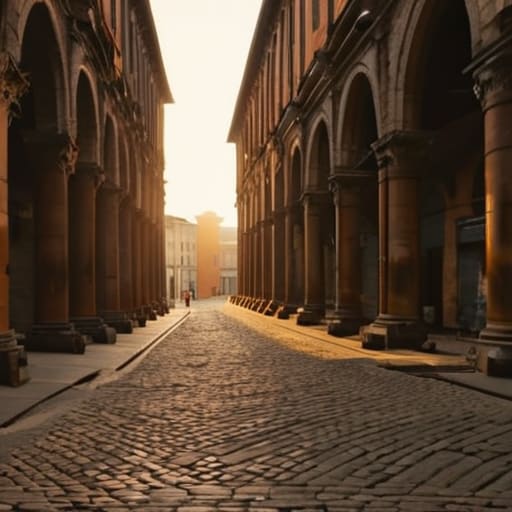
I was standing in a damp basement near Porta Romana last Tuesday, my flashlight catching the edge of a reused Roman brick wedged into a much later medieval foundation. Most people walk through the city center looking at the Duomo’s spire or the sleek glass of Porta Nuova, completely missing the chaotic, beautiful struggle of milan and its layers happening right beneath their feet. They see a finished skyline, but I see a constant negotiation between eras. It’s frustrating how often the conversation gets stuck on “style” or “aesthetic” when the real story is written in the grit—the way a 17th-century lime mortar fails against a modern cement patch, or how a single street corner can hold four centuries of structural decisions.
I am not here to give you a sanitized tour of famous landmarks or a lecture on high-concept urbanism. Instead, I want to show you how to actually read the city. We are going to look past the polished facades to examine the joints, the reused stone, and the structural scars that define this place. I promise to guide you through the technical reality of these transitions, focusing on the material truth of how this city was stitched together, one layer at a time.
Table of Contents
The Roman Ruins in Milan Traces of an Imperial Foundation
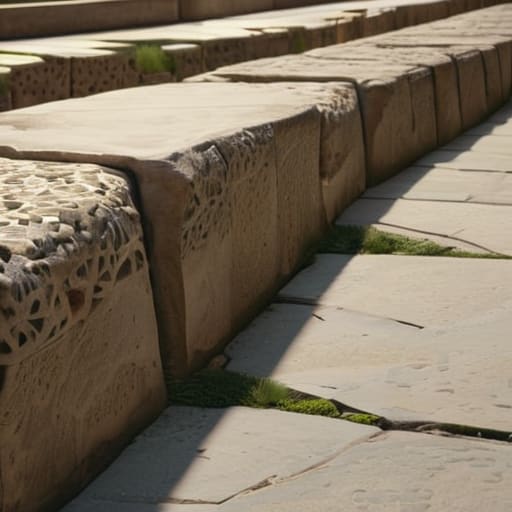
When I walk near the Colonne di San Lorenzo, I don’t see a monument; I see a structural argument. Most people see the Corinthian capitals and think of “glory,” but I find myself staring at the opus reticulatum in the nearby fragments, tracing the way those small, diamond-shaped tuff stones were pressed into the mortar. To understand the Milan archaeological history, you have to stop looking at the surface and start looking at the gaps. The Roman foundation isn’t just a layer beneath the street; it is the very logic upon which the city’s later chaos was built.
You can see it clearly in the way the modern street levels have drifted away from the original Roman grid. If you catch a glimpse of a foundation wall during a construction site excavation, you’ll notice the sheer density of the Roman concrete—a heavy, purposeful material that refuses to yield. This isn’t just rubble; it is the stratigraphy of Milanese city life, where the massive, disciplined geometry of the Empire provides the silent, sturdy skeleton for everything that followed. Even as the centuries piled on, the Romans left us a footprint that simply refuses to be erased.
Digging Through the Milan Archaeological History
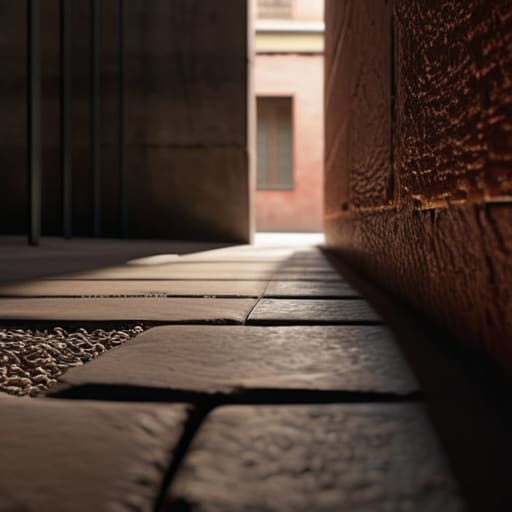
When you descend into the basement of a modern office block or a renovated cellar near the Duomo, you aren’t just entering a room; you are entering a vertical timeline. To understand the stratigraphy of Milanese city life, you have to stop looking at the street level and start looking at the floor. I often find myself tracing the edge of a concrete foundation only to realize it’s sitting directly atop a fragment of a reused Roman brick. There is a specific, almost tactile tension in seeing a 21st-century steel beam anchored into a base that was laid during the late imperial period.
The real challenge for anyone studying the Milan archaeological history is that the city doesn’t just sit on its past; it consumes it. You see it in the way the medieval masonry often uses the “spoils” of the Roman era—irregularly shaped stones tucked into walls like a jigsaw puzzle of necessity. It’s never a clean transition. Instead, you find these messy, fascinating junctions where a 12th-century stone arch might be forced to accommodate a Roman drainage channel. The city is a series of architectural compromises, and my job is to find the exact moment where one builder’s solution became the next builder’s problem.
The Living Palimpsest
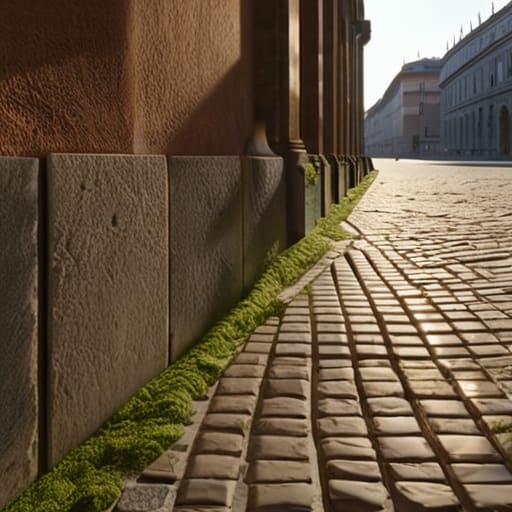
To walk through Milan is to navigate a continuous, messy dialogue between eras. We have seen how the Roman bones of Mediolanum were not simply erased, but rather repurposed, serving as the literal and figurative foundation for the Gothic ambitions that followed. From the deep archaeological excavations that reveal the city’s stratified past to the way modern concrete is forced to negotiate with ancient brickwork, the city is a study in structural survival. It is never a clean break; it is a constant process of re-using, re-layering, and re-interpreting the decisions of those who laid the stones before us.
I often find myself standing in front of a simple, weathered wall, tracing the line where a medieval repair meets a Renaissance patch, and I am struck by the sheer persistence of it all. We tend to look at cities as finished products, as static postcards, but Milan teaches us that a city is actually a living, breathing organism of stone and mortar. If you stop rushing and truly look at the seams, you realize that we are not just inhabitants of these streets; we are merely the latest layer in an ongoing, unfolding construction. The story isn’t finished; we are simply the ones currently holding the trowel.