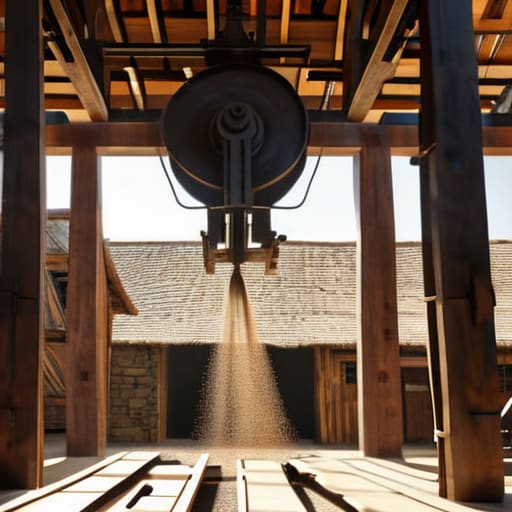
I remember standing on a scaffolding in Palermo last autumn, watching a modern tower crane attempt to hoist a delicate, hand-carved limestone lintel that had been salvaged from a collapsed portico. The sheer, mechanical indifference of the machine felt almost violent against the fragility of the stone. Most people look at a construction site and see only the brute force of progress, but if you stop looking at the spectacle of the machine, you realize that cranes and lifting technology are actually the most sensitive instruments on a site. They aren’t just about moving weight from point A to point B; they are the bridge between the heavy, stubborn reality of raw material and the precise, intentional geometry of a finished building.
I have no interest in the glossy brochures that promise “limitless efficiency” or “revolutionary automation.” Instead, I want to talk about the physicality of the lift—the way a load settles, the tension in a cable, and the critical, often overlooked decisions made by the operator to ensure a structure survives its own assembly. I am going to show you how to read these machines not as mere tools of labor, but as the essential hands that dictate whether a building’s soul remains intact during its birth.
Table of Contents
The Silent Strength of the Treadwheel Mechanism History
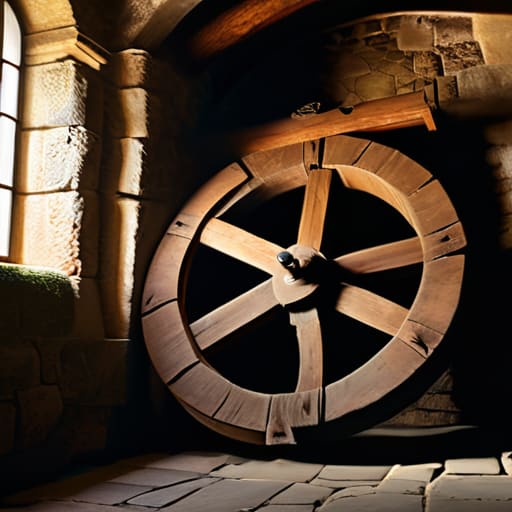
I spent most of last Tuesday in a small, damp basement in Lucca, tracing the ghost of a timber frame that had long since rotted away, but the stone sockets remained. They were shaped for something much more primal than a modern hydraulic jack. When I think about the treadwheel mechanism history, I don’t see it as a mere precursor to the steel towers we see today; I see it as a triumph of human geometry. These massive wooden wheels, often operated by men walking inside them like caged animals, were the first real mastery of mechanical advantage in hoisting. You can still find the scars of this era—rounded notches in the masonry where the pivot points once sat, holding the weight of a cathedral’s ambition.
There is a profound honesty in those old mechanisms that we sometimes lose in the age of material handling automation. A treadwheel didn’t rely on a computer to calculate load distribution; it relied on the physical tension of hemp rope and the rhythmic, straining breath of the workers. When I look at a medieval construction site through my lens, I’m looking for those points of contact—where the wood met the stone—because that is where the heavy lifting machinery evolution truly began. It wasn’t just about moving weight; it was about translating human muscle into a force capable of defying gravity.
Tracing the Mechanical Advantage in Hoisting Through Time
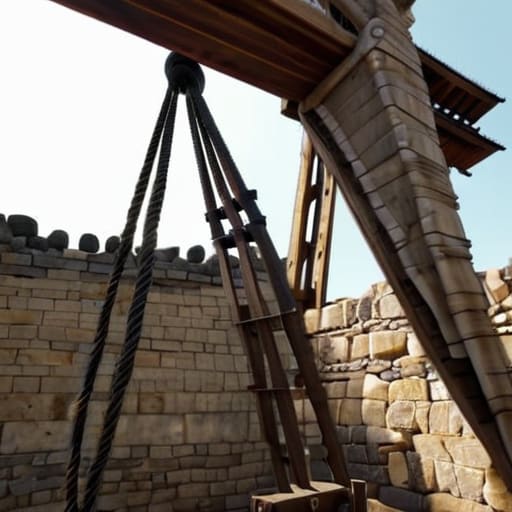
When I stand before a medieval fortification, I don’t just see the stone; I see the ghost of the effort required to place it. To understand the mechanical advantage in hoisting, you have to look at the geometry of the pulleys and the sheer scale of the timber frames that once dominated these sites. Long before we had hydraulic precision, there was a raw, tactile negotiation between gravity and human ingenuity. You can still see the evidence in the way certain heavy lintels were positioned—sometimes they feel slightly off-center, a silent testament to the limitations of a hemp rope or a wooden windlass that was being pushed to its absolute breaking point.
The transition from these manual, labor-intensive systems to the heavy lifting machinery evolution of the industrial era changed more than just our speed; it changed our relationship with weight. We moved from the rhythmic, organic strain of a treadwheel to the calculated, cold efficiency of steel. While I find a certain soul in the old timber rigs, I cannot deny the necessity of modern lifting equipment engineering. Today, we trade the unpredictable groan of seasoned oak for the predictable, measured tension of a sensor-driven hoist. It is a different kind of truth, but one that ensures the stone stays exactly where the architect intended.
The Gravity of Human Intent
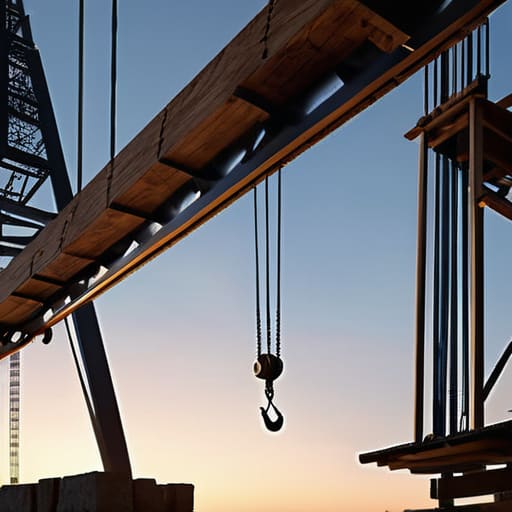
Looking back at the trajectory from the wooden treadwheels of a medieval cathedral to the hydraulic precision of a modern tower crane, it is clear that lifting technology is never just about physics. It is about the negotiation between mass and gravity. We have moved from the rhythmic, human-powered heave of the hoist to the silent, calculated tension of steel cables, yet the fundamental challenge remains the same: how to move a mountain one piece at a time. Whether it is the coarse, hand-hewn stone of a Roman arch or a pre-stressed concrete beam, the way we lift these elements dictates the very geometry of our skyline.
Next time you walk past a construction site, don’t just look at the finished facade or the sleek glass. Look up at the crane, suspended against the sky, and try to see the invisible lines of force it manages every second. Every lift is a testament to our refusal to be limited by our own physical strength. We build upwards because we have mastered the art of defying weight, leaving behind a legacy written in the joints and seams of the structures we leave behind. The machine is merely the tool; the real story is the unyielding ambition of the hands that direct it.