I was crouched in a damp corner of a villa near Syracuse last autumn, my flashlight catching the edge of a faded fresco that looked, at first glance, like a simple decorative border. But as I leaned in closer—the way you do when the dust of a century is still settling in your lungs—I realized the pigment wasn’t just sitting on the plaster; it was fighting it. Most people look at wall painting and illusion and see a pretty picture meant to make a room feel larger or more grand, but they miss the structural deception happening right under their noses. They see a window where there is only a solid wall, failing to notice how the artist used the natural grain of the stone to anchor a lie that has held steady for four hundred years.
I am not here to talk to you about color palettes or how to make your living room look “expensive.” My interest lies in the mechanics of the trick. In this series, I want to show you how these illusions were actually engineered—how the lime, the pigment, and the very texture of the masonry were manipulated to deceive the eye. We are going to look past the beauty to find the deliberate decisions of the craftsmen, learning how to read the surface to understand the bones of the building beneath.
Table of Contents
Where Pigment Masks the Truth of the Masonry
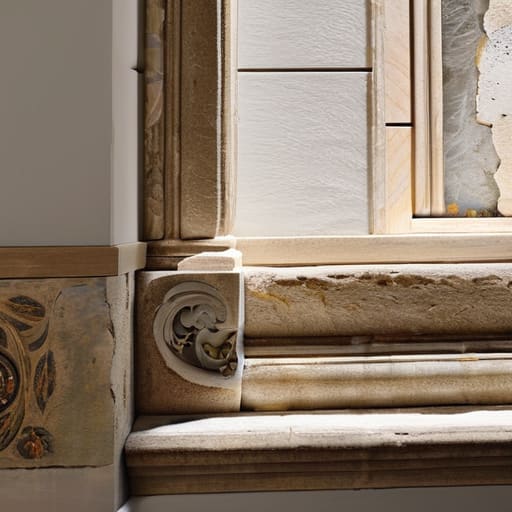
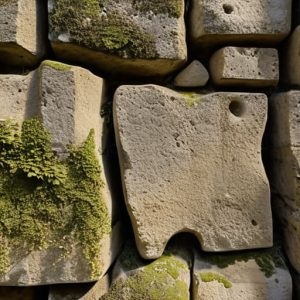
I was in a small, crumbling palazzo near Syracuse last Tuesday when I saw it: a perfectly rendered marble pilaster that, upon closer inspection, was nothing more than a smear of lime and ochre over a particularly uneven patch of rubble masonry. This is the heart of the deception. When we look at trompe l’oeil techniques used in these aging interiors, we aren’t just looking at decoration; we are looking at a strategic cover-up. The artist wasn’t trying to make the room “pretty”—they were trying to reconcile a structural failure with a sense of dignity. They used the pigment to follow the natural irregularities of the stone, turning a jagged seam into a deliberate shadow.
It is a fascinating tension between the honesty of the material and the lie of the brush. In many of the classical fresco methods I’ve surveyed, the painter actually relies on the texture of the substrate to provide the “grit” for the illusion. They don’t fight the wall; they use its bumps and hollows to create the illusion of depth. You can see where the pigment thins out over a crack, mimicking the way light would naturally catch a real relief. It’s a beautiful, calculated dishonesty that tells me more about the budget and the desperation of the original patron than any blueprint ever could.
The Calculated Lie of Optical Illusion Wall Decor
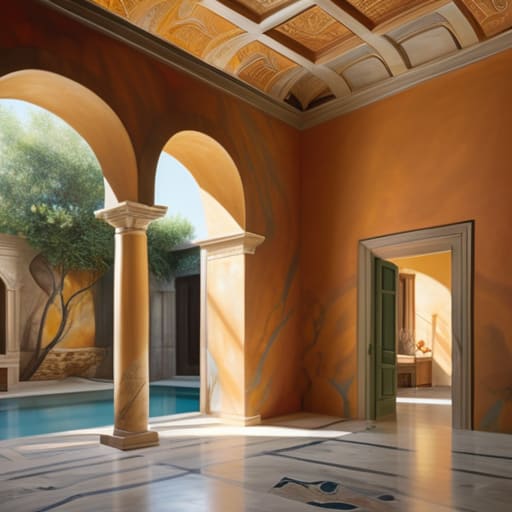
When I stand in a room where the walls seem to recede into a courtyard that doesn’t exist, I don’t see a decoration; I see a structural negotiation. These trompe l’oeil techniques aren’t just about vanity; they are often a clever way to compensate for the limitations of the actual masonry. In many of the Palermitan villas I’ve surveyed, the artists used architectural illusion painting to create the sensation of depth where the stone was actually thick, heavy, and claustrophobic. It is a brilliant, calculated way to cheat the eye into feeling a spatial freedom that the budget or the site simply wouldn’t allow.
There is a specific tension in watching how a painter handles the light source. If you look closely at the edges of a painted pilaster, you can see the exact moment the craftsman decided where the “real” light should fall. They aren’t just applying color; they are simulating physics. I often find myself tracing the transition between the actual plaster and the painted shadow, looking for that slight, tell-tale shift in texture. It’s a deliberate manipulation of perception designed to make the viewer forget the flat, unyielding reality of the wall behind it.
The Ghost in the Gesso
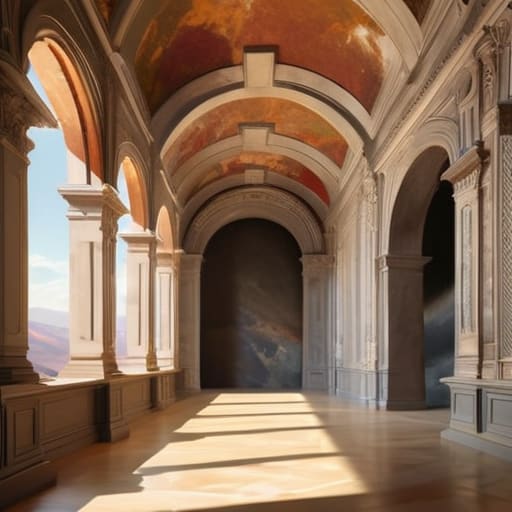
When we step back from these surfaces, we have to acknowledge that these illusions were never just about vanity or decoration. They were structural interventions, much like a well-placed flying buttress or a hidden iron tie, designed to manage the perceived reality of a space. We have seen how the pigment can swallow a structural flaw, how a carefully placed trompe-l’œil can turn a cramped, low-ceilinged room into a soaring nave, and how the craftsman used light and shadow to cheat the very physics of the masonry. To understand these paintings is to understand the tension between the raw material and the human desire for perfection.
Next time you find yourself in a dim chapel or an old palazzo, I urge you to stop looking at the scene depicted on the wall and start looking at the seams where the illusion meets the stone. Look for the moment the brushstroke falters because it hit a crack in the plaster, or where the perspective breaks against a corner that wasn’t quite square. That is where the truth lives. The art is the beautiful lie, but the intersection of paint and masonry is the honest conversation between the artist and the building itself.