I was standing in a damp, salt-crusted cellar near Ravenna last autumn, watching a junior contractor prepare to inject a high-tech, polymer-based resin into a crumbling tuff wall. He was treating the stone like a broken plastic toy rather than a living, breathing organism. It’s the same mistake I see far too often: people chasing the latest “miracle” chemical fix, thinking that expensive, synthetic consolidation techniques can somehow bypass the fundamental laws of masonry. They forget that if you seal a stone too tightly with something that doesn’t breathe, you aren’t saving the building—you are merely accelerating its decay from the inside out.
I’m not here to sell you on a catalog of proprietary resins or overpriced industrial sprays. Instead, I want to talk about what actually works when you respect the original material. In this post, I’ll be sharing the practical, often overlooked methods I’ve used over twenty years of field work—from traditional lime-based injections to the delicate art of structural stitching. My goal is to help you understand the logic of the repair, ensuring that whatever you do today doesn’t become the ruin of tomorrow.
Table of Contents
Reading the Cracks in Geotechnical Consolidation Theory
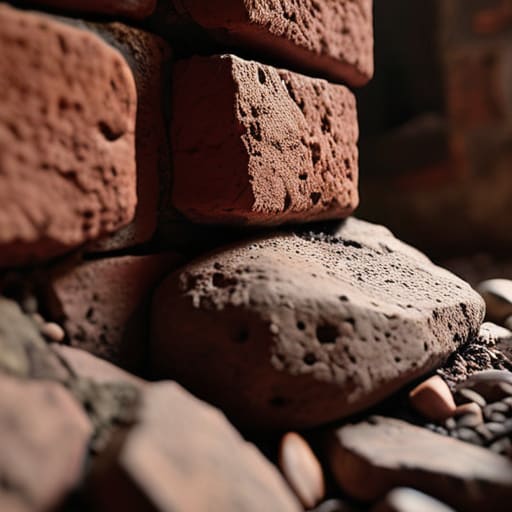
When I am standing in a damp basement in Ravenna, looking at a hairline fracture that seems to migrate upward through the brickwork, I don’t just see a crack. I see a symptom of a conversation happening between the building and the earth beneath it. There is a tendency in modern practice to treat geotechnical consolidation theory as a purely mathematical exercise—a series of load calculations and pressure gradients—but the ground is rarely that cooperative. You can run every simulation in the book, yet the soil has a memory of its own, a way of shifting that defies the neat lines of a blueprint.
The mistake many engineers make is assuming that foundation settlement repair is a one-time event, a quick fix to stop the bleeding. I’ve seen too many projects where they pumped in resins to satisfy a deadline, only to watch the building settle further a year later because they ignored the underlying moisture migration. Real ground improvement engineering requires a certain level of humility. You have to listen to what the subsidence is telling you. Is it a sudden shift from a recent excavation nearby, or is it the slow, rhythmic breathing of a clay-rich soil reacting to a changing water table? If you don’t respect that rhythm, you aren’t restoring a building; you’re just temporarily stalling its inevitable descent.
Where the Earth Forgets Its Own Strength
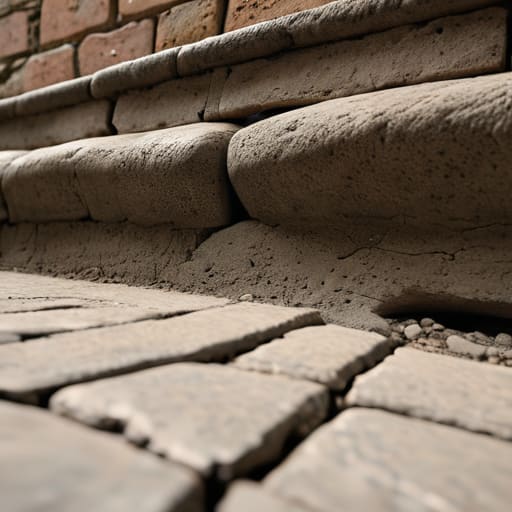
I remember a small, 16th-century palazzo near the coast of Ravenna where the subsidence was so aggressive it felt like the building was slowly exhaling into the silt. When we arrived, the diagonal shear cracks in the ground-floor masonry weren’t just structural failures; they were symptoms of a landscape that had lost its memory of being solid. In these cases, you realize that the most sophisticated structural integrity reinforcement is useless if you haven’t first addressed the shifting ground beneath the footings. You cannot fix the stone if the earth refuses to hold it.
We spent weeks analyzing the way the alluvial deposits were behaving under the weight of the masonry. It wasn’t a matter of simple underpinning; we had to look at more complex soil stabilization methods to create a reliable platform. We eventually opted for a series of controlled chemical grouting processes to fill the voids in the subsoil, essentially re-knitting the earth together. It is a strange, invisible kind of architecture. Unlike a beautiful Corinthian capital or a well-laid ashlar course, this work is entirely hidden from the eye, yet it is the only reason the walls above can continue their slow, silent conversation with the sky.
The Weight of What Remains
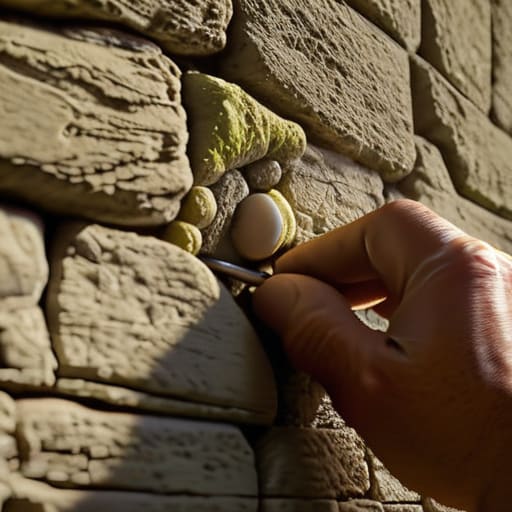
We cannot treat consolidation as a mere mechanical checklist or a way to force a building into submission. Whether we are dealing with the shifting sands of a geotechnical failure or the slow, microscopic decay of ancient lime mortar, the goal isn’t to overwrite the past with modern polymers. It is about understanding the dialogue between the substrate and the intervention. We have seen how the earth can lose its grip and how even the most sophisticated injection techniques can fail if they ignore the original logic of the masonry. Real conservation requires us to respect the inherent physics of the structure, ensuring that our repairs don’t become the very stressors that eventually tear the building apart.
In the end, my work—and yours—is a quiet act of listening. When I stand before a crumbling facade, I am not just looking for structural voids; I am looking for the intent of the mason who laid that stone five hundred years ago. Our job is to provide the stability necessary for that story to continue, without silencing the original voice of the maker. We are not just fixing cracks; we are preserving the continuity of human effort. If we do our jobs well, the next generation won’t see our interventions as scars, but as the invisible stitches that allowed the history to hold together.