I was kneeling in a damp villa outside of Syracuse last autumn, my knees aching against the grit, when I realized how much we get wrong about the past. Most people walk through a museum and see roman mosaics and floors as these untouchable, finished masterpieces of art—static things meant to be admired from a distance. But when you’re actually down there, tracing the uneven dip in a limestone bedding layer or spotting where a worker’s hand slipped while setting a row of tesserae, the “art” disappears. What’s left is something much more interesting: a series of human decisions made in the heat and the dust.
I am not here to give you a sanitized lecture on imperial aesthetics or the grand sweeping history of the Empire. Instead, I want to show you how to actually read these surfaces. We are going to look past the patterns to find the truth in the mortar, the grit, and the structural logic of how these floors were actually composed. I promise to skip the romanticized fluff and focus on the technical reality of the craftsmanship, because that is where the real story of the Roman world is written.
Table of Contents
Decoding the Intent in Classical Mosaic Iconography
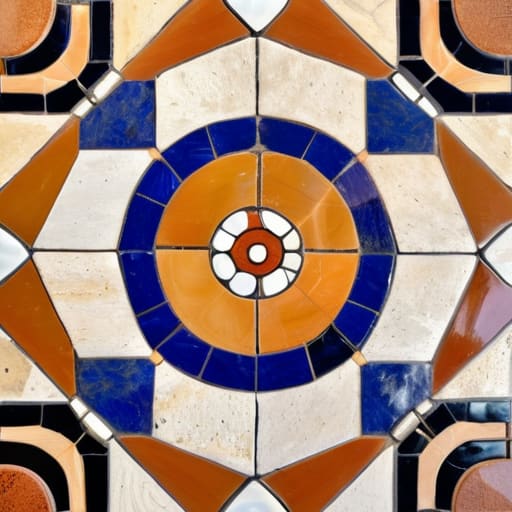
When I stand over a site, I don’t just see the image; I see the hierarchy of labor. In many roman villa floor decorations, the iconography isn’t just a decorative choice—it is a map of the room’s social function. You can tell if you are standing in a formal triclinium or a secondary service area by the way the classical mosaic iconography shifts from complex, narrative scenes to simple, repetitive geometric borders. In the grander rooms, the figures demand your eye, but if you look closer at the edges, you’ll see where the complexity drops off. It’s a silent dialogue between the patron’s ego and the reality of the workshop’s stamina.
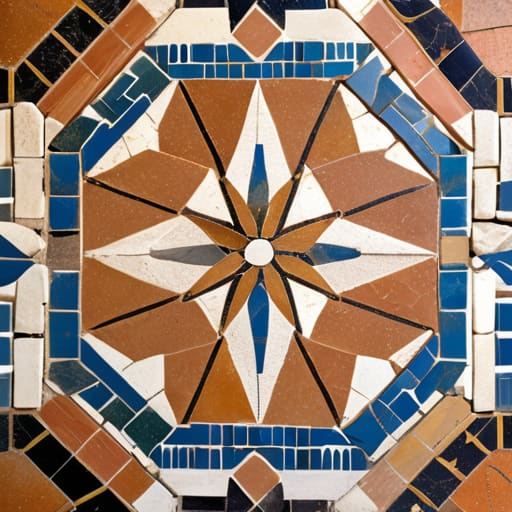
I find myself particularly drawn to the way the tesserae composition and colors dictate the movement of the viewer. A master craftsman wouldn’t just pick a color because it looked pleasing; they chose it to guide your gaze across a specific architectural axis. You can see the intent in the way certain hues are used to create depth or shadow, often using local limestone to mimic the expensive imported marbles that the budget simply wouldn’t allow. It is in these small, calculated shifts in material that the true character of the space reveals itself.
The Hidden Narrative of Roman Villa Floor Decorations
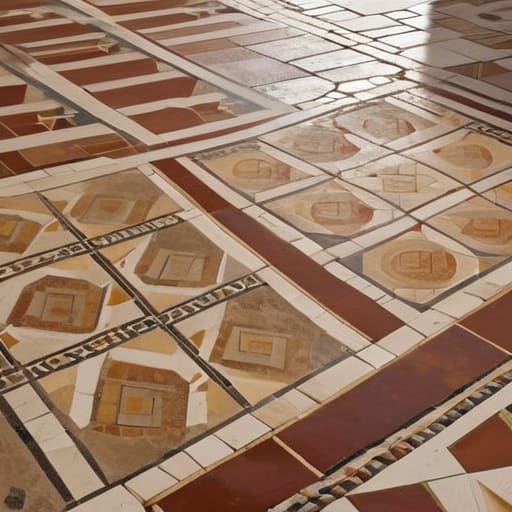
When I walk through the peristyles of a villa in Pompeii or the more weathered remains near Ravenna, I don’t look at the central figure first. I look at the margins. It is in the way the ancient roman floor patterns transition from a grand, central scene to a repetitive geometric border that you truly begin to understand the room’s function. A formal dining room, or triclinium, demands a certain rhythmic discipline in its layout, whereas a more private, domestic space might allow for a looser, almost hurried application of the stones.
I often find myself kneeling to examine the opus tessellatum techniques used in these transitional zones. You can see the shift in energy—the way the craftsman might have used larger, more irregular pieces to fill a secondary space, saving the most precise, tiny cubes for the focal point. It isn’t just about decoration; it is a map of resource management and labor. By studying the tesserae composition and colors, I can often tell where a single workshop ran out of a specific marble or where a client decided, mid-project, that a certain room simply didn’t warrant the premium imported limestone. The floor isn’t just a surface; it is a ledger of every decision made on that site.
The Weight of the Stone
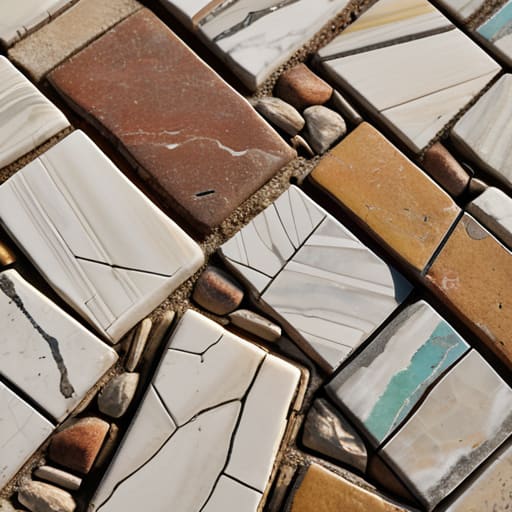
When we step onto these surfaces, we aren’t just walking on decoration; we are walking on a complex, layered sequence of decisions. We have seen how the choice of tesserae—from the expensive imported marbles to the local limestone—reveals the exact moment a patron’s ambition met their actual financial reality. By examining the bedding mortar and the way the patterns shift to accommodate a structural irregularity, we move past the superficial beauty of the image and begin to understand the physicality of the labor. These floors are not static art; they are the fossilized remains of a construction process that demanded precision, patience, and a deep understanding of material behavior.
I often find myself kneeling on a dusty site, my camera lens inches from a seam where two different workshops clearly met, and I am struck by the same realization every time. A mosaic is a dialogue between the person who dreamed the design and the person who actually pressed the stone into the lime. As you walk through the ruins of a villa or a bath complex, I urge you to stop looking at the pattern and start looking at the joints. Look for the slight unevenness, the tool marks, and the way the grout holds the story together. That is where you will find the true pulse of the past, hidden in the very grit beneath your feet.