I was standing in a humid courtyard in Palermo last Tuesday, squinting at a modern facade that tried far too hard to look “timeless.” It was one of those recent attempts at the classical orders revived, but instead of the grace of a well-proportioned Ionic capital, I saw nothing but a hollow, machine-cut imitation that felt utterly lifeless. There is a specific kind of frustration that comes when architects treat the orders like a decorative skin to be pasted onto a building, rather than understanding the structural logic and the rhythmic weight that makes them work in the first place.
I am not interested in the glossy, superficial trend cycles you see in design magazines. In this series, I want to pull back the curtain on what actually happens when we attempt to bring these ancient languages back into a modern context. We are going to look past the pretty pictures and focus on the material reality—the way a column actually meets its plinth, the honesty of the stone, and the technical precision required to make a revival feel earned rather than stolen.
Table of Contents
Tracing the Ancient Greek Column Design Through Time
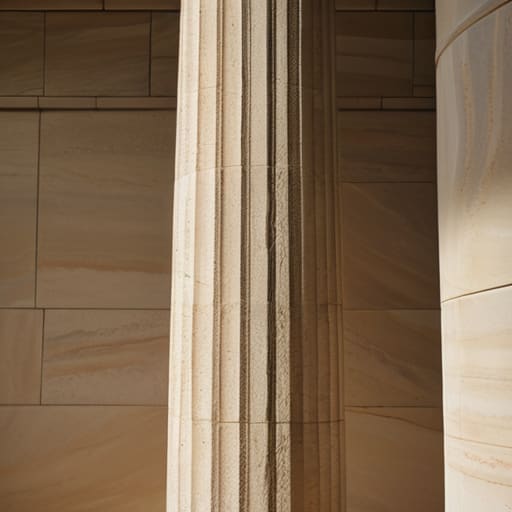
When I walk through a site, I don’t look at the façade first; I look at the shaft. To understand how we arrived at our current aesthetic, you have to look at the DNA of ancient Greek column design. It wasn’t just about aesthetics; it was a rigorous mathematical language. You can see it in the way a Doric column meets its base—it’s not just a revival, it’s a deliberate choice made in stone to convey weight and stability. Even as we moved through the centuries, that fundamental logic of architectural proportions and symmetry remained the invisible scaffold upon which everything else was hung.
The transition from the sturdy, unadorned Doric to the more fluid Ionic and the lush, leafy Corinthian styles tells a story of changing human appetites. I often find myself tracing the subtle shifts in how these orders were interpreted during the Renaissance. Architects weren’t just copying old drawings; they were obsessing over the rhythm of the fluting and the exact taper of the entasis. They were trying to recapture a sense of perfect balance that felt lost. When you see these elements resurfacing today, they aren’t just decorative flourishes; they are echoes of a structural logic that has survived two millennia of decay.
The Echo of Neoclassical Architecture History in Our Streets Bonds
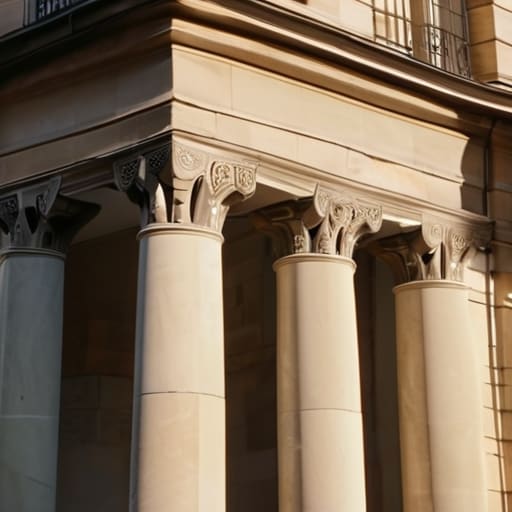
When I walk through the center of a city like Turin or even certain quarters of Palermo, I don’t see “revivals” as abstract concepts; I see them in the way the light hits a specific molding. The Neoclassical period wasn’t just a stylistic whim; it was a rigorous, almost obsessive attempt to re-apply renaissance architectural principles to the urban fabric of the 18th and 19th centuries. You can see it in the way a street corner is handled—there is a sudden, disciplined insistence on architectural proportions and symmetry that feels almost startling compared to the organic, messy growth of the medieval layers beneath.
I often find myself stopping to trace the transition where a heavy, austere base meets a more delicate shaft. In these Neoclassical stretches, the architects weren’t just copying the past; they were trying to impose a sense of permanent order on a rapidly changing world. They leaned heavily into the Doric, Ionic, and Corinthian styles, but they did so with a specific, restrained logic. It’s in the tightness of the joint between the entablature and the column that you feel the tension—a desire to make the stone look as though it is obeying mathematical laws rather than gravity. It’s a quiet, disciplined echo that still dictates how we perceive stability and authority in our modern streets.
The Living Language of Stone
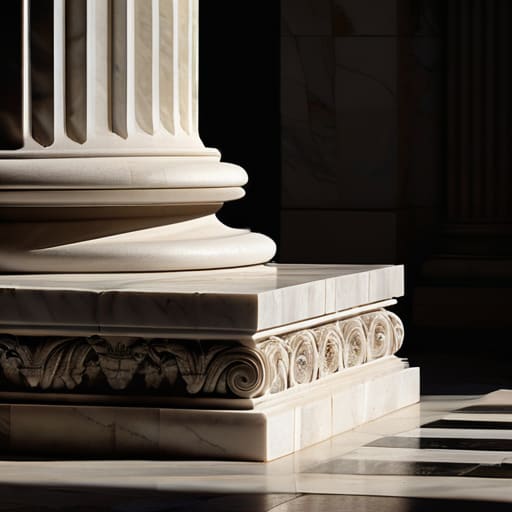
When we look back at how the Greek proportions evolved into the Neoclassical facades that line our piazzas, we aren’t just looking at a repetitive fashion cycle. We are seeing a continuous dialogue between the hand of the mason and the geometry of the mind. From the strict, rhythmic discipline of the early Doric to the more fluid, decorative grace of the later orders, each era has used these columns to signal something about its own stability and values. It is never just about the aesthetic; it is about the structural logic and the way a builder chooses to express weight, tension, and grace through a single, carefully carved joint.
As I walk through the streets of Ravenna or Palermo, I find myself less interested in the grand silhouette of a building and more captivated by the way a column meets its plinth. The revival of these orders isn’t a retreat into the past, but rather a way of speaking a language that has already proven it can hold the weight of history. I hope that next time you pass a classical facade, you don’t just see a pretty decoration. Instead, try to look for the decisions of the architects hidden in the stone. Look for the way the light catches a flute or how the mortar binds the dream to the earth. That is where the building truly begins to speak.