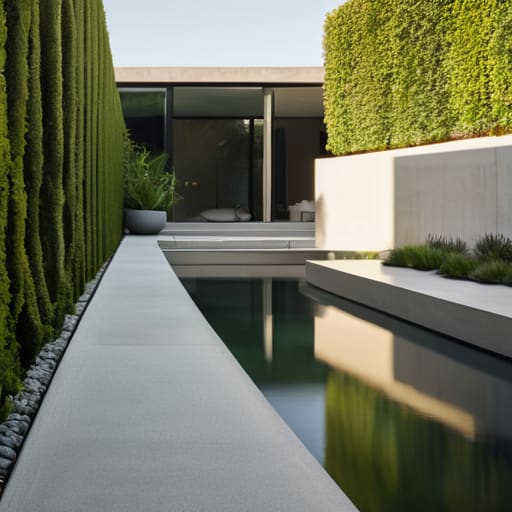
I was standing in a villa near Syracuse last autumn, tracing the hairline fractures in a travertine retaining wall, when I realized how much we get wrong about the relationship between structures and their surroundings. Most people treat gardens and architectural design as two separate entities—one a box of stone, the other a collection of plants—as if they aren’t part of the same continuous dialogue. We spend thousands on ornamental shrubs only to realize they have no business sitting against a lime-washed wall, or we build rigid, sterile terraces that feel like they were dropped from the sky rather than growing from the earth.
I am not here to talk to you about “curb appeal” or the latest trends in landscape lighting. Instead, I want to show you how to look at the tectonic truth of a space. We are going to explore how the weight of a stone plinth dictates the movement of a hedge, and how the moisture in your soil is already telling you exactly how your masonry should behave. My goal is to help you understand the physical logic that connects a building to its ground, so you can stop decorating and start building something that actually belongs.
Table of Contents
Reading the Intent in Spatial Organization in Gardens
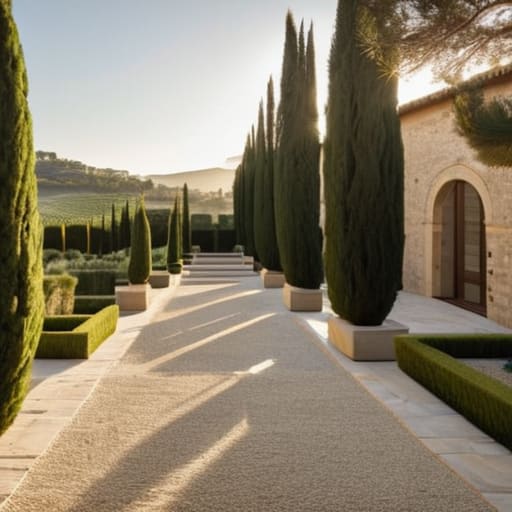
When I walk through a formal villa in the Tuscan hills, I don’t look at the blooms first; I look at the axes. You can feel the weight of the spatial organization in gardens by how the central stone walkway dictates the movement of the eye toward the horizon. It isn’t just about aesthetics; it’s about a structural dialogue. The way a gravel path transitions into a paved terrace isn’t a mere convenience—it is a calculated decision to define where the “room” ends and the “wild” begins. I often find myself tracing the line where a limestone retaining wall meets the soil, looking for that precise moment where the architect’s control yields to the organic.
In many of the historic sites I’ve surveyed, the hardscape and softscape integration is where the true tension lies. A well-conceived garden isn’t an afterthought to the house; it is an extension of the floor plan, projected outward into the landscape. I look for the ghost of the building’s footprint in the way a hedge is clipped or how a stone bench is anchored into a slope. If the masonry feels heavy and permanent while the greenery feels ephemeral, you are seeing a deliberate attempt to ground the structure within the shifting seasons.
Where the Foundation Meets the First Root
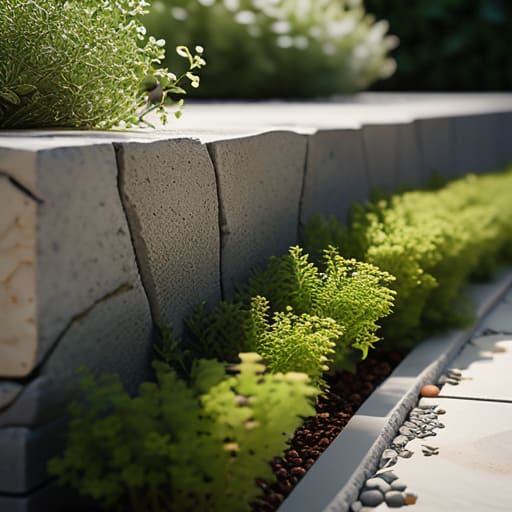
I often find myself kneeling at the edge of a terrace, not to admire the view, but to trace the line where the travertine meets the soil. It is in this specific tension—the exact point of contact—that the true success of hardscape and softscape integration is revealed. When a designer treats a stone retaining wall as an afterthought, a mere container for dirt, the structure feels parasitic. But when you see a limestone plinth that has been slightly recessed to allow a creeping thyme to spill over its lip, you are witnessing a dialogue. It is a deliberate decision to soften the architectural rigidity, allowing the masonry to feel as though it is emerging from the earth rather than being forced upon it.
In my surveys, I look for the subtle shifts in grade that signal a deep understanding of landscape architecture principles. A well-conceived threshold doesn’t just stop; it transitions. I’ve seen Roman-style garden walls where the mortar was intentionally mixed with local aggregate to mimic the color of the surrounding cliffside, creating a seamless visual bridge. When the foundation is treated with this level of respect, the transition from the built environment to the organic one becomes an intentional act of composition, rather than a clumsy collision of materials.
The Threshold Between Stone and Soil
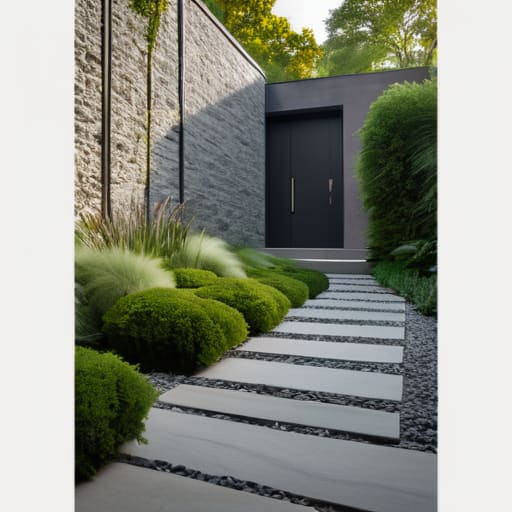
When we step back from the technicalities of load-bearing walls and root systems, we see that a garden is never merely an ornament added to a structure; it is the final, living layer of the building’s own skin. Whether it is the way a limestone plinth manages the moisture of a shaded terrace or how a gravel path dictates the rhythm of movement toward a heavy oak door, the integration is found in the deliberate transitions. We have seen that the most successful designs do not fight the landscape but rather negotiate with it, respecting the structural logic of the masonry while allowing the organic chaos of the plant life to soften the edges of human geometry.
Ultimately, I hope you stop looking at gardens as separate from the architecture and start seeing them as the connective tissue that holds our built environment to the earth. The next time you walk through a courtyard or sit beside a stone wall, don’t just admire the bloom of a rose or the symmetry of a hedge. Look instead at the joint where the paving meets the dirt, or the way the light hits a weathered corner. That is where the real conversation happens—between the permanence of the stone and the transience of the leaf—and that is where the true soul of a place resides.