
I was standing in a crumbling courtyard near Syracuse last autumn, watching a designer try to explain how a high-pressure, recirculating pump system would “transform the atmosphere” of a sixteenth-century stone basin. It was nonsense. They were trying to force a modern, mechanical ego into a space that demanded a conversation with gravity. Most people approach water features and hydraulics as a way to buy a spectacle, focusing on the loud, expensive splash of a fountain rather than the quiet logic of how the water actually moves through the stone. We have become obsessed with the electricity required to make water dance, completely forgetting that the most profound water movements are those that feel inevitable.
I am not here to sell you on high-tech pumps that will inevitably leak and fail within three seasons. Instead, I want to show you how to look at the structural soul of a water system. We are going to strip away the marketing gloss and talk about the actual mechanics: the slope of a channel, the weight of the stone, and the way pressure can be managed through clever masonry rather than just more horsepower. I will share what I have learned from decades of seeing what lasts and what merely performs for a moment.
Table of Contents
The Secret Language of Water Circulation Systems
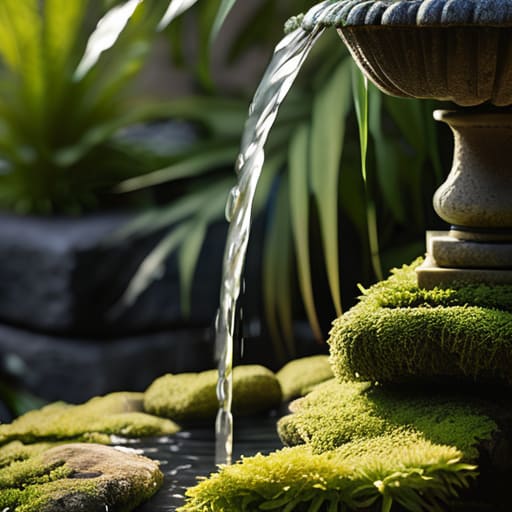
When I walk through an old villa garden, I don’t look at the basin first; I look for the subtle depressions in the stone that suggest where the water used to travel. Even in modern installations, the true character of a piece is defined by its hidden anatomy. You cannot simply drop a device into a pool and expect a soul to emerge. The way a stream breaks against a rock or how a spray catches the light is entirely dictated by the invisible tension of hydrostatic pressure in fountains. If the balance is off, the water feels heavy, or worse, mechanical—a sterile loop that lacks the rhythmic pulse of a living thing.
To master this, one must move past the surface aesthetics of landscape water design and obsess over the unseen. I often find myself tracing the path of a pipe, thinking about the subtle choreography of the flow. It isn’t just about moving volume; it is about understanding how the weight of the water itself interacts with the vessel. When you study the mechanics of the circulation, you realize that the most beautiful element isn’t the water you see, but the precise, controlled way it is forced to move by the hands of the designer.
Where Fluid Dynamics for Garden Ponds Begin
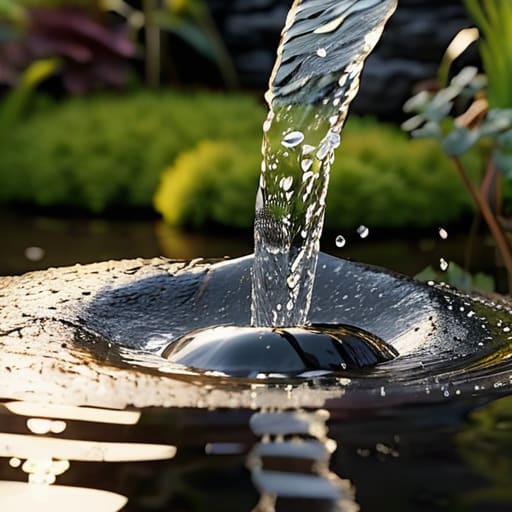
When I stand beside a neglected garden pond, I don’t see a stagnant pool; I see a failure of movement. Most people look at the surface, but I look at the edges, searching for the subtle signs of where the energy is being lost. To truly understand fluid dynamics for garden ponds, you have to stop thinking about the water as a static element and start seeing it as a constant negotiation between gravity and mechanical force. It begins the moment you consider how the volume of the basin will react to the sheer weight of the liquid pressing against its boundaries.
If you are planning a new installation, you cannot simply drop a motor into a hole and hope for the best. You have to respect the physics of hydrostatic pressure in fountains and the way it dictates the height and rhythm of every spray. I often find that even the most beautiful stone basins fail because the designer ignored the invisible tension exerted by the water itself. Whether you are working with a simple recirculating stream or a complex tiered system, the success of the landscape water design relies entirely on the invisible math happening beneath the surface—the way the pressure balances against the containment.
The Weight of the Water
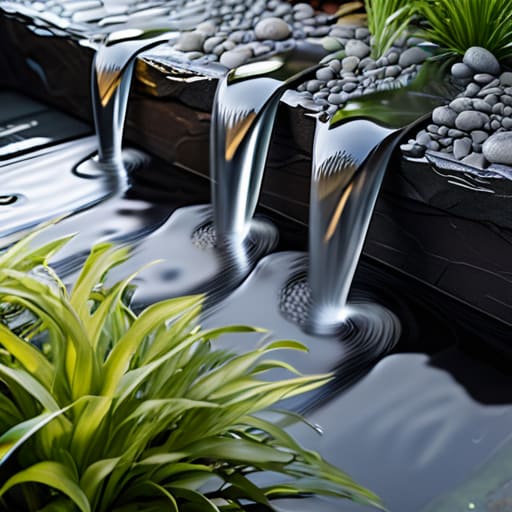
We have traced the path from the invisible pressure within a copper pipe to the way a stone lip catches a stream, but the technicalities are merely the skeleton. Whether we are discussing the delicate equilibrium of a garden pond’s filtration or the calculated descent of a modern spillway, the lesson remains the same: hydraulics is not an afterthought to be tucked behind a wall. It is the very circulatory system of the site. If the pump is poorly matched to the head pressure, or if the overflow is miscalculated by even a few millimeters, the entire architectural intent collapses into a mess of erosion and stagnant pools. You cannot separate the beauty of the water from the rigorous physics that keeps it moving.
When you walk past a fountain or a rill, I ask you to stop looking at the surface tension and start looking for the intention. Look for the way the stone has been dressed to receive the flow, or how the subtle slope of a basin directs the eye. There is a profound, quiet dignity in a system that works in perfect silence, where the mechanics are hidden but the result is felt in every ripple. A well-designed water feature doesn’t just decorate a space; it breathes life into the masonry, proving that even the most fluid elements can be anchored by thoughtful engineering.