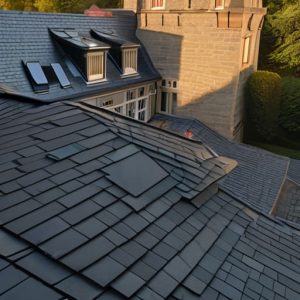
I was surveying a mid-century renovation in Ravenna last Tuesday when I found myself staring, not at the beautiful frescoes, but at the junction where a new drywall partition met an old stone lintel. It was a mess of cheap gypsum and plastic shims—a hollow, soulless fix that felt like a personal insult to the masonry. Everyone wants to talk about interest rates or zoning laws when discussing contemporary housing challenges, but they always miss the physical truth of it. We are building houses that lack structural integrity, opting for fast, superficial layers that hide the fact that we’ve forgotten how to actually compose a room that lasts more than a decade.
I’m not here to give you a lecture on macroeconomics or urban planning theories that only exist in academic journals. Instead, I want to pull back the cladding and look at the material reality of why our modern living spaces feel so flimsy and disconnected. I will show you how the shift from heavy, honest materials to lightweight, disposable assemblies is at the very heart of our current crisis. We are going to look past the marketing gloss to understand why the way we build today is failing the way we actually live.
Table of Contents
Urbanization and Housing Shortages a Widening Structural Gap
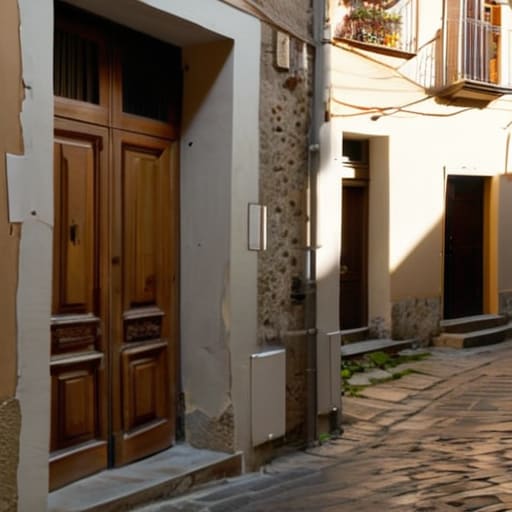
When I walk through the center of any major Italian city, I don’t just see crowds; I see the friction between old walls and new demands. We talk about urbanization and housing shortages as if they are mere statistics on a spreadsheet, but you can feel the tension in the very grain of the neighborhood. It’s visible in the way historic residential blocks are being hollowed out, their internal structures stripped and repurposed for short-term rentals, leaving the actual fabric of the community to fray at the edges.
The problem isn’t just that there are too many people; it’s that the way we manage our space has become disconnected from how people actually live. I see it in the rigid, often outdated zoning laws and housing supply constraints that prevent us from breathing life into underutilized spaces. Instead of finding ways to integrate modern living into our existing masonry, we create these artificial scarcity loops. We end up with a city that looks beautiful in a postcard but functions like a museum—static, expensive, and increasingly impossible to inhabit for anyone who doesn’t hold a significant inheritance. It is a structural failure that starts long before the first brick is laid.
Rising Real Estate Costs the Mortar That No Longer Holds
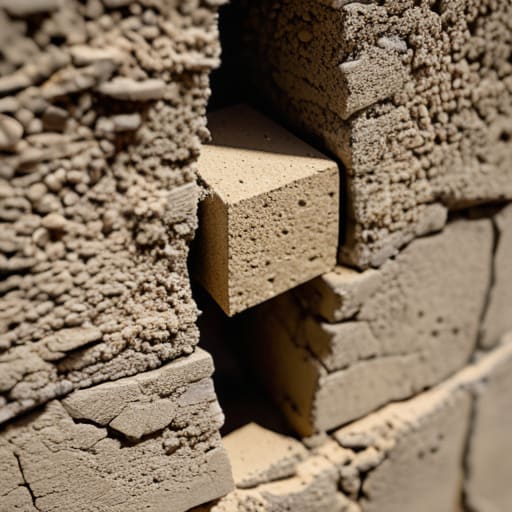
I often find myself tracing the edges of a doorway, feeling for the difference between a hand-cut stone and a machine-pressed block, and I realize that the economics of construction have become just as rigid as the materials themselves. When I look at the current market, rising real estate costs act like a poor-quality, sandy mortar; they provide a veneer of growth, but they lack the binding strength required to hold a community together. We are seeing a trend where the sheer cost of land and materials forces developers to prioritize density over durability, often sacrificing the very structural integrity that allows a building to age gracefully.
It isn’t just about the price of the bricks, though. The way gentrification impacts on communities manifests in our cities is visible in the very fabric of our neighborhoods. You see it when a historic apartment block is gutted, its soul stripped away to make room for high-end, thin-walled units that serve investors rather than residents. We are losing the “middle” of our architecture—the sturdy, functional spaces that once housed the heartbeat of the city. When the cost of entry becomes too high, the social mortar dries up and cracks, leaving us with beautiful shells that lack any real connection to the people who walk past them every day.
The Seams of the Future
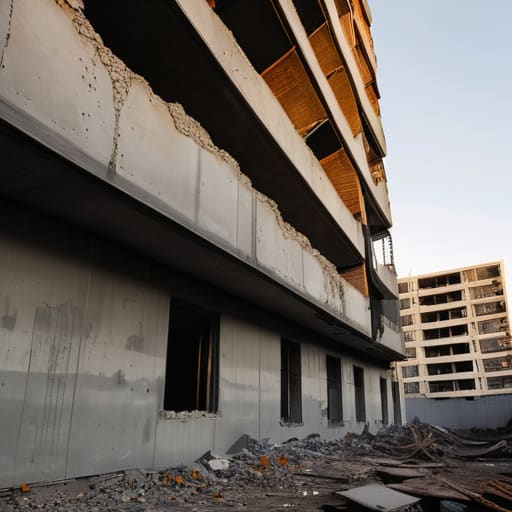
When we look at the data, it is easy to get lost in the abstract statistics of shortages and inflation, but as an architect, I see the crisis differently. It is visible in the structural imbalance between the density we need and the quality we are actually providing. We have seen how the rising cost of materials and the rush toward urbanization have created a landscape where the “mortar” of our social fabric is thinning. We are building faster and cheaper, often sacrificing the long-term integrity of our neighborhoods for the immediate gratification of a quick return. If we continue to ignore the fundamental disconnect between economic demand and the actual necessity for durable, livable spaces, we aren’t just facing a housing crisis—we are facing a crisis of permanence.
But there is a way forward if we change our gaze. Just as I study the way a Roman arch distributes weight to ensure it stands for millennia, we must learn to design cities that distribute opportunity and stability. We need to stop viewing housing as a mere commodity to be traded and start seeing it as the essential framework of human life. If we begin to prioritize the quality of the joinery—the way policy, community, and construction meet—we can build something that lasts. We must build not just for the next fiscal quarter, but for the generations who will walk these streets long after we are gone.