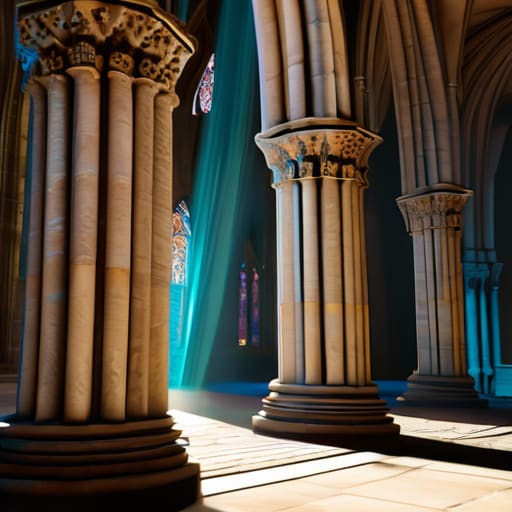
I remember standing in a damp, salt-crusted courtyard in Palermo last autumn, watching a junior technician fuss over a tripod while he talked incessantly about “data density” and “point cloud optimization.” He was so preoccupied with the sheer volume of digital noise that he didn’t even notice the slight undulation in the limestone lintel right above his head—a clear sign of a settling foundation that no software update could ever fix. We often get so lost in the high-tech shimmer of laser scanning historic buildings that we forget the technology is supposed to be a servant to the stone, not a replacement for the eye.
I am not here to sell you on the magic of expensive gadgets or the latest software hype. Instead, I want to talk about how we use these tools to actually listen to what the masonry is saying. In this series, I’ll share my practical, unvarnished approach to integrating digital documentation with the tactile reality of a site. We will look at how to translate those millions of points into something meaningful: a way to capture the true soul of a joint or the exact decay of a mortar bed, ensuring the digital record serves the physical survival of the building.
Table of Contents
The Silent Language of Architectural Heritage Documentation
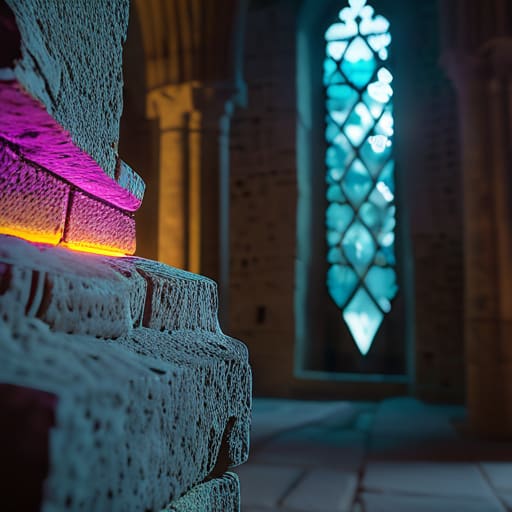
When I walk into a site, I am looking for the discrepancies—the slight lean of a column or the way a lintel has settled into its bed of lime mortar over four centuries. Traditional methods of recording these nuances often feel like a compromise, a struggle to translate a three-dimensional soul into a two-dimensional drawing. This is why I have become so enamored with 3D reality capture for preservation. It isn’t about replacing the hand-drawn section, but about capturing the unfiltered truth of a structure. When we use terrestrial laser scanning technology, we aren’t just generating a cloud of points; we are documenting the very irregularities that tell us how a building has breathed and shifted through time.
This level of detail is essential for meaningful architectural heritage documentation. If we only record the “ideal” geometry, we lose the history held in the deviations. By creating a high-fidelity digital record, we move closer to developing a true digital twin for heritage conservation. This allows us to see the building not as a static monument, but as a living organism. I find that when you look closely at the data, you can see the ghosts of the original builders in the subtle undulations of the stone, preserved forever in a digital space where the smallest crack becomes a vital piece of the narrative.
Capturing the Truth Through 3d Reality Capture for Preservation
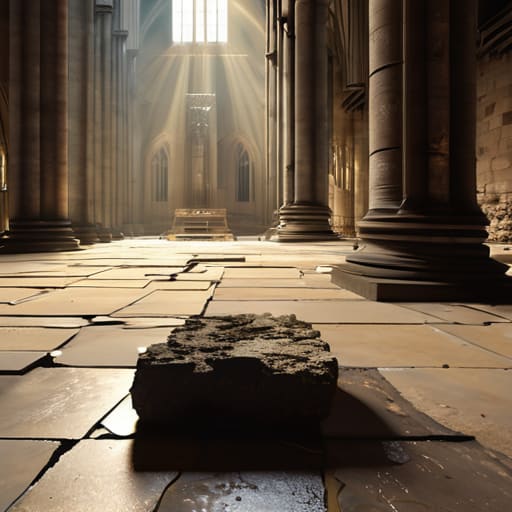
When I stand in the center of a crumbling nave or a narrow Sicilian alleyway, I am acutely aware of the gap between what my eyes see and what a drawing can truly capture. Traditional methods, as much as I love my calipers and my sketchbook, often flatten the soul of a structure. This is where 3D reality capture for preservation changes the conversation. It isn’t about replacing the architect’s eye; it’s about providing a level of fidelity that honors the complexity of the site. We aren’t just creating a geometric model; we are documenting the deflection of a floor beam or the subtle bulge in a centuries-old wall that tells us exactly where the foundation is struggling.
By integrating this data into a digital twin for heritage conservation, we move beyond static snapshots. We create a living, breathing record where every stone’s position is locked in time. If a crack widens by even a millimeter over the next decade, the model will tell us. It allows us to see the building not as a finished object, but as a continuous, evolving process of decay and repair. For me, the real magic happens when we can overlay these high-precision scans with our historical knowledge, finally seeing the invisible dialogue between the original mason’s intent and the inevitable weight of time.
Beyond the Digital Twin
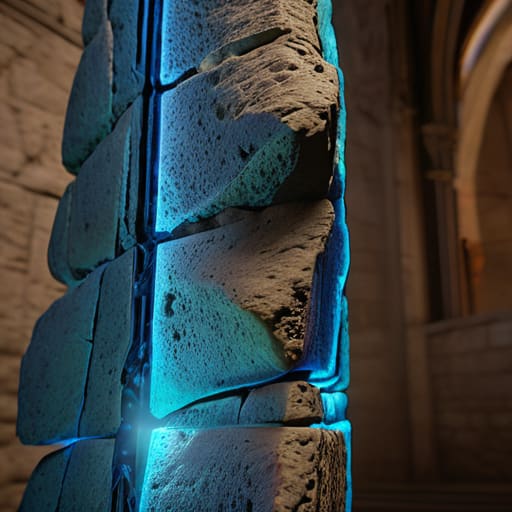
At the end of the day, laser scanning isn’t about replacing the architect’s eye or the mason’s intuition; it is about providing us with a more precise lens. We have seen how these scans move us beyond mere surface aesthetics, allowing us to document the micro-deviations in a wall’s plumb or the subtle decay within a complex stone joint. By integrating this high-fidelity data with our traditional understanding of materials, we move from guesswork to a form of forensic architecture. We aren’t just creating pretty digital models; we are building a rigorous, mathematical foundation that ensures our interventions are based on the reality of the structure, rather than an idealized, smoothed-over version of history.
As I sit here with my sketchbook, looking at the way light hits a weathered cornice, I am reminded that every scan we take is a bridge between eras. We use these advanced tools to listen more closely to the decisions made by craftsmen centuries ago, ensuring their material logic survives the next hundred years of weathering. Technology should never distance us from the stone; it should bring us closer to the truth of it. When we document a building with this level of precision, we aren’t just preserving a shape—we are guarding the continuity of human labor and the silent, beautiful stories written in mortar and grit.