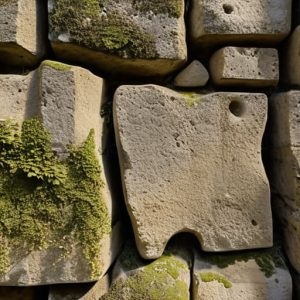
I was kneeling in the dust of a crumbling site near Ostia last autumn, my knees aching and my camera lens fogging, when I saw it again: that stubborn, defiant refusal of the material to simply give up. Most people look at a ruin and see a tragedy of decay, but when I look at the way the lime has calcified around the volcanic aggregates, I see a masterclass in chemistry. Everyone wants to talk about the grand scale of the Pantheon, but they miss the microscopic truth of why roman concrete lasted through centuries of salt spray and seismic shifts. It isn’t some magical, lost alchemy; it is the result of very specific, very deliberate decisions made by workers who understood their materials better than we do today.
I’m not here to give you a sanitized history lesson or a list of vague superlatives. Instead, I want to take you into the seams and the joints to look at the actual mechanics of the mix. We are going to strip away the romanticism and look at the grit, the ash, and the way these ancient builders embraced the very cracks that we modern engineers try so desperately to prevent.
Table of Contents
The Poetic Violence of the Pozzolanic Reaction Explained
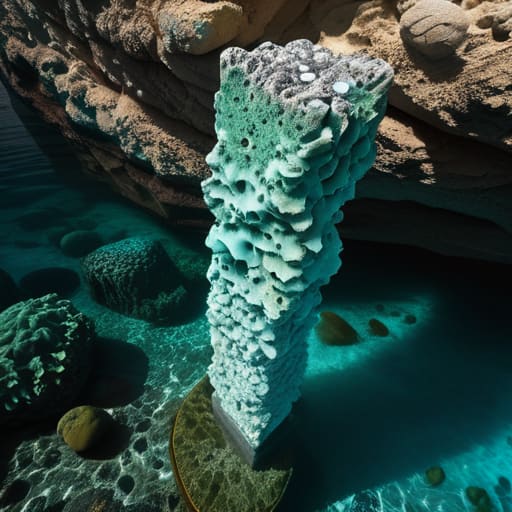
I call it a kind of “poetic violence” because it isn’t a passive process. Most modern cement is a static thing; once it sets, it begins its slow, inevitable march toward decay. But when I examine the core of ancient Roman maritime structures, I see something much more aggressive and alive. The secret lies in the pozzolanic reaction explained through the interaction between lime and the specific volcanic sands found near Naples. It isn’t just a mixture that sits there; it is a chemical engine.
When seawater infiltrates a crack in these ancient piers, it doesn’t just erode the stone. Instead, it triggers a secondary reaction with the leftover volcanic material. This is the magic of their self-healing concrete properties: the water dissolves certain minerals, which then recrystallize into new, sturdy structures within the fissure itself. You aren’t just looking at a wall; you are looking at a material that uses its own environment to repair its wounds. To see these tiny, microscopic crystals of calcium-aluminum-silicate-hydrate blooming inside a fracture is to understand that the Romans didn’t just build for stability—they built for perpetual motion.
Tracing the Volcanic Ash Reaction Through the Centuries
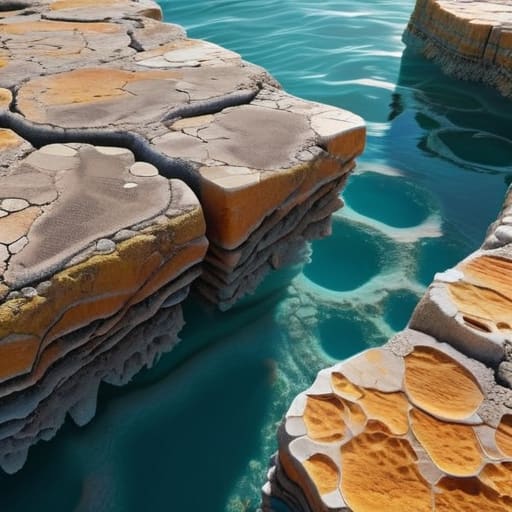
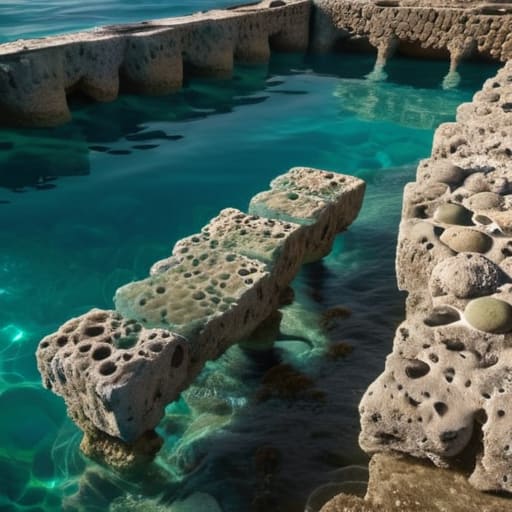
I remember standing on a pier near Baiae last autumn, my fingers tracing the pitted, salt-crusted surface of a pier that had been submerged for nearly two millennia. Most people see a ruined block of stone; I saw a chemical battlefield. When you examine the microscopic structure of these ancient Roman maritime structures, you realize they aren’t just surviving the sea—they are actively interacting with it. The seawater isn’t an enemy to this material; it is a catalyst.
As the salt water percolates through the microscopic cracks, it triggers a slow-motion alchemy. This is where the real magic happens: the water dissolves the remnants of the volcanic ash, facilitating the growth of new mineral crystals within the voids. This process of self-healing concrete properties means that the very environment that should destroy the structure is actually reinforcing it. By the time I finish my sketches, I am always struck by the same thought: the Romans didn’t just build for the moment; they designed a material that could evolve with its environment. It is a testament to their understanding of the volcanic ash reaction, a mastery of chemistry that we are only just beginning to truly respect in modern conservation.
The Legacy in the Layers
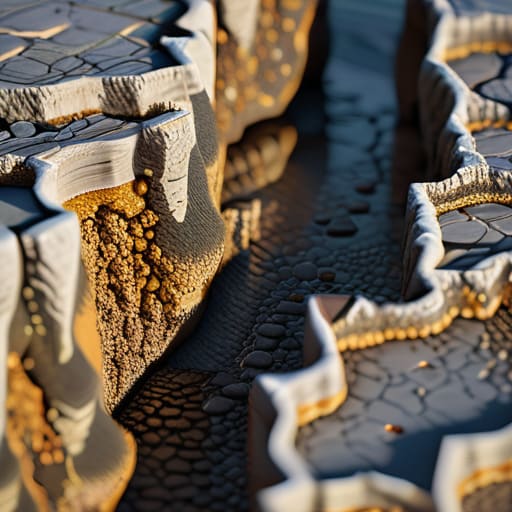
When I run my fingers over a weathered pier in the Mediterranean, I am not just feeling stone; I am feeling the result of a deliberate, chemical dialogue between lime and volcanic ash. We have seen how the pozzolanic reaction isn’t a static event that ended when the mortar dried, but a living, self-healing mechanism that continues to evolve within the cracks. By understanding how these materials work together to mitigate micro-fractures, we move past the superficial awe of Roman scale and begin to respect the technical precision of their material science. It wasn’t luck that allowed these structures to survive the salt air and the centuries; it was a profound understanding of how to harness the earth’s own chemistry to create something permanent.
Ultimately, studying these ancient seams teaches us a lesson that our modern, “disposable” construction methods often ignore. There is a quiet dignity in a material that is designed to age alongside its environment rather than fight against it. As I sit in my studio, sketching the way a single joint has held fast for two millennia, I am reminded that true durability is a conversation between the builder and the landscape. If we can learn to look at our own structures with this same level of scrutiny—valuing the integrity of the bond as much as the silhouette of the facade—perhaps we might finally start building things that are actually meant to last.