
I was crouched in the damp shadow of a medieval stone arch near Ravenna last autumn, my fingers tracing the uneven grit of a lime-mortar joint that had been weeping for decades. Most people walk over a crossing and see only a way to get from point A to point B, but I was looking at the geometry of survival. There is a specific, quiet desperation in how we design bridges and their spans; you can see it in the way a builder compensated for a shifting riverbed or how a later engineer tried to patch a failing stone pier with modern cement that was far too rigid for the original rhythm.
I am not here to give you a textbook lecture on load-bearing capacities or the abstract mathematics of civil engineering. Instead, I want to show you how to read the scars left behind by the people who actually laid the stones. We are going to look past the aesthetics and dive straight into the mechanics—the tension, the compression, and the material choices that dictate whether a span holds for centuries or fails in a generation.
Table of Contents
Reading the Intent in Structural Engineering Bridge Design
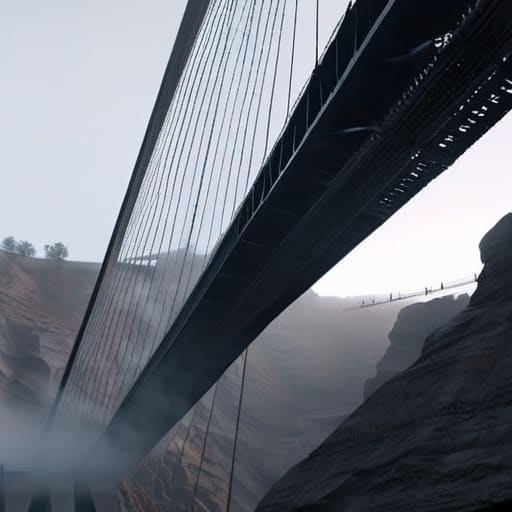
When I stand before a bridge, I don’t just see a crossing; I see a series of calculated arguments between gravity and material. In the realm of structural engineering bridge design, the designer’s intent is rarely a single, unified thought. Instead, it is a negotiation. You can see it in the way a designer chooses between a single, sweeping leap and a more cautious, rhythmic progression. A designer opting for a wide, uninterrupted reach is making a statement of bravado, whereas one who settles for a series of smaller increments is prioritizing a different kind of stability, perhaps one dictated by the stubbornness of the geology beneath.
I find myself constantly looking at the transition points—the places where the weight of the structure is handed off to the earth. If you look closely at the bridge abutment and foundation, you can often sense the original engineer’s anxiety or their absolute confidence. There is a specific kind of tension in the way a stone pier meets the riverbed, a silent dialogue between the intended load and the reality of the silt. It isn’t just about physics; it’s about the decisions made in the dark of a drafting room a century ago, translated into the heavy, unyielding language of stone and steel.
The Weight of Choice Clear Span vs Multi Span Bridges
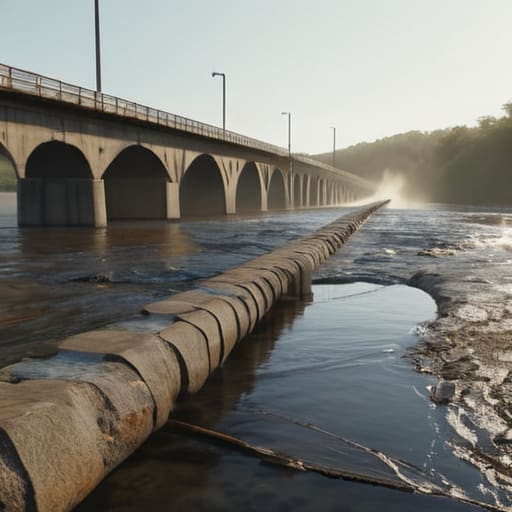
When I stand at the edge of a riverbank, I don’t just see a crossing; I see a negotiation between the landscape and the engineer’s ego. The decision between clear span vs multi-span bridges is never just a matter of budget—it is a fundamental choice about how much of the natural world we are willing to disturb. A multi-span design, with its rhythmic repetition of piers, feels like a compromise with the current, a way to distribute the load by stepping carefully through the water. You can see the logic in the way the piers sit, often wrestling with the silt and the seasonal flow, requiring a massive, invisible commitment from the bridge abutment and foundation to keep the whole assembly from migrating downstream.
But then there is the clear span. There is something almost defiant about a single, uninterrupted leap across a gorge or a wide channel. When an engineer opts for a single span, they are rejecting the middle ground. You see it in the sheer, concentrated pressure exerted on the banks; the forces aren’t being dissipated into the riverbed, but are instead being driven violently into the earth at the edges. It is a high-stakes gamble of physics, where the structural engineering bridge design must account for every ounce of tension and compression without the luxury of a central pillar to catch the fall.
The Silent Dialogue of the Span
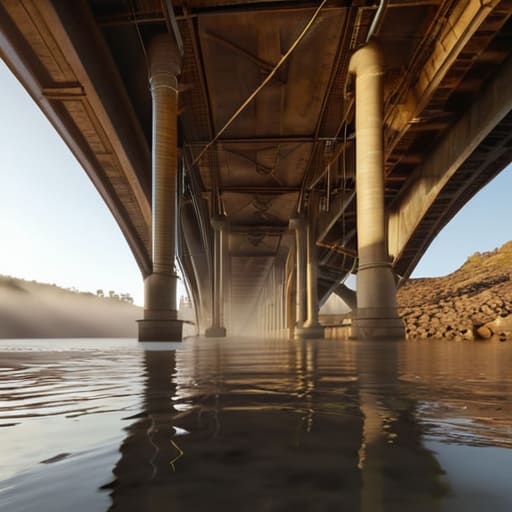
When we step back from the sheer scale of a bridge, we realize that every decision—whether to commit to a single, daring clear span or to nestle a series of piers into the riverbed—is a negotiation with gravity and geography. We have seen how the choice of span dictates the very language of the structure, from the heavy, rhythmic presence of stone arches to the slender, almost defiant tension of modern steel. It is not merely a matter of distance; it is about how the architect manages the transfer of forces and how they respect the constraints of the site. To understand a bridge is to understand the delicate balance between ambition and necessity, where every pier and every cable serves as a response to the physical reality of the void it must cross.
Next time you cross a river, I ask you to do more than just look at the horizon. Look down at the joints where the metal meets the concrete, or up at the way the light catches the curve of an arch. There is a profound, quiet dignity in these structures that often goes unnoticed by those in a hurry. A bridge is more than a transit point; it is a frozen moment of engineering courage, a physical record of how we learned to bridge the gap between two points. If you look closely enough, you can see the intent of the builder etched into the very way the materials hold their ground against the current.