I was standing in the Querini Stampalia last Tuesday, my flashlight tracing the edge of a brass inlay, when I realized how much people misinterpret him. Most architectural critics treat the relationship between Carlo Scarpa and detail as if it were some untouchable, metaphysical mystery—a sort of divine geometry that you simply have to feel. It’s exhausting. They talk about his “genius” in sweeping, poetic abstractions that do nothing to explain why a specific joint actually works or how the thermal expansion of two different metals was managed. To me, his work isn’t a mystery to be contemplated; it is a series of incredibly precise, physical solutions to the problem of how materials inhabit space.
I’m not here to feed you more lofty, academic fluff about “spatial poetry.” Instead, I want to look at the mechanics of his intent. We are going to strip away the romanticism and look at the actual logic of his junctions—the way he used shadow to mask a transition or how a recessed channel directs the eye. I promise to show you how to read his work not as a collection of beautiful objects, but as a masterclass in assembly, where every millimeter of space is a deliberate choice.
Table of Contents
Where Material Transitions Tell Their Own Story
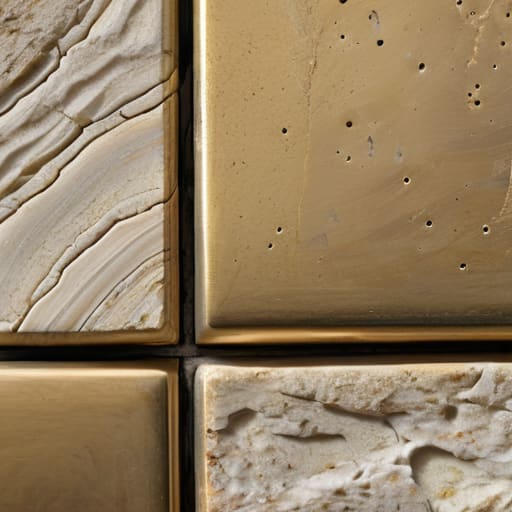
I spent most of yesterday in a small studio in Venice, tracing the way light hits a corner where travertine meets a hand-beaten brass inlay. It’s easy to walk into a Scarpa room and be overwhelmed by the atmosphere, but if you stop looking at the “room” and start looking at the edges, the real dialogue begins. He didn’t just place materials next to one another; he choreographed their meeting. In his work, you see a profound sense of tectonic expression in design, where the weight of a stone slab is intentionally interrupted by a thin, recessed line of metal. This isn’t just decoration; it’s a way of acknowledging that two different substances are occupying the same space, yet respecting their individual boundaries.
When I examine his work, I’m always searching for those tiny, intentional gaps—the “breathing room” between a heavy concrete wall and a delicate wooden floor. These scarpa material transitions act like punctuation in a sentence. Without them, the architecture would be a monotonous monologue. Instead, through his specific architectural joinery techniques, he creates a rhythm. You can see the exact moment where the density of the stone gives way to the fluidity of water or the warmth of timber, making the transition feel like a deliberate, almost sacred, decision made by the builder.
The Silent Language of Scarpa Material Transitions
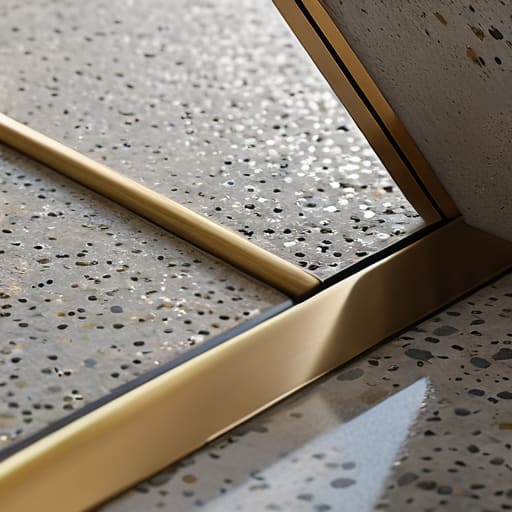
I often find myself standing in front of his work, not looking at the silhouette of the room, but staring intensely at the floor level. There is a specific tension in the way he handles a threshold; he never simply lets one material end where another begins. Instead, he creates a deliberate pause. In his work, you see a masterclass in architectural joinery techniques that feel almost biological. He might nestle a strip of brass into a seam of terrazzo, not to hide the gap, but to celebrate the very fact that two different substances are meeting. It is a way of acknowledging the physics of the materials, a refusal to pretend that stone and metal are the same thing.
This is the heart of his tectonic expression in design. When I survey a site, I look for the “honesty” of a connection, and Scarpa provides it in abundance. He treats the junction as a site of high drama. Whether it is the way light catches a recessed groove or how a heavy concrete element seems to hover just millimeters above a delicate marble slab, he is teaching us how to read the building. You aren’t just looking at a floor or a wall; you are witnessing a careful negotiation between weight and light.
The Lesson in the Lacunae
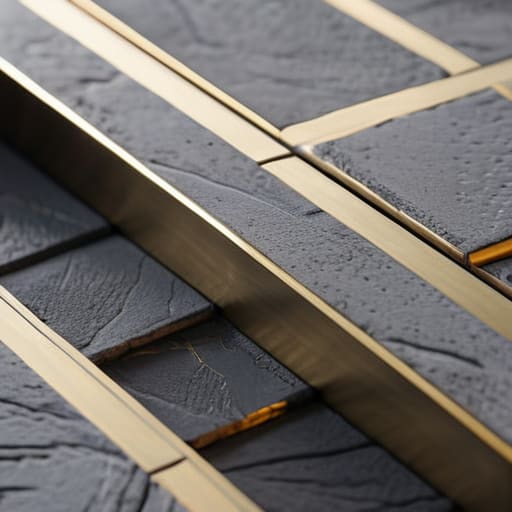
When we look back at what we have discussed—the way he orchestrated the collision of brass and concrete, or how he used shadow to define a threshold—it becomes clear that Scarpa wasn’t just designing objects; he was managing the tension between materials. He understood that a building is never a static, monolithic thing, but a collection of precise, intentional decisions made at the point of contact. To study his work is to realize that the “finish” isn’t something applied at the end, but rather the deliberate logic of the assembly itself. He didn’t hide the seams; he celebrated them, turning every structural necessity into a moment of profound architectural clarity.
I often find myself standing in front of a weathered wall or a modern installation, tracing the lines where one substance yields to another, searching for that same level of honesty. We spend so much of our lives looking at the grand facades and the sweeping silhouettes, yet we miss the most vital truths hidden in the margins. If you want to truly understand a space, stop looking at the whole and start looking at the joints. That is where the architect’s soul resides—in the small, quiet decisions that bridge the gap between the idea and the stone.