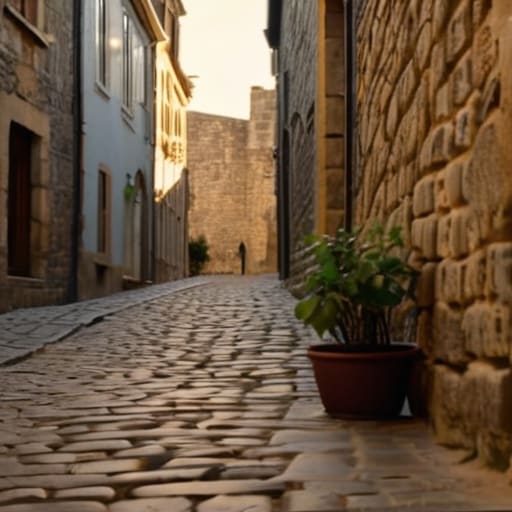
I was kneeling in the dust of a narrow side street in Trastevere last Tuesday, my magnifying glass inches away from a crumbling travertine threshold, when a tour group of forty people surged past. They weren’t looking at the delicate tool marks left by a medieval mason; they were looking at their phones, their heavy, rubber-soled sneakers grinding the same ancient limestone into fine white powder with every rhythmic step. People love to talk about the economic benefits of travel, but they rarely discuss the physical cost of tourism pressure on historic centres. We treat these cities like open-air museums that can withstand infinite footfall, but a building isn’t a static object; it is a living system of joints and mortar that feels every single vibration.
I am not here to give you a lecture on urban management or a list of polite suggestions for “sustainable travel.” Instead, I want to show you what is actually happening beneath the surface—the way vibration from heavy transit rattles the foundations of a Renaissance palazzo and how micro-abrasion from millions of footsteps is slowly erasing our history. I will share what I see when I am on-site, looking past the postcards to the structural reality of our cities.
Table of Contents
When Cobblestones Groan Under Unseen Loads
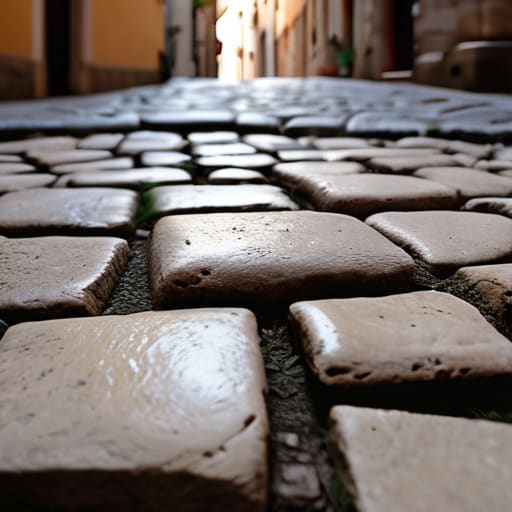
I spent three hours yesterday in a narrow alleyway off the Via dei Tribunali, not looking at the frescoes, but staring at the base of a sixteenth-century palazzo. The sandstone plinth was weeping—not with water, but with a fine, white dust that tells a story of mechanical fatigue. When we talk about the weight of visitors, we rarely talk about the vibrations. It isn’t just the static load of people standing still; it is the relentless, rhythmic pulse of thousands of soles striking the pavement every hour. This constant micro-shaking travels through the subsoil and into the foundations, slowly loosening the very joints that have held these structures together for centuries.
It is a slow-motion erosion that most people miss. While the city officials debate short-term rental regulations to manage the influx of people, the stones themselves are suffering a different kind of crisis. The physical carrying capacity of historic districts isn’t just a number on a spreadsheet; it is a measurable limit of the material itself. When the mortar between the cobblestones turns to powder under the sheer frequency of footfall, we aren’t just losing a path—we are losing the structural integrity of the entire streetscape.
Calculating the Carrying Capacity of Historic Districts
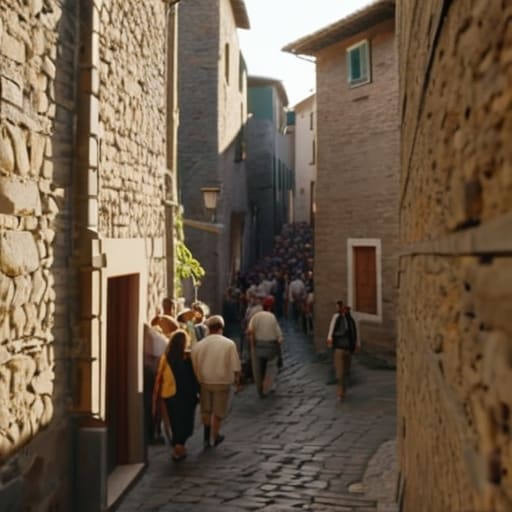
When I sit in a small piazza in Lucca or a narrow alley in Trastevere, I don’t just see people; I see a mathematical problem that no one seems to want to solve. To understand the carrying capacity of historic districts, we have to move past the vague, emotional arguments against crowds and look at the actual physics of the space. It is about the threshold where the physical friction of movement—the constant brushing of shoulders against centuries-old plaster, the vibration of heavy luggage wheels on uneven basalt—exceeds the material’s ability to absorb the stress. We aren’t just managing crowds; we are managing the structural fatigue of an entire urban organism.
This isn’t merely a matter of comfort; it is a technical necessity for the preservation of cultural heritage. If we ignore the data, we end up with a city that is essentially a hollowed-out stage set. When we talk about sustainable urban tourism management, we must account for the fact that a building’s “load” isn’t just vertical weight from the roof down, but the lateral, constant agitation of a thousand footsteps. If we don’t find that tipping point, we aren’t just losing the local character; we are literally wearing the history away, grain by grain.
Beyond the Snapshot
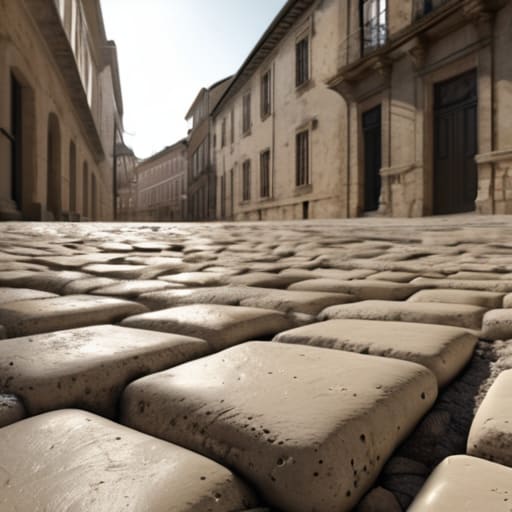
We cannot simply treat our historic centres as mere backdrops for a perfect photo, nor can we ignore the physical reality of what that constant movement does to the fabric of the city. Between the micro-abrasion of millions of footsteps wearing down the edges of travertine and the subtle, terrifying shifts in masonry caused by the vibrations of heavy transit, the cost of our presence is written in the stone. We have discussed the limits of carrying capacity and the groaning of the cobblestones, but the technical reality remains: if we do not respect the structural threshold of these districts, we are not visiting history—we are actively accelerating its decay.
Ultimately, preservation is not about freezing a city in amber or turning a living neighborhood into a hollow museum. It is about a more profound kind of stewardship, one that requires us to look past the aesthetic beauty and see the delicate equilibrium of the joints and mortar that hold our past together. Next time you walk through a piazza, don’t just look at the monument; look at the ground beneath you and the way the light hits the weathered edges of the walls. If we learn to see the building for what it truly is—a living, breathing assembly of human decisions—we might finally learn how to walk through it with the reverence it deserves.