I was standing in a damp courtyard in Syracuse last autumn, tracing the edge of a weathered limestone lintel, when I realized how much we’ve turned the concept of beauty into a mathematical lecture. Most textbooks treat proportion and harmonic ratios as if they are some sacred, untouchable formula found only in a dusty Vitruvian manuscript, something you calculate with a calculator to prove you’re “correct.” It’s exhausting. People talk about these ratios as if they are rigid laws imposed from above, but when you’re actually kneeling in the dust, looking at how a block was carved to meet its neighbor, you realize they aren’t rules at all. They are rhythms.
I’m not here to give you a geometry lesson or a lecture on abstract aesthetics. Instead, I want to show you how to see the intent behind the numbers. I will walk you through how these ratios actually manifest in the physical world—in the way a column carries its load or how a window opening feels “right” without needing a ruler to prove it. We are going to look past the theory and focus on the material reality of how these proportions were actually lived and built.
Table of Contents
Tracing the Golden Ratio in Aesthetics Through Weathered Stone
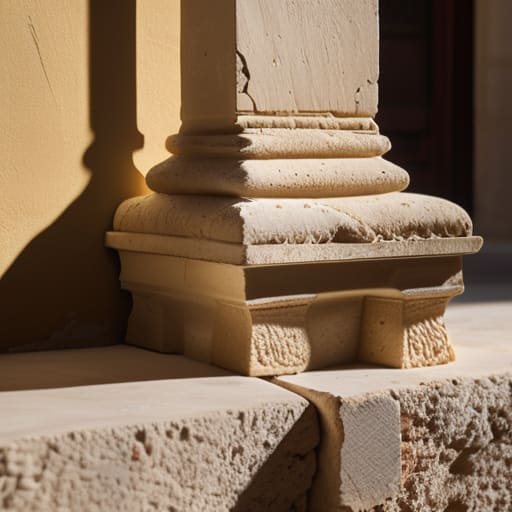
I was in a small courtyard near Syracuse last Tuesday, tracing the edge of a weathered limestone lintel, when it hit me again. We often talk about the golden ratio in aesthetics as if it were a mathematical imposition, a rigid rulebook forced upon a structure. But when you are kneeling in the dust, looking at stone that has been softened by centuries of salt air, you realize it’s something much more organic. The proportions aren’t just calculated; they feel earned. There is a specific way the light catches the recession of a molding that suggests the builder wasn’t just thinking about width and height, but about a certain visual resonance.
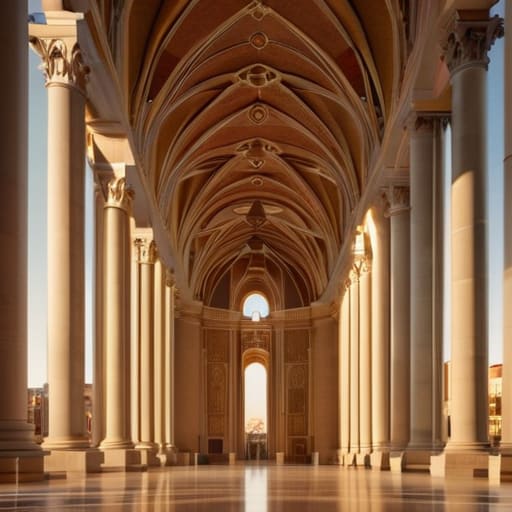
It’s almost impossible to separate these stone geometries from the ancient idea that architecture is simply frozen music. When I look at the spacing of columns in a weathered portico, I don’t just see vertical supports; I see the physical manifestation of consonance and dissonance ratios. You can sense where the rhythm of the stone settles into a perfect, quiet chord, and where the sudden shift in a pediment’s pitch creates a deliberate, structural tension. It’s not about perfection—it’s about how those ratios allow a building to breathe alongside the landscape, rather than fighting against it.
The Silent Intent Found in Geometric Proportions in Art
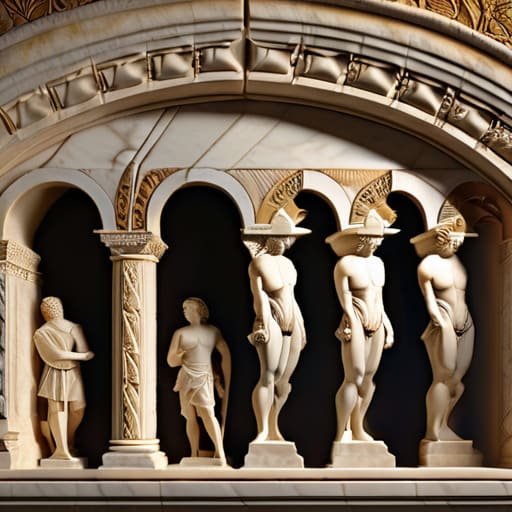
I often find myself standing before a carved lintel or a relief, not looking at the subject matter, but at the spacing between the elements. There is a specific tension in certain Renaissance reliefs where the figures don’t just sit in space; they seem to vibrate with a structured logic. It’s as if the sculptor wasn’t just looking at anatomy, but was translating the mathematical principles of music theory into stone. When you see a series of receding arches or a sequence of sculptural figures, you aren’t just seeing a visual progression; you are seeing a physical manifestation of consonance and dissonance ratios.
It strikes me that the ancient masters didn’t view geometry and sound as separate disciplines. When I examine the way a pediment is divided, I can almost hear the underlying rhythm. They were chasing a sense of “rightness” that mirrors how we perceive a perfect chord. This isn’t mere decoration; it is an attempt to ground the ephemeral beauty of art in the immutable laws of the universe. To find these geometric proportions in art is to realize that the artist was trying to compose a visual symphony, one where every carved edge serves as a note in a larger, silent, and perfectly tuned composition.
The Ghost in the Geometry
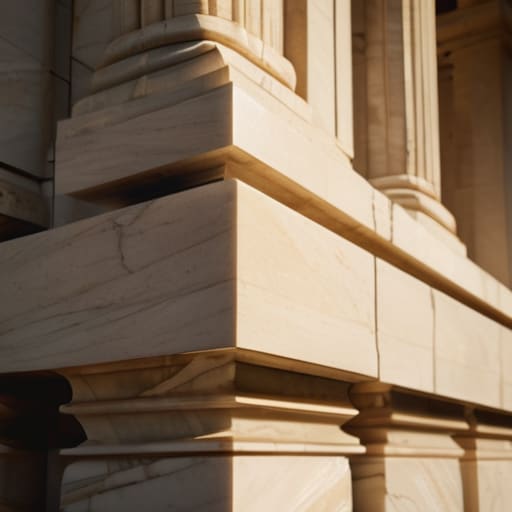
When we look back at these weathered surfaces, we realize that proportion was never just an academic exercise or a way to satisfy a textbook formula. Whether it was the calculated grace of a Golden Ratio carved into a marble frieze or the intuitive, rhythmic spacing of stones in a rural courtyard, these ratios served as the connective tissue between human intention and physical reality. We have seen how geometry moves from the abstract concept of a master mason into the very marrow of the structure, surviving centuries of erosion and neglect. It is in these precise, mathematical relationships—the way a lintel sits in relation to its pier, or how a window opening breathes within a facade—that we find the true fingerprint of the builder.
Ultimately, studying these ratios teaches us that architecture is a conversation across time. When I run my hands over a joint that has held its shape for five hundred years, I am not just touching stone; I am touching a decision made by someone who understood that order creates permanence. As you walk through the streets of Ravenna or the ancient centers of Sicily, I urge you to stop looking at the decorative flourishes and start looking at the bones. Look for the logic in the layout and the rhythm in the heights. Once you begin to see the hidden geometry of intent, the buildings will never be silent again; they will begin to tell you exactly how they were meant to stand.