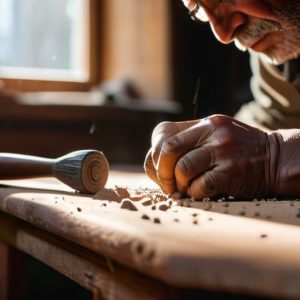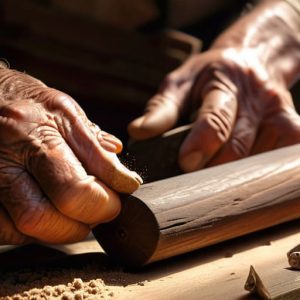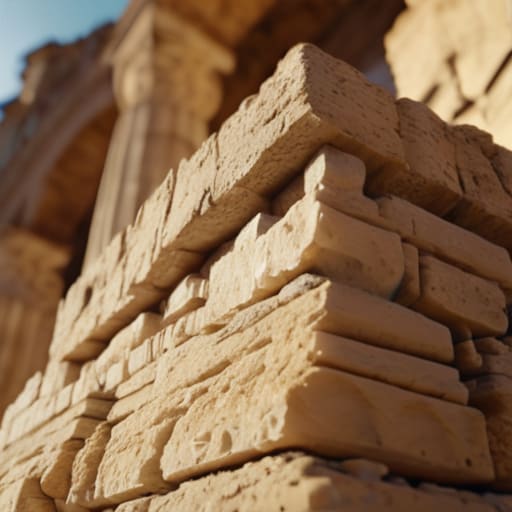
I was standing on a scaffold in a courtyard near Tivoli last autumn, my fingers tracing a particularly deep void in a weathered block, when I realized how much we misinterpret this material. Most people—and certainly most glossy interior design magazines—treat travertine as if it were a mere backdrop, a neutral, “safe” luxury to be polished into submission until it looks like plastic. They talk about it in terms of color palettes and “timeless elegance,” completely ignoring the violent, beautiful geological history written into every pore. To truly understand travertine and its character, you have to stop looking at it as a finished product and start looking at it as a living record of water, sediment, and time.
I am not here to sell you on a lifestyle or a specific shade of beige. Instead, I want to pull back the curtain on the actual mechanics of the stone. I will show you how to distinguish between a well-set mason’s joint and a rushed modern imitation, and how to respect the inherent irregularities that give a building its soul. By the end of this, you won’t just be choosing a stone; you will be learning how to read the story told by the voids and the veins.
Table of Contents
Deciphering the Calcium Carbonate Properties
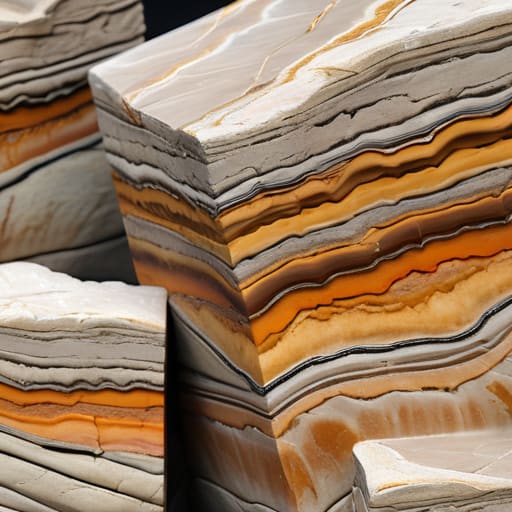
To understand why this stone behaves the way it does under a chisel or a heavy rain, you have to look past the surface and consider its calcium carbonate properties. Unlike metamorphic stones that have been crushed and reborn under immense pressure, travertine is a product of a much more rhythmic, aqueous process. It is born from the slow, bubbling precipitation of minerals in thermal springs—a sedimentary rock formation that happens in real-time, layer by layer. When I run my fingers over a weathered block, I’m not just feeling stone; I’m feeling the chemical residue of ancient, mineral-rich waters that froze a moment of geological activity into a solid mass.
This chemical makeup is exactly what dictates the stone’s unique physical language. Because the minerals precipitate around organic debris—twigs, leaves, or even tiny shells—the stone is left with a restless, uneven surface. This natural stone porosity is often mistaken by novices as a defect, but for a conservationist, it is the stone’s breathing apparatus. These voids allow the material to settle and interact with its environment, a characteristic that has defined its architectural use of travertine for millennia. If you ignore the pores, you ignore the very mechanism that allows the stone to endure.
Tracing the Sedimentary Rock Formation
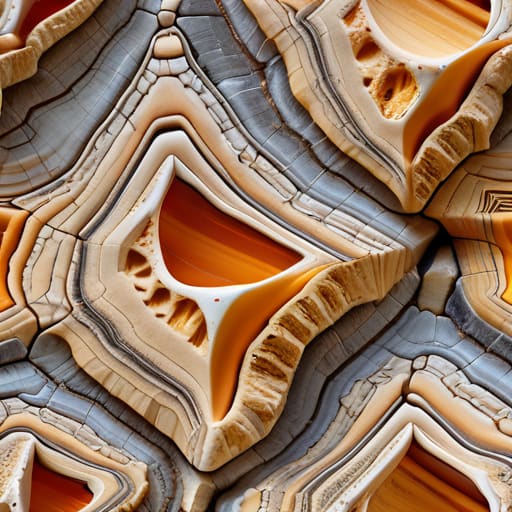
To understand the stone, you have to look past the finished facade and imagine the violent, bubbling chemistry of the thermal springs that birthed it. Travertine isn’t a static object; it is the result of a frantic sedimentary rock formation occurring in high-temperature environments. As mineral-rich waters rise toward the surface, the sudden release of carbon dioxide causes the calcium carbonate to precipitate out of the solution, layering itself in a chaotic, rhythmic dance. When I’m on a site, I find myself tracing these layers with my fingers, feeling for the subtle shifts in density that mark different eras of deposition.
This process is exactly why the travertine texture and appearance is so inherently irregular. Unlike a marble that has been compressed into a dense, uniform mass, travertine retains the “memory” of the water’s movement. You see it in the voids—the tiny pockets where gas bubbles were trapped mid-flow, or where organic matter once sat before being encased in stone. This natural stone porosity isn’t a defect; it is the stone’s biography. It tells you how quickly the spring was flowing and how much life was swirling in those waters centuries ago. When you look at a block, you aren’t just looking at a building material; you are looking at a frozen moment of geological turbulence.
The Living Record of the Stone
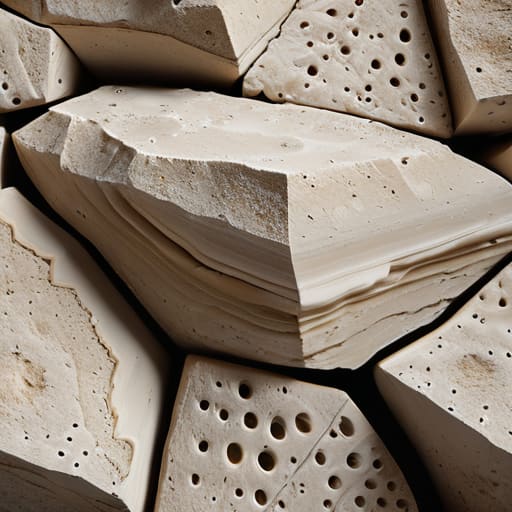
When we look back at what we have discussed—from the chemical stubbornness of its calcium carbonate structure to the slow, rhythmic deposition of minerals in ancient thermal springs—it becomes clear that travertine is never a static material. It is a dialogue between geology and time. We have seen how its porosity is not a flaw, but a biological signature of its formation, and how those very voids dictate how a mason must approach the stone. To understand travertine is to understand that its strength lies in its imperfections; it is the interplay of the solid matrix and the empty space that gives the stone its unique ability to breathe alongside the structures it supports.
Next time you find yourself walking through a Roman forum or a quiet courtyard in Tivoli, I ask you to stop looking at the facades as mere surfaces. Instead, lean in. Look for the way the light catches a particular pit or how a tool mark has smoothed over centuries of weathering. When you do, you aren’t just looking at a building; you are witnessing the physical decisions of the earth and the hands that shaped it. A stone is never truly silent if you know how to listen to its grain.