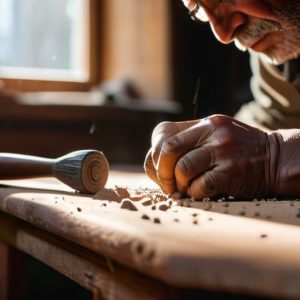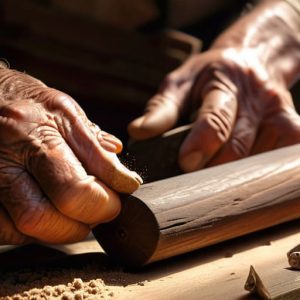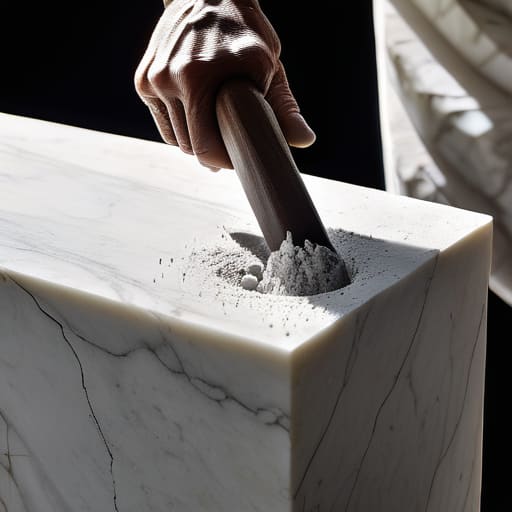
I was in a small workshop outside Carrara last autumn, the kind of place where the air is more stone dust than oxygen, when I saw a young apprentice trying to “fix” a hairline fracture in a slab using a modern resin kit. It was heartbreaking. People today treat marble as if it were some synthetic, plastic-adjacent material that can be patched and polished into submission, completely ignoring the ancient, honest marble working techniques that actually respect the stone’s soul. They chase a mirror-finish perfection that masks the truth, rather than understanding how a craftsman once navigated the grain to prevent the very break they are now trying to hide with chemicals.
I’m not here to sell you on high-tech resins or the illusion of flawlessness. Instead, I want to show you how to read the stone by looking at the marks left behind by the tools themselves. We are going to strip away the marketing fluff and look at the actual mechanics—the way a point chisel bites, how a tooth chisel prepares a surface, and why the direction of a cut matters more than any expensive polishing compound. My goal is to teach you to see the intentionality of the hand in every surface you encounter.
Table of Contents
- The Ghost in the Grain Mastering Marble Working Techniques
- The Weight of Intent in Traditional Marble Carving Equipment
- Tracing the Makers Hand Through Sculpting Marble Methods
- The Dialogue of Steel Choosing Your Stone Masonry Tools
- The Honest Bite of Hand Tools for Stone Carving
- Where Precision Meets Force in Essential Stone Masonry Tools
- Surviving the Dust the Ritual of Stone Masonry Safety
- Respecting the Stone and the Breath of the Artisan
- The Silent Cost of Ignoring Essential Safety Protocols
- From Rough Cut to Radiance Polishing Natural Stone
- Revealing the Vein the Art of Polishing Natural Stone
- The Final Surface a Testament to Patient Labor
- The Last Mark of the Chisel
The Ghost in the Grain Mastering Marble Working Techniques
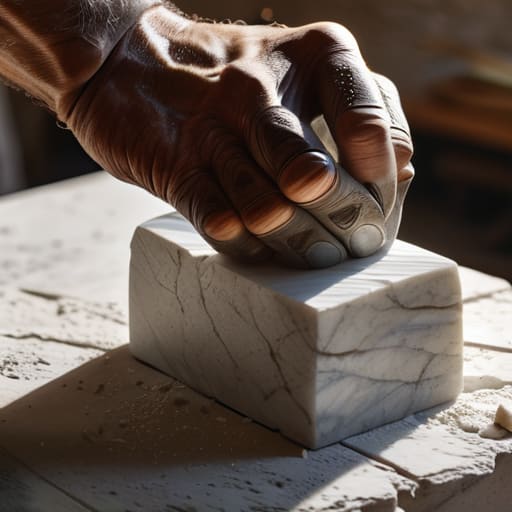
When I stand before a block of Carrara, I don’t see a finished monument; I see a series of negotiations. To master the stone, a mason has to understand that the material is never truly passive. You start with the heavy lifting—the roughing out with a point chisel—but it’s in the transition to the finer hand tools for stone carving that the character of the piece is decided. I’ve spent hours in dusty workshops in Tuscany, watching how a craftsman uses a claw chisel to “draw” the form out of the mass. They aren’t just removing material; they are listening to the density of the grain, feeling for the microscopic fractures that dictate where the blade can bite and where it must retreat.
The real magic, however, happens in the refinement. It is one thing to shape a curve, but quite another to achieve that translucent depth through polishing natural stone. You can see the lineage of the work in the way the light hits the surface—if the transition from the tooth of the chisel to the smoothness of the abrasive was rushed, the stone looks bruised rather than luminous. I often find myself photographing these subtle shifts in texture, because even a century later, you can still see exactly where the artisan shifted their weight and how they managed the tension of the cut.
The Weight of Intent in Traditional Marble Carving Equipment
When I set out my kit, I don’t just see tools; I see extensions of a specific kind of physical logic. A heavy iron mallet isn’t just a weight in your hand—it is the arbiter of force. I remember standing in a workshop near Carrara, watching an elderly mason use a pointed punch to rough out a block. There is a violent, necessary honesty in that initial stage. You can see the transition from the crude percussion of the heavy tools to the surgical precision of the fine chisels, and that shift is where the stone begins to surrender its mass.
Every tool leaves a signature, a specific frequency of impact that tells you if the worker was rushed or contemplative. A flat chisel used with a steady, rhythmic strike creates a surface that feels calm, almost liquid, whereas a jagged, uneven series of marks suggests a struggle against a particularly stubborn vein of calcite. You have to learn to listen to the vibration traveling up through the handle; it tells you exactly how much resistance the stone is offering.
Tracing the Makers Hand Through Sculpting Marble Methods
When I am standing in a workshop or examining a fragment in a museum, I am rarely looking at the finished form. Instead, my eyes hunt for the rhythm of the tool. You can distinguish a master’s hand by the way they manage the transition from the heavy, aggressive strikes of a subbia—the pointed chisel used for roughing out—to the delicate, rhythmic percussion of a claw chisel. A novice often leaves a chaotic surface, a frantic struggle against the stone’s natural cleavage. But a skilled mason understands the stone’s internal tension; they work with the grain rather than against it, leaving a surface that feels intentional, even in its most raw, unfinished state.
I often find myself photographing these transitions, specifically where the tool marks change direction. It is in these shifts that the maker’s logic becomes visible. You can see exactly where a sculptor decided to stop fighting the mass and start defining the light, a moment where the physicality of the labor dissolves into the grace of the shape.
The Dialogue of Steel Choosing Your Stone Masonry Tools
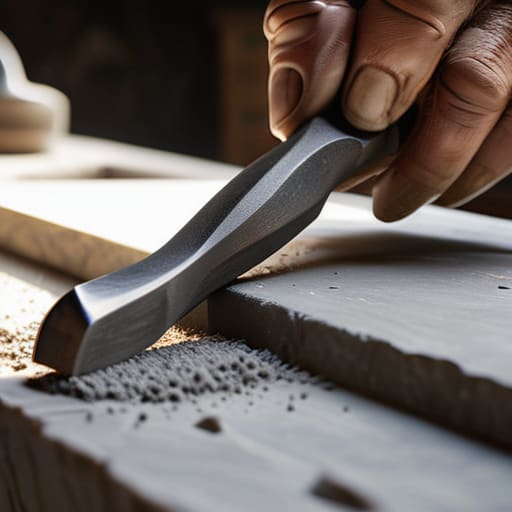
I often find myself standing in a workshop, watching the way a mason selects his steel. It isn’t a random grab from a rack; it is a conversation. If you are working with a particularly stubborn vein of Carrara, you don’t approach it with the same aggression you would a softer piece of Travertine. You have to listen to the resistance. Choosing the right hand tools for stone carving is less about brute force and more about understanding the specific temperament of the block. A heavy mallet might drive a point home, but if you haven’t mastered the subtle weight of the tool, you risk a fracture that no amount of resin can ever truly hide.
There is a specific rhythm to it, a cadence between the hand and the hammer. When I survey a site, I look for the marks left by different grades of chisels to understand the sequence of the work. A wide-toothed comb leaves a different signature than a fine-edged claw, and seeing them layered tells me exactly how the artisan transitioned from roughing out the form to the delicate business of polishing natural stone. It is a progression of refinement. You start with the heavy, violent strikes of the point, and you end with the almost silent, rhythmic friction of the abrasives. To ignore the tool is to ignore the very soul of the material.
The Honest Bite of Hand Tools for Stone Carving
There is a specific, almost violent honesty in the way a point chisel interacts with a block of Carrara. Unlike the clinical, uniform surface left by a diamond-tipped saw, a hand tool leaves a signature of resistance. When I am surveying a facade in a small village outside Lucca, I don’t look at the finished column; I look at the rhythm of the strikes. You can see where the mason found a hidden fissure in the stone and adjusted his angle mid-swing to prevent a fracture. It is a physical conversation between the steel and the calcium carbonate, a series of micro-decisions that a machine simply cannot replicate.
A well-worn mallet and a set of tooth chisels are not just implements; they are extensions of the worker’s own fatigue and focus. You can trace the fatigue of a long afternoon by the way the percussion marks begin to shallow or drift slightly off-axis. To me, these aren’t imperfections. They are evidence of a living presence in the stone, a way of knowing that someone stood there, breathing and sweating, deciding exactly how deep that cut should bite.
Where Precision Meets Force in Essential Stone Masonry Tools
When you move away from the delicate, rhythmic tapping of a fine chisel, you enter the realm of the heavy hitters: the mallets and the point chisels. This is where the physics of the stone truly asserts itself. I often find myself standing before a block of Carrara where the initial roughing-out was done with a heavy, blunt force, and you can feel the vibration of that effort just by looking at the deep, irregular divots. There is a violent necessity to this stage; you aren’t seeking grace yet, you are seeking subtraction. It is a brutal conversation between the weight of the tool and the crystalline structure of the marble, a process of shedding the excess to find the form hidden within.
If you misjudge the strike here, the stone doesn’t just chip—it screams. A misplaced blow from a heavy mallet can send a fracture racing through the grain, a structural betrayal that no amount of fine sanding can ever truly mask. You have to respect the momentum. It’s a delicate balance of controlled aggression, knowing exactly how much energy to transfer through the steel to break the surface without shattering the soul of the block.
Surviving the Dust the Ritual of Stone Masonry Safety
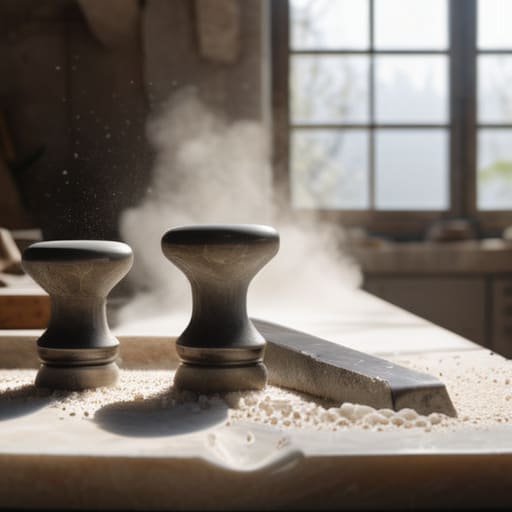
I remember watching an old master in a workshop near Carrara; he treated his respirator with more reverence than his finest chisels. There is a romanticism often attached to the image of the sculptor, shrouded in a fine white haze, but the reality is much more clinical. That dust—the microscopic silica from polishing natural stone—is a silent thief. It settles in the lungs long before you notice it in the air. When I am surveying a site, I look for the tell-tale signs of poor protection, like the fine white powder coating the discarded remnants of hand tools for stone carving. It’s a sign that the maker was prioritizing the rhythm of the strike over the longevity of their own breath.
True stone masonry safety isn’t just about the heavy-duty goggles or the steel-toed boots; it’s about the discipline of the workspace. You have to manage the debris as carefully as you manage your mallet. I’ve seen too many young apprentices rush through their work, letting the grit from their marble carving equipment migrate into every corner of the studio. A clean workspace isn’t just for aesthetics; it’s a way of respecting the material and yourself. If you don’t control the dust, the dust eventually controls you.
Respecting the Stone and the Breath of the Artisan
I remember standing in a workshop near Carrara years ago, watching an old man work. He didn’t just wear a mask; he moved with a certain reverence for the air around him. When we talk about safety, it’s easy to get lost in the clinical jargon of respirators and silica dust regulations, but that misses the soul of the matter. To work marble is to enter into a physical contract with the material, and that contract involves the very air you breathe. You aren’t just managing a hazard; you are honoring the sanctity of the workspace so that the craft can endure without costing you your health.
There is a specific, heavy silence that settles in a studio when the dust is properly managed. It isn’t a sterile silence, but a respectful one. When you control the particulates—not just for your lungs, but to keep the fine grit from settling into the very tool marks we spend hours perfecting—you allow the stone to speak clearly. A clean environment isn’t about following a manual; it’s about ensuring the artisan remains as resilient as the marble itself.
The Silent Cost of Ignoring Essential Safety Protocols
I’ve spent enough years on scaffolding in the humid heat of Palermo to know that the most dangerous thing in a workshop isn’t the heavy slab or the swinging hammer; it’s the complacency that settles in after a decade of work. We often think of safety as a series of bureaucratic checkboxes, but in stone masonry, it is a physical debt you eventually have to pay. When you skip the fine-mesh mask because the silica dust feels “dry” rather than “dangerous,” you aren’t saving time. You are simply borrowing health from your future self, and the interest rates on lung disease are unforgiving.
I remember a young assistant in Ravenna who thought his heavy leather gloves were enough to protect him from a slipping chisel. He was wrong. A single moment of diverted attention, a tool catching a vein of quartz just slightly off-angle, and the stone doesn’t just chip—it bites back. The cost isn’t just a ruined piece of Carrara; it is the permanent loss of dexterity that defines a craftsman’s life.
From Rough Cut to Radiance Polishing Natural Stone
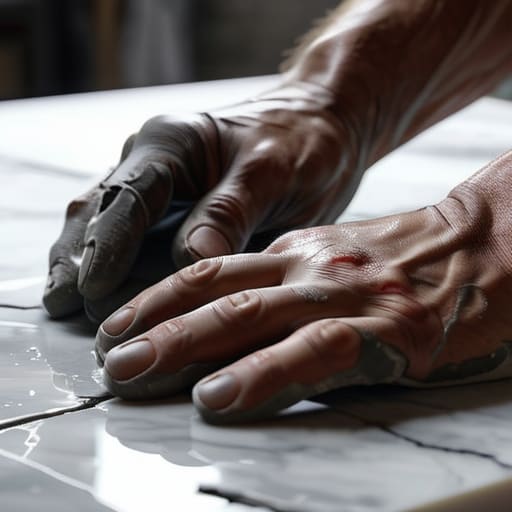
Polishing is where the stone finally stops fighting you and begins to reveal its soul. It is a deceptive process; many beginners think it is merely about friction and water, but it is actually a systematic subtraction of chaos. After the heavy lifting of the initial sculpting marble methods is complete, you are left with a surface that is honest but bruised—a landscape of deep scratches and uneven planes. To move from that raw state to a true luster, you have to respect the hierarchy of abrasives. You cannot rush to the fine grits. If you skip a step in the progression, you aren’t polishing; you are simply hiding the scars under a layer of superficial shine, and any trained eye will see the ghost of those deep gouges beneath the surface.
I often find myself tracing the transition points in older villas, where a floor transitions from a honed finish to a high polish. You can see the exact moment the artisan changed their rhythm. Achieving that deep, liquid radiance requires a patient dance between the stone and your hand tools for stone carving, specifically the abrasive pads that must be worked with a consistent, rhythmic pressure. It is a meditative, almost exhausting labor. When you finally reach that stage of polishing natural stone where the light doesn’t just bounce off the surface, but seems to sink into the crystalline structure, you realize the stone hasn’t changed—you have simply finally allowed it to speak.
Revealing the Vein the Art of Polishing Natural Stone
Polishing is where the stone finally stops fighting you and starts talking. It isn’t just about achieving a mirror finish; it is a process of controlled exhaustion. When I’m surveying a Renaissance floor, I’m looking for how the light interacts with the surface—whether it’s a high, glassy sheen or a softer, more diffused glow. Each successive grit of abrasive, moving from the coarse to the fine, peels back layers of chaos to find the order hidden within the mineral structure. If you rush the transition between grits, you leave microscopic scratches that will eventually catch the light in ways you never intended, betraying a lack of patience.
You have to listen to the stone as it changes. As the surface tightens and the colors deepen, you realize that polishing doesn’t create beauty; it merely uncovers it. I often find myself tracing the edges where a highly polished slab meets a honed border, noting how the contrast in texture defines the geometry of the room.
The Final Surface a Testament to Patient Labor
I often find myself running my fingertips over a finished surface, not to check for smoothness, but to feel the rhythm of the work. A truly polished slab of Carrara or a honed piece of Travertine isn’t just a flat plane; it is a record of time. You can sense the progression from the aggressive, rhythmic bite of the coarse abrasives to the almost meditative, microscopic movements required for the final buffing. It is a process that cannot be rushed by modern machinery without losing that specific, human vibration that settles into the stone.
When I survey a restored facade in a Sicilian courtyard, I look for that subtle variation in sheen. If a mason was distracted, or perhaps simply exhausted, the light catches a minute irregularity—a ghost of a scratch that survived the polishing sequence. These aren’t flaws to me; they are the testament to patient labor, proving that a person, not just a motor, stood there breathing the dust and coaxing the light out of the mineral.
The Last Mark of the Chisel
We have traveled from the initial, violent strike of the heavy mallet to the meditative, slow rhythm of the final polish. To master marble is to understand a constant negotiation between force and fragility. Whether it is the selection of the right steel to avoid fracturing a delicate vein, the disciplined adherence to safety to protect the artisan’s lungs, or the patience required to bring a dull surface into a deep, translucent radiance, every step is a decision. We have seen that the tools are not merely instruments, but extensions of a will that must respect the inherent physics of the stone. When we look back at the techniques we have discussed, we see that they are not just steps in a process, but a language of survival and skill etched into the very material itself.
As I close my sketchbook today, I find myself thinking about the next person who will stand before a block of Carrara or Pentelic marble. They will feel the same resistance I feel, and they will make the same mistakes I once made. But if they take the time to listen—to truly listen to the way the grain responds to the chisel—they will realize that they are not just shaping a surface; they are participating in a lineage. A finished piece of marble is never truly silent; it carries the echoes of every strike and every grain of dust. My hope is that you never look at a finished monument as a static object, but as a living testament to the human struggle against the stubbornness of the earth.