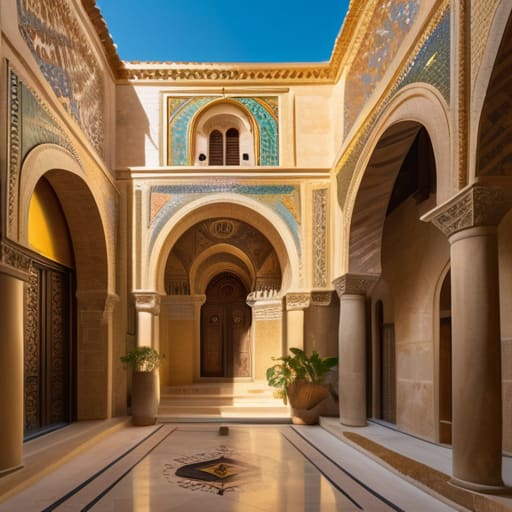
I was kneeling in the dust of a Palermitan courtyard last summer, my magnifying glass inches away from a limestone block, when I realized how much we miss by simply looking at the “grandeur.” Most guidebooks will try to sell you on the sweeping, romanticized myth of arab norman architecture in sicily as this seamless, ethereal marriage of cultures. They use words like harmony and synthesis as if these buildings were dreamed up by a single, peaceful mind. But if you look at the way a Fatimid-style pointed arch is forced into a heavy, Norman-style masonry wall, you see something much more human: you see the friction. You see the physical evidence of builders from different worlds, using different tools and different mortars, trying to make sense of one another in the middle of a construction site.
I am not here to give you a lecture on aesthetic theory or to recite a list of kings and dates. Instead, I want to show you how to read the stone. We are going to look past the gold mosaics and the tourist brochures to find the real story told in the joints, the rubble-fill, and the tool marks. I promise to guide you through the technical reality of how these structures actually stand, focusing on the material truth of the craftsmanship that remains long after the empires have crumbled.
Table of Contents
Fatimid Architectural Influence in the Curvature of Arches
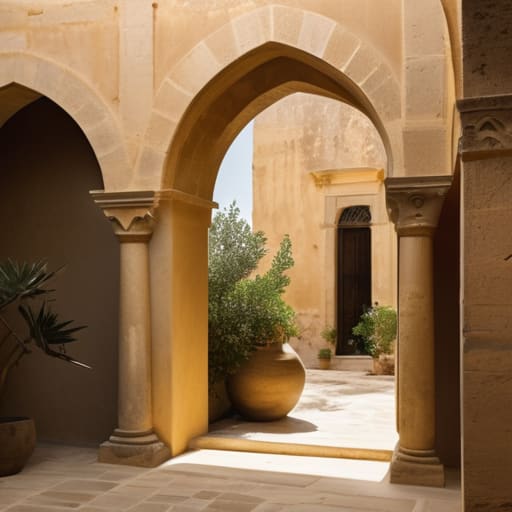
I spent most of yesterday afternoon in the shadow of a crumbling courtyard, tracing the way a specific curve breaks the tension of a wall. When you look at the arches in these Sicilian structures, you aren’t just seeing a structural necessity; you are seeing the Fatimid architectural influence written in stone. Unlike the heavy, rounded Romanesque arches that would later dominate Europe, these pointed, slightly keel-shaped curves feel lighter, almost as if they are lifting the weight of the masonry rather than just bearing it. It is a subtle geometry, one that suggests a mathematical elegance brought by North African craftsmen who understood how to manipulate gravity through grace.
If you stand close enough to the joints, you can see where the stone meets the air. There is a specific rhythm to the way these arches transition into the surrounding walls, a hallmark of the Norman-Arab-Byzantine fusion style that defines this era. It isn’t a seamless, singular vision, but rather a series of intentional, layered decisions. You can almost sense the dialogue between the builders—the way a pointed arch might be framed by a heavy stone lintel, creating a tension that is both beautiful and structurally complex. To me, these curves are more than just aesthetic choices; they are the physical fingerprints of a cross-cultural architectural heritage that refused to be one thing or the other.
The Heavy Hand of Medieval Sicilian Building Techniques
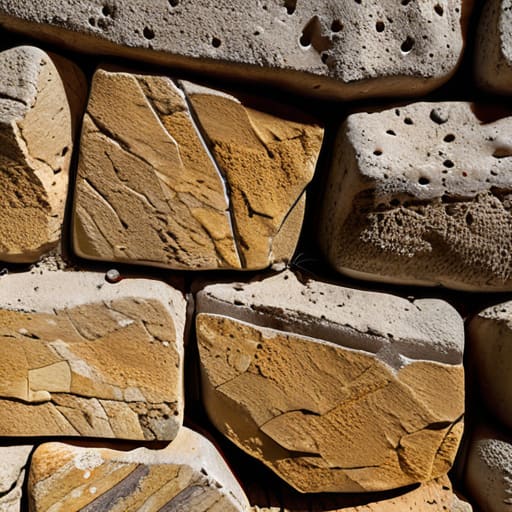
When I stand in the shadow of a Norman keep, I am rarely looking at the grand silhouette against the sky. Instead, my eyes drop to the base of the walls, searching for the irregularity of the rubble core. Unlike the precision of Roman ashlar, the medieval Sicilian building techniques found here are a study in pragmatism and opportunistic layering. You can see where the builders took whatever was at hand—limestone from local quarries, perhaps even repurposed Roman fragments—and packed them into thick, defensive shells. There is a certain honesty in the way the mortar binds these disparate pieces; it isn’t just a glue, but a structural necessity that allowed these massive walls to absorb the seismic shifts of the Mediterranean.
There is a tension in the masonry that I find endlessly fascinating. While the decorative surfaces often strive for a certain ethereal lightness, the actual skeleton of the building remains stubbornly, almost aggressively, heavy. You see this clearly when moving from the structural weight of the exterior walls toward the delicate Palatine Chapel interior design. It is a jarring, beautiful transition. The sheer mass required to support those soaring ceilings is what allows the gold of the Byzantine mosaics in Palermo to catch the light without the structure feeling fragile. The building isn’t just a shell for art; it is a heavy, stone-bound vessel designed to protect a fragile, shimmering soul.
The Unfinished Dialogue of Stone
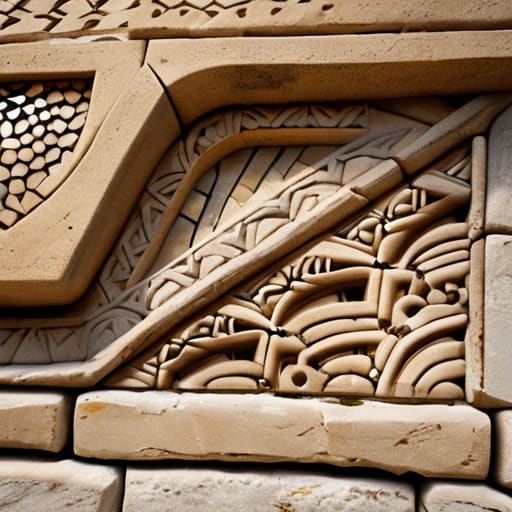
When you step back from a structure like the Monreale or the Palatine Chapel, it is easy to let the sheer scale of the gold mosaics blind you. But if you lean in close—closer than a tourist usually bothers to go—you see the truth of what I have been tracing. You see how the delicate geometry of a Fatimid arch doesn’t just sit atop a wall, but actually negotiates space with the heavy, unyielding limestone of the Norman builders. It is a physical record of compromise and coexistence, etched into the very mortar and the uneven surfaces of the masonry. These buildings are not static monuments; they are the frozen results of a thousand small decisions made by hands that spoke different languages but shared the same stone.
I often find myself standing in the shadow of these ruins, tracing a chisel mark or a weathered joint with my thumb, wondering about the exact moment a master mason decided to let one style yield to another. We tend to look at history as a series of dates on a page, but history is actually tactile. It is found in the way a building holds its weight and how it survives the centuries. My hope is that next time you walk through a Sicilian courtyard, you won’t just see a beautiful backdrop for a photograph. I want you to look for the seams where worlds collided, because that is where the real soul of the architecture resides.