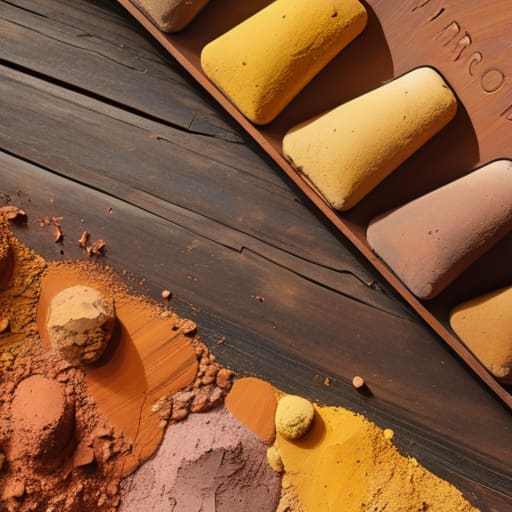
I remember standing on a scaffolding in a crumbling palazzo near Palermo, squinting at a patch of wall that everyone else called “faded.” To the untrained eye, it was just a dying shade of yellow, but as I brushed away a century of dust, I saw the deliberate, heavy grit of the original mix. Most modern restorers will try to sell you on expensive, synthetic tinted washes that sit on the surface like a plastic skin, completely ignoring the soul of the masonry. They forget that true color isn’t something you paint on; it is something you weave into the lime. When you actually study the chemistry of earth pigments and ochres, you realize that the most beautiful hues aren’t manufactured in a lab—they are pulled from the very ground the building stands on.
I am not here to give you a lecture on color theory or a catalog of luxury finishes. Instead, I want to show you how to read the mineral signature left behind by the masons of the past. I will walk you through the practical reality of how these pigments behave in a wet lime wash, how to identify the difference between a true natural pigment and a cheap imitation, and why the texture of the earth is just as important as the shade itself.
Table of Contents
Reading the Strata for Natural Mineral Pigments for Painting
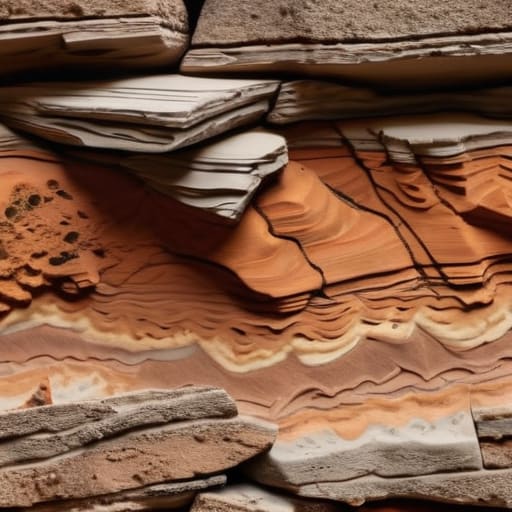
When I am on a site in the hills of Tuscany or tracing the faded frescoes of a Sicilian villa, I don’t just see a color; I see a map of the landscape. To truly understand a wall, you have to look past the surface and consider the geological origins of ochre that dictated the building’s entire visual language. These aren’t just decorative choices made in a vacuum. They are the result of what was available within a few kilometers of the construction site. When I trace a finger over a particularly deep, burnt sienna, I am looking at the specific chemistry of the local soil—the way the iron oxide color variations shift depending on how much manganese or clay was present in that particular vein of earth.
Sourcing raw earth pigments wasn’t a matter of aesthetic preference for the master builders of the past; it was a matter of necessity and profound local knowledge. You can see this in the way a specific shade of yellow settles into the lime wash of a rural farmhouse, a hue that is inextricably tied to the very ground the house stands upon. By studying these layers, we aren’t just looking at paint. We are reading the stratigraphy of human intent, seeing how craftsmen harnessed the mineral wealth of their immediate environment to create a traditional earth color palette that felt, and still feels, entirely inevitable.
The Slow Alchemy of Iron Oxide Color Variations Much
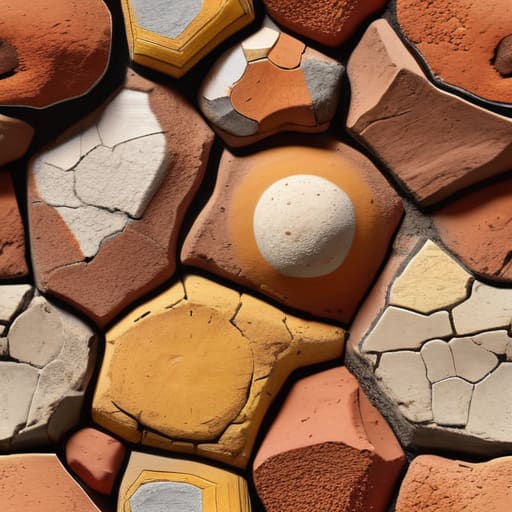
When I am surveying a faded facade in the hills of Tuscany or a crumbling courtyard in Sicily, I am rarely looking for a single, uniform shade. Instead, I am looking for the tension between different heats of red and yellow. This is where the iron oxide color variations become a map of the local landscape. A single vein of earth doesn’t just produce one color; it produces a spectrum. You might see a deep, bruised hematite red sitting right next to a pale, sun-bleached sienna, often within the same square meter of plaster. It isn’t a mistake or a lack of consistency; it is the chemical reality of the soil.
To understand these shifts, you have to look at the geological origins of ochre in a specific region. The presence of water, the level of oxidation, and even the specific impurities in the clay dictate whether a pigment leans toward a vibrant orange or a somber, brownish terracotta. When I photograph these patches, I’m not just documenting decay. I am documenting the moment a mason decided to mix a specific batch of earth into his lime wash, perhaps trying to mimic a more expensive pigment, or perhaps simply using what was under his feet. There is a profound, quiet logic in how these natural mineral pigments for painting interact with the lime, aging not as a flat coat of color, but as a living, breathing layer of the building’s skin.
The Permanence of Dust
When we look at a faded facade in a Sicilian courtyard or a Roman fresco, we aren’t just looking at color; we are looking at the geological history of the land itself. We have traced how the specific grit of a local ochre interacts with lime, and how the oxidation of iron creates those subtle, shifting gradients that no synthetic pigment could ever replicate. To understand these pigments is to understand that a building’s skin is not a superficial layer, but a deliberate marriage of chemistry and geology. By recognizing the mineral fingerprints left behind, we move past mere aesthetics and begin to grasp the material reality of how these structures were actually brought to life.
I often find myself standing before a crumbling wall, my camera ready to capture the way a particular shade of sienna has held its ground against centuries of salt air and sun. It is a humbling realization: these colors were chosen by hands that have long since turned to dust, yet their decisions remain visible in every streak of pigment. We must stop treating color as a modern convenience and start seeing it as a testament to human intent. Next time you walk through an old city, don’t just look at the light hitting the walls; look for the soul of the earth embedded in the mortar, waiting for someone to finally notice.