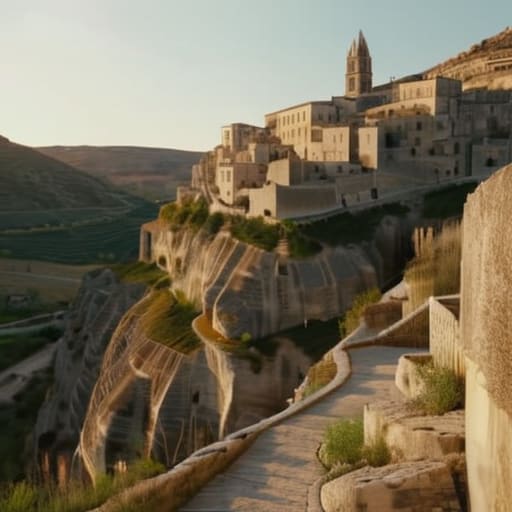
I remember standing in a narrow alleyway in the Sassi during a particularly humid July, watching a tour group cluster around a crumbling archway. They were all staring at the “picturesque” view, snapping the same filtered photos of the cave dwellings, completely oblivious to the fact that the very structural logic of the Sassi of Matera was being swallowed by modern, poorly executed cement repairs. It frustrates me to see people treat these stone labyrinths like a mere backdrop for a vacation photo, rather than seeing them for what they truly are: a complex, breathing dialogue between human necessity and the calcarenite rock.
I am not here to tell you which boutique hotel has the best breakfast or where to find the most “Instagrammable” sunset. Instead, I want to show you how to actually read the stone. We are going to look past the postcard veneer to examine the way the voids were hollowed, the specific grit of the local mortar, and the clever, ancient ways these dwellings managed moisture. My goal is to give you the eyes of a conservator, so that when you walk through the Sassi of Matera, you see the decisions of the builders etched into every single joint.
Table of Contents
Tracing the Tool Marks in Ancient Cave Dwellings Basilicata
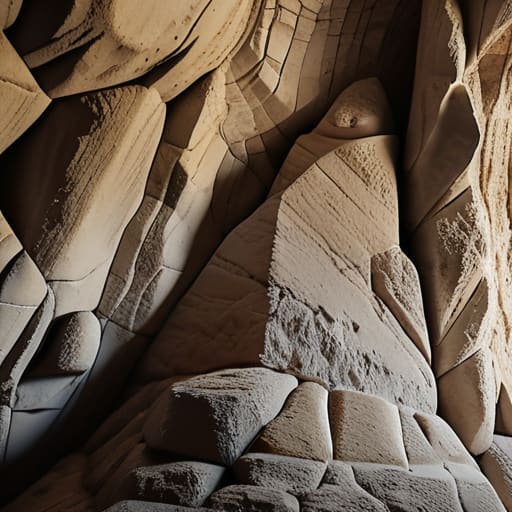
When I find myself deep in the labyrinthine alleys of the ancient cave dwellings Basilicata, I rarely look at the facades first. Instead, I lean in close to the calcarenite walls. There is a specific, rhythmic quality to the percussion marks left by a hand-held chisel—a jagged, uneven cadence that tells me more about the inhabitant’s urgency than any textbook ever could. You can see where the stone was hacked away with brute force to widen a threshold, and where the finish becomes smoother, almost hesitant, near the corners of a sleeping niche.
In this UNESCO World Heritage site Matera, the distinction between “building” and “excavating” dissolves. Most people see a static structure, but I see a continuous negotiation with the earth. I often find myself photographing the slight diagonal striations left by a pickaxe, documenting how the local masons adapted their technique to the varying density of the rock. It isn’t just about shelter; it is about the tactile record of survival. Every gouge in the stone is a decision made in the dark, a moment where a person decided exactly how much of the mountain they needed to remove to call this place home.
The Gravity of Choice Carving Life From Calcarenite
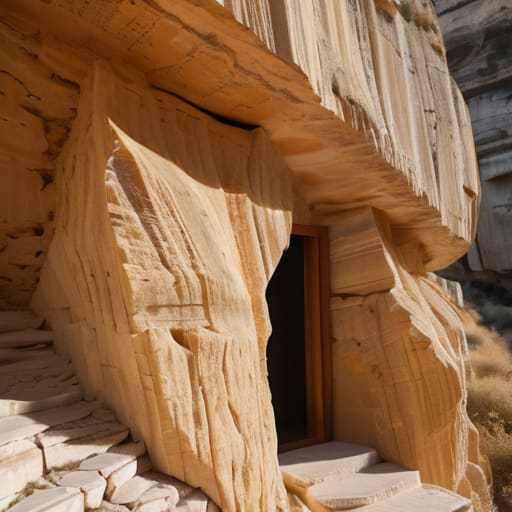
When you stand before a facade in the Sassi, you aren’t looking at a building that was “constructed” in any traditional sense; you are looking at a void that was carefully negotiated. The calcarenite—that soft, honey-colored limestone—is both the provider and the thief. To create a room, you have to take away the very material that holds the structure together. I often find myself tracing the edges where a doorway meets the raw rock, looking for that specific moment of hesitation where the mason decided how deep the threshold should bite into the cliffside. It is a delicate, almost violent dance with gravity.
In these ancient cave dwellings of Basilicata, the architecture is defined by what is absent. Unlike the brickwork I studied in Ravenna, where every layer is an addition, here, every cubic centimeter removed is a structural risk. You can see the intelligence in how they managed the load; they didn’t just hollow out caves, they sculpted them to ensure the weight of the mountain above didn’t become a catastrophe. Even as a UNESCO World Heritage site, Matera demands more than just a casual glance at its beauty; it demands you respect the sheer physical willpower required to turn a solid cliff into a habitable, breathing home.
The Living Memory of the Stone
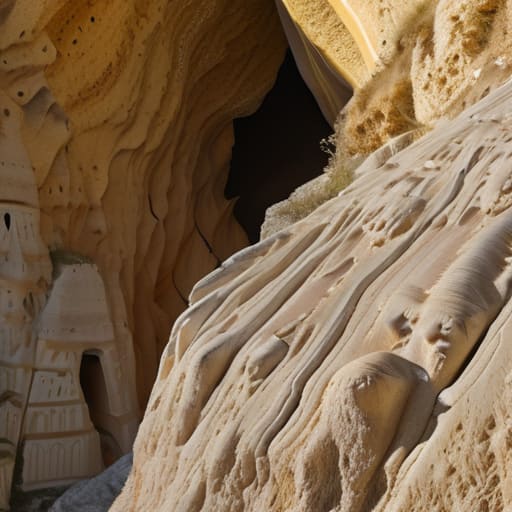
When we look at the Sassi, it is easy to get lost in the sheer scale of the ravine, but the true narrative is found in the details I have spent my career chasing. It is in the way the calcarenite was hollowed out, the specific angle of a chisel mark left by a mason centuries ago, and the way the soft stone was reinforced to hold the weight of a family. We have seen how the material dictated the form, and how the intimate relationship between hand and stone allowed a civilization to emerge from the very bones of the earth. To understand Matera is to understand that these are not just caves; they are deliberate architectural responses to a landscape that demands respect.
As I pack my camera and my calipers, I find myself thinking about the permanence of these decisions. Long after the modern tourists have left the Via del Corso, the stone remains, holding the thermal memory of every person who ever lived within its walls. I hope that next time you stand on the edge of the Gravina, you don’t just see a picturesque vista. Instead, I want you to look closer—look at the seams, the textures, and the unspoken dialogue between the builder and the bedrock. That is where the soul of the city lives, tucked away in the quiet geometry of survival.