I was standing in a dim corner of a basilica near Ravenna last autumn, my flashlight tracing the uneven surface of a crumbling apse, when it hit me how much we get wrong. Most guidebooks treat glass mosaic in byzantine work as if it were some static, ethereal miracle handed down from the heavens, a sort of divine wallpaper that just exists. But when you get close enough to see the lime mortar oozing around the edges, you realize it wasn’t magic—it was math, sweat, and very specific physical choices. They weren’t just decorating a wall; they were engineering a way to trap light using nothing but colored sand and fire.
I’m not here to feed you the usual romanticized nonsense about “lost celestial arts.” Instead, I want to show you the actual mechanics of the craft. We are going to look past the shimmering gold to examine the physicality of the setting process—the angle of the tesserae, the composition of the bedding, and the way the artisans manipulated the substrate to force a glow. If you want to understand how these surfaces actually function, you have to stop looking at the image and start looking at the assembly.
Table of Contents
Forging Color From Fire and Sand
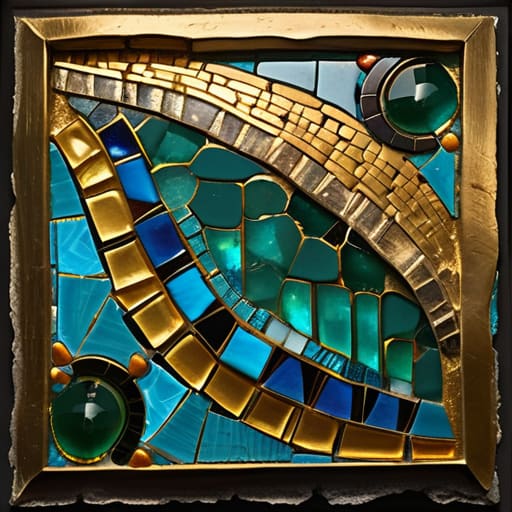
To understand the final shimmer on a church wall, you have to look past the saint’s face and look at the chemistry of the glass itself. Most people see a finished image, but I see the intense, violent heat required for smalti glass production. These aren’t the clear, uniform cubes you’d find in a modern craft kit; they are thick, opaque, and intentionally irregular. The artisans in the Eastern Roman Empire weren’t just making color; they were manipulating minerals—cobalt for those deep, midnight blues, or copper for the greens—to ensure the pigment lived inside the glass, rather than just sitting on the surface.
The real magic, however, happens in the way they handled the light. When I’m surveying a site, I often find that the most striking effects come from the gold leaf sandwich technique. They didn’t just paint gold onto the surface; they encased a thin layer of precious metal between two layers of clear glass. This protected the leaf while creating a specific depth. When you stand in the nave and watch the sun shift, you realize the light isn’t just hitting the wall—it is being trapped and redirected by the uneven thickness of each piece. It’s a deliberate, structural use of refraction of light in mosaics that makes the architecture feel less like stone and more like a living, breathing skin.
The Chemical Soul of Byzantine Architectural Decoration
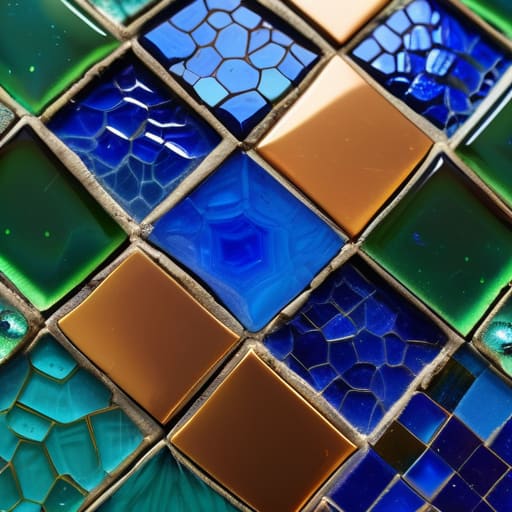
When I run my fingers over a section of surviving wall, I’m not just feeling glass; I’m feeling the chemistry of an empire. The vibrancy we see today isn’t an accident of history, but a result of the complex smalti glass production methods that defined the era. These weren’t the clear, predictable sheets you’d find in a modern studio. They were thick, slightly uneven, and infused with metallic oxides—cobalt for those deep, midnight blues, or copper for the greens—that gave the material an internal life. Because the glass was so dense and saturated, it didn’t just sit on the surface; it seemed to hold the color deep within its very marrow.
What fascinates me most, though, is how they managed the light. They didn’t want a flat, painted surface; they wanted a living interface. By using the gold leaf sandwich technique, where a thin layer of gold is fused between two layers of glass, they created a way to trap light indefinitely. When you stand in a dim nave and see that glow, you are witnessing a deliberate manipulation of physics. They weren’t just decorating a wall; they were engineering a way for the refraction of light to bridge the gap between the physical stone and the divine.
The Living Light in the Mortar
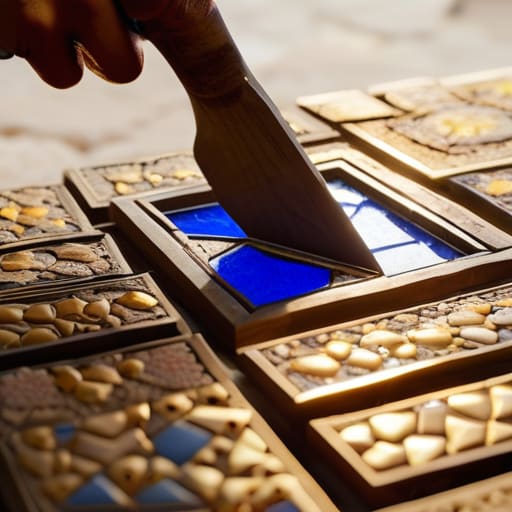
When we strip away the grand theological narratives, we are left with the physical reality of the workshop: the precise chemistry of the glass, the careful selection of metal oxides, and the specific, rhythmic way a craftsman pressed a tessera into a bed of lime mortar. It wasn’t enough for these surfaces to simply depict a saint or a scene; they had to interact with the very air of the basilica. By manipulating the angle of insertion and the varying thickness of the glass, the Byzantine artisans ensured that the light didn’t just hit the wall, but lived within it. Every shimmering fragment is a testament to a deliberate technical decision made over a millennium ago.
Next time you find yourself standing in a dim nave, don’t just look at the images. Look at the way the light breaks against the uneven surfaces. See the slight tilts in the glass, the way the mortar holds the color, and the tiny imperfections that prove a human hand was there, working against the grain of the material. We often think of history as something written in books, but I believe it is written in the joints and the shadows. A mosaic isn’t just a decoration; it is a dialogue between light and stone that refuses to fall silent.