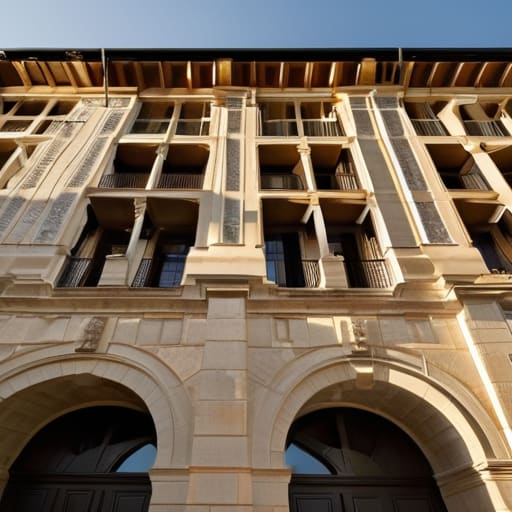
I was crouched in the dust of a narrow side street near Santo Spirito last autumn, my knees aching against the uneven pavement, when I realized I was looking at something most tourists walk past without a second thought. I wasn’t looking at the gilded altarpieces or the famous frescoes; I was staring at a single, deeply recessed joint in a block of pietra forte. People talk about florence palaces and rustication as if it were merely a stylistic choice, a bit of “Renaissance flair” to dress up a facade. But as I traced the marks left by a sixteenth-century chisel, I saw the truth: it was a brutal, calculated language of structural intimidation.
I’m not here to give you a dry lecture on art history or repeat the sanitized versions you find in glossy guidebooks. Instead, I want to show you how to read the stone itself. We are going to look past the “beauty” of these facades to understand the actual physics and the deliberate decisions made by the masons. I promise to guide you through the grit and the geometry, teaching you to see the weight, the texture, and the sheer human will etched into every block.
Table of Contents
Reading the Intentionality of Architectural Facade Textures
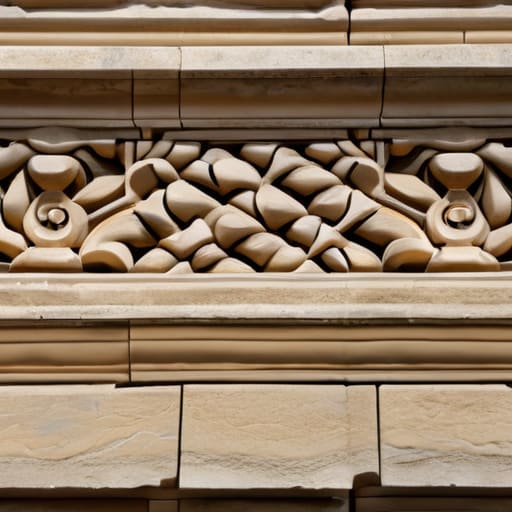
When I stand before a façade in the Oltrarno, I am not looking at a wall; I am looking at a sequence of choices. To understand the palazzo architecture history of this city, you have to stop seeing the stone as a finished surface and start seeing it as a gradient of labor. You can trace the exact moment a builder decided to move from the aggressive, almost defensive grit of the ground floor to the refined elegance of the piano nobile. This transition from rough to smooth stone is never accidental. It is a physical manifestation of social hierarchy, where the weight of the masonry literally anchors the building’s prestige to the street.
I often find myself tracing the chisel marks on a particularly stubborn block of pietra forte. In the context of various Renaissance architectural styles in Florence, these textures act as a visual language. A deeply recessed joint isn’t just a way to fit stones together; it creates a shadow play that emphasizes the sheer mass of the structure. When you look closely at the stone masonry techniques of the Renaissance, you realize that the “imperfections” are often the most communicative parts. They tell you whether the mason was rushing to meet a deadline or if the patron—perhaps even someone from the Medici circle—demanded a specific, tactile ruggedness to project an image of unshakeable stability.
The Weight of Power in Renaissance Architectural Styles Florence
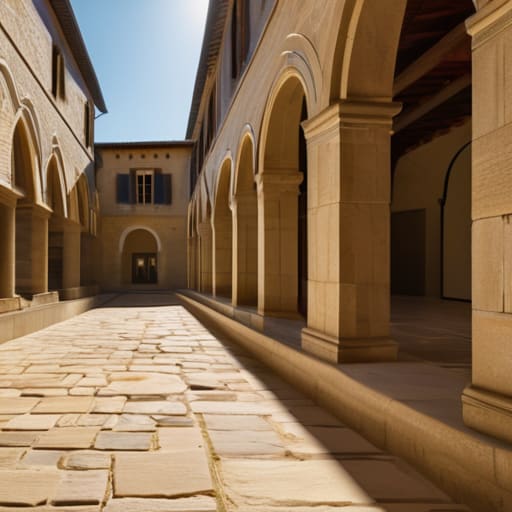
When you stand before the Palazzo Medici Riccardi, you aren’t just looking at a house; you are looking at a calculated display of stability. As I trace the lines of the ground floor, I see how the stone masonry techniques of the Renaissance were used to establish a hierarchy of presence. The base is massive, almost defensive, with blocks that feel as though they are anchoring the entire street to the earth. It is a physical manifestation of the family’s rising influence—a way of saying that their foundation is as unshakeable as the stone itself.
As your eyes move upward, you witness the deliberate transition from rough to smooth stone. This isn’t an aesthetic accident or a mere stylistic whim. It is a sophisticated visual language. The heavy, rugged textures of the lower levels gradually yield to more refined, polished surfaces on the upper stories. This progression reflects a shift from the earthly, defensive grit of the street level to the intellectual and refined grace of the private quarters above. In the context of Renaissance architectural styles in Florence, this gradient serves as a silent map of social order, moving from the raw strength of the street to the cultivated elegance of the ruling class.
Beyond the Surface
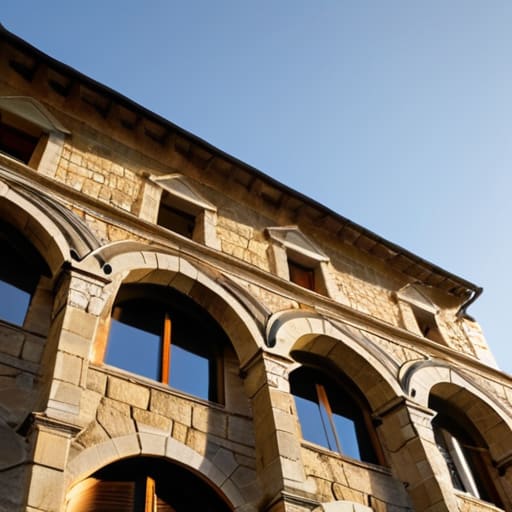
When we step back from the street and look at these Florentine facades, we aren’t just seeing a collection of pretty stones or a stylistic choice from a textbook. We are seeing the culmination of a very specific, very physical dialogue between the mason’s chisel and the patron’s ego. From the deeply recessed, rugged joints of the early Renaissance to the more refined, smoothed surfaces of later centuries, every transition in texture tells us something about the shifting priorities of the city. We have seen how rustication was used to ground a building in permanence, using weight to command respect and declare that the family within was as immovable as the stone itself.
Next time you find yourself walking through the Oltrarno or passing a grand palazzo on the Via de’ Tornabuoni, I urge you to stop looking at the silhouette and start looking at the interstitial spaces. Look at where the mortar meets the edge of the block, or how the light catches a deliberate tool mark left by a craftsman five hundred years ago. Architecture is not a static image; it is a series of technical decisions frozen in time. If you learn to read the language of the joints, the buildings will stop being mere scenery and start telling you their secrets.