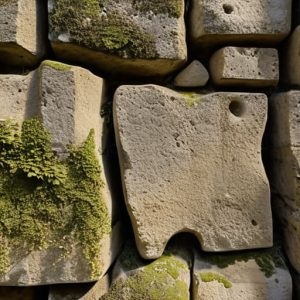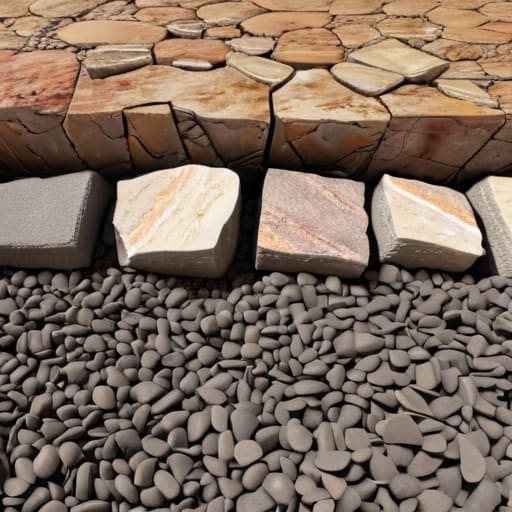
I was kneeling in a muddy trench outside of Via Appia last autumn, my knees soaked through, staring at a fragment of crushed volcanic tuff that most tourists would have stepped over without a second thought. Everyone talks about the grand, sweeping arches and the marble monuments, but they completely miss the point of how these veins of empire actually functioned. They treat roman roads and layering as some sort of mystical, monolithic feat of engineering, when in reality, it was a brutal, incredibly logical sequence of grit, rubble, and drainage. You don’t find the soul of a road in its surface stones; you find it in the unseen weight of the foundation.
I’m not here to give you a sanitized lecture on imperial logistics or some textbook list of materials. Instead, I want to show you how to read the ground beneath your feet like a technical drawing. We are going to strip away the romanticized myths and look at the actual structural decisions made by engineers two millennia ago—from the way they managed water to the specific compaction of the aggregate. If you want to understand why these paths still hold firm while our modern asphalt crumbles in a single season, let’s look at the layers.
Table of Contents
Deciphering Intent in Ancient Roman Engineering Techniques
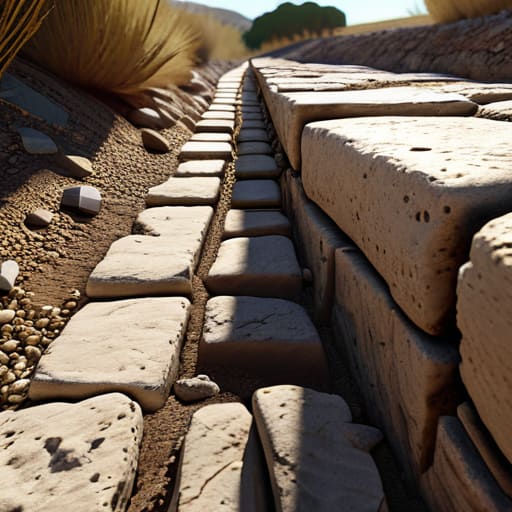
When I kneel in the dirt beside a section of a broken way, I’m not looking at a pile of debris; I’m looking at a sequence of decisions. To understand the stratification of Roman roads, you have to stop seeing them as a single surface and start seeing them as a vertical argument against gravity and water. They didn’t just dump stone on the ground and hope for the best. There is a deliberate, almost rhythmic logic to the way they stacked materials. You’ll find the statumen layers—those heavy, hand-placed foundation stones—acting as the anchor, providing a rigid base that prevents the entire structure from sinking into the soft Italian silt.
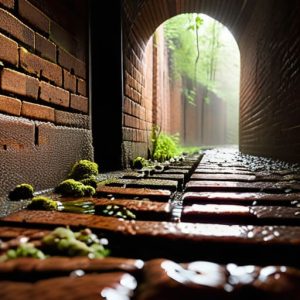
It is this specific sequence of ancient Roman engineering techniques that explains why a path can remain visible two millennia after the legions have marched away. If you look closely at the transition between the rubble and the finer aggregate, you can see where they anticipated the enemy: moisture. The way they engineered the Roman road drainage systems, subtly cambering the surface to shed water toward the sides, shows a profound respect for the physics of erosion. They weren’t just building a path for feet or wheels; they were building a machine designed to manage the very earth it sat upon.
The Weight of History Beneath the Surface
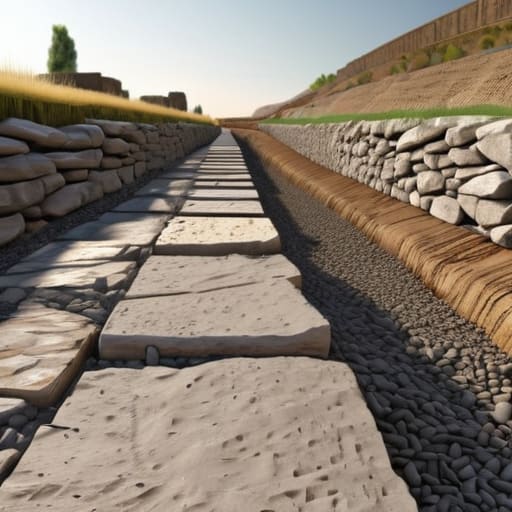
When I kneel by a section of a road where the top layer has been stripped away by centuries of plowing or looting, I don’t just see a hole in the ground. I see a vertical timeline. You can trace the logic of the builders through the stratification of Roman roads, moving from the chaotic, heavy rubble of the foundation up to the precision of the surface. It isn’t just about stacking material; it’s about managing pressure. They understood that for a surface to remain level, the weight had to be distributed through a very specific sequence of compression.
I often find myself tracing the transition between the statumen and the rudus layers with my fingers. There is a tactile intelligence in the way they transitioned from large, hand-set stones to finer, crushed aggregates. This wasn’t haphazard; it was a calculated response to the soil beneath. If they encountered soft earth, they thickened the base. This deliberate approach to the pavimentum and statumen layers is exactly why these arteries still dictate the geography of our modern landscape. They didn’t just build a path; they engineered a permanent geological feature that happened to be made by human hands.
The Silent Dialogue of Stone and Sand
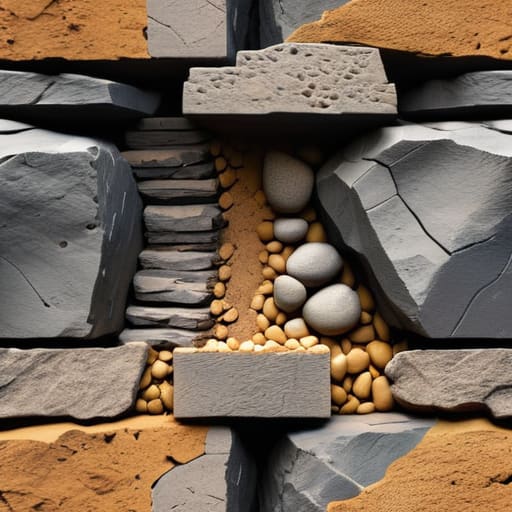
When we look at these roads, we shouldn’t just see a way to get from point A to point B; we have to see them as a vertical conversation between the earth and the engineer. From the initial statumen of heavy stones to the final, meticulously fitted summa crusta, every layer was a deliberate response to the soil beneath it. We’ve seen how the Romans didn’t fight the landscape, but rather negotiated with it through drainage, compaction, and a relentless pursuit of structural stability. To understand the road is to understand the grit, the lime, and the sheer, stubborn logic of a civilization that built not for the season, but for the millennium.
Next time you find yourself walking along a path that feels too permanent, too intentional, I want you to stop. Don’t just look at the horizon; look down at the edges where the paving meets the dirt. Look for the way the layers settle, the way the centuries have tried—and failed—to reclaim the ground. There is a profound, quiet dignity in a well-placed joint or a carefully graded slope. It reminds us that true permanence isn’t found in the grand monuments we see from a distance, but in the unseen decisions made deep within the foundation, long before the first traveler ever set foot upon them.