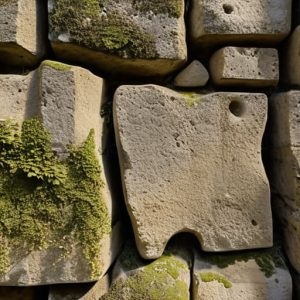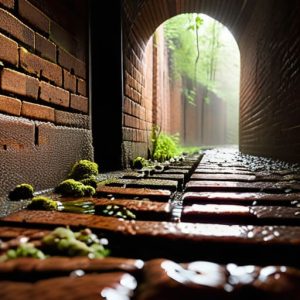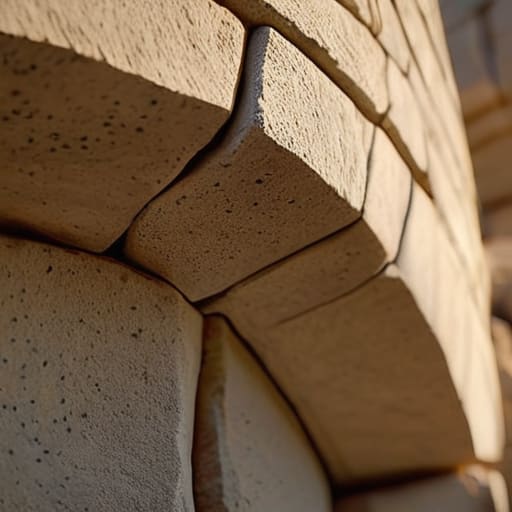
I was standing in a damp, half-collapsed Romanesque doorway near Ravenna last Tuesday, my fingers tracing the uneven grit of a limestone voussoir, when I realized how much we misinterpret the simplest things. Most textbooks will try to sell you a sanitized, mathematical abstraction of the arch and how it works, treating it like a sterile equation found in a physics lab. But they forget that an arch is a living tension; it is a physical argument between heavy stone and the relentless pull of the earth. When I look at a structural failure, I don’t see a math error—I see a moment where the stone lost its grip on the intent of the mason.
I am not here to bore you with theoretical diagrams that have no business being separated from the dust and the mortar. Instead, I want to show you the actual mechanics of weight, the way compression turns individual blocks into a single, unyielding unit. I promise to strip away the academic jargon and talk to you about the real logic of the curve—the way a well-placed keystone can hold the weight of a century through nothing more than sheer, calculated pressure.
Table of Contents
The Physics of Stone Masonry and Gravity
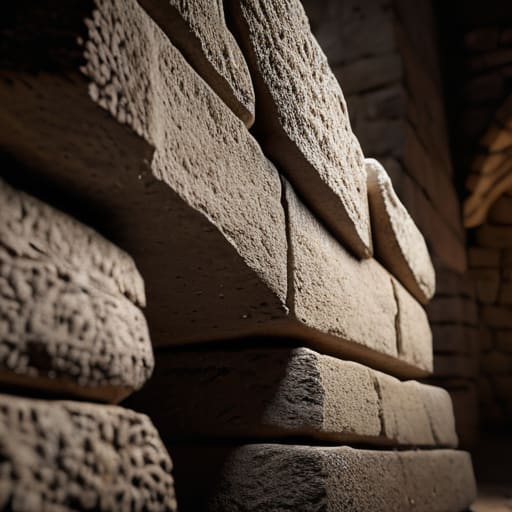
When I’m crouched in a damp basement in Ravenna, tracing the line where a voussoir meets its neighbor, I don’t see abstract equations. I see a physical negotiation. The physics of stone masonry isn’t about clean, digital lines; it’s about the messy reality of mass. Every stone in an arch is essentially trying to fall straight down, driven by a relentless, singular urge toward the center of the earth. But because they are wedged into a curve, that downward energy is forced to change direction. It’s diverted sideways, pushing against the adjacent stone, turning a vertical collapse into a lateral embrace.
This is the core of the structural mechanics of arches: the transformation of gravity into compression. As long as the stones are being squeezed together tightly enough, they stay put. They aren’t just sitting there; they are actively fighting. If you look closely at the joints—especially in those older, slightly irregular Roman spans—you can see where the distribution of weight isn’t perfectly even. You see the slight shifts, the tiny compressions in the mortar, and the way the stones lean into one another to find a state of equilibrium. It is a constant, silent struggle held in check by nothing more than geometry and the sheer weight of the material itself.
The Intentional Distribution of Weight in Arches
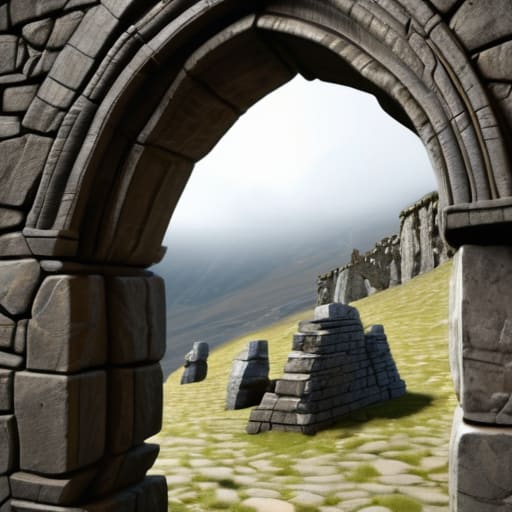
When I stand before a medieval portal, I’m not looking at the decorative carvings; I’m looking at how the stone manages the crushing reality of its own existence. To understand the distribution of weight in arches, you have to stop seeing them as static shapes and start seeing them as active paths. Every stone, or voussoir, is essentially in a state of controlled falling. The weight doesn’t just sit there; it travels. It moves through the curve, stepping from one block to the next, redirected from a vertical downward pull into a lateral thrust that wants to push the walls outward.
This is where the true structural mechanics of arches reveal the hand of the master mason. If the abutments—those heavy side supports—aren’t massive enough to counteract that outward push, the entire geometry fails. I often find myself tracing the lines of force in old Romanesque structures, noting how the thickness of the piers tells you exactly how much pressure the architect expected to manage. It isn’t just about supporting a roof; it is about a calculated redirection of force that turns gravity from an enemy into a stabilizing companion. You can see the exact moment where the builder decided that the weight was no longer a threat, but a tool for stability.
The Weight of History and Intent
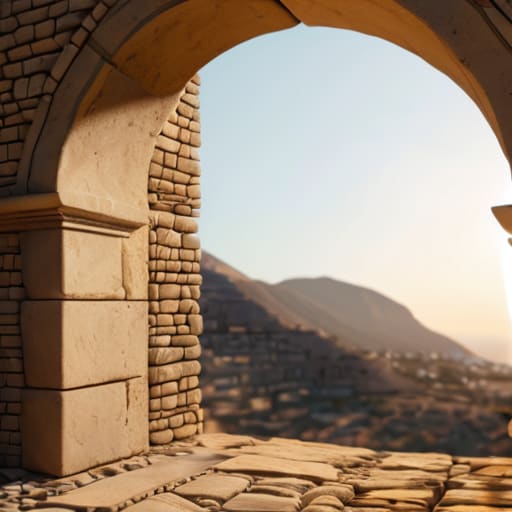
When you step back from a structure, it is easy to see only the silhouette against the sky, but the true genius lies in the compressed tension between the voussoirs. We have seen how the arch transforms the relentless downward pull of gravity into a lateral force, redirected through the geometry of the curve and anchored by the heavy, unyielding weight of the abutments. It is not merely a shape; it is a sophisticated management of energy where every stone relies on its neighbor to maintain the equilibrium. Whether it is a Roman triumphal gate or a humble stone lintel in a Sicilian village, the principle remains the same: stability is achieved through a calculated struggle of forces working in perfect, silent unison.
Next time you walk through a city, I urge you to stop looking at the facades and start looking at the joints. Find an arch, lean in close, and look for the marks left by the mason’s chisel or the slight irregularities in the mortar. You will realize that these structures are not static objects, but living decisions frozen in stone. An arch is a testament to human agency—a way of saying that we understood the laws of the earth well enough to bend them to our will. When you see the way the stones lean into one another, you aren’t just seeing architecture; you are witnessing the enduring intent of those who refused to let gravity have the final word.