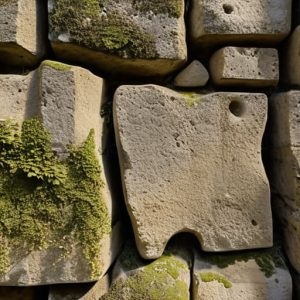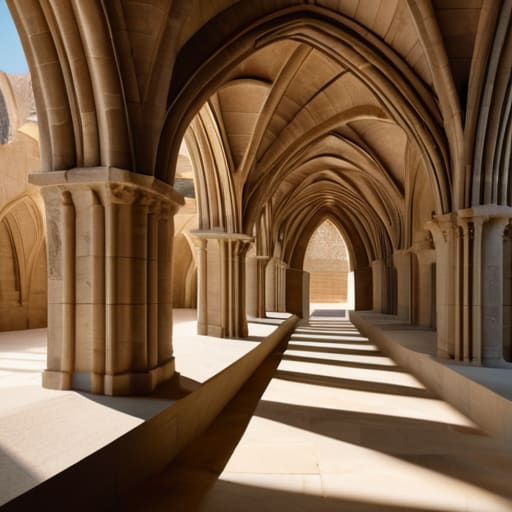
I was standing in a damp basement in Ravenna last November, my flashlight beam cutting through decades of dust, when I realized most people treat a ceiling like a mere lid. They see a finished surface, a decorative flourish of plaster or stone, and they stop looking. But when you truly study the vault and its variations, you realize you aren’t just looking at a shape; you are looking at a negotiation with gravity. I watched a mason’s thumbprint preserved in a patch of lime mortar near a groin vault, a tiny, accidental signature of a man who had to decide, in a single afternoon, exactly how much lateral thrust those walls could actually handle.
I have no interest in reciting the sterile, textbook definitions of geometry that you can find in any university syllabus. Instead, I want to show you how to read the structural intent left behind in the masonry. We are going to strip away the architectural jargon and look at the real mechanics—the way a barrel vault breathes under pressure and why a pointed arch was often a desperate, brilliant solution to a weight problem. I promise to show you the logic of the stone, not just the beauty of the curve.
Table of Contents
Reading the Pressure in Historical Masonry Arches
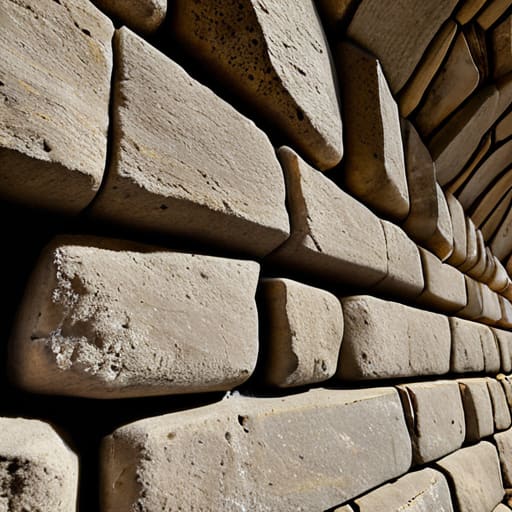
When I stand beneath a heavy stone arch, I am not just looking at an opening; I am looking at a frozen negotiation with gravity. You can see the exact moment the tension shifts by observing how the stones—the voussoirs—settle into one another. In many historical masonry arches, the pressure isn’t a uniform weight; it’s a directional force that seeks the path of least resistance toward the ground. I often find myself tracing the slight irregularities in the mortar joints, looking for that telltale sign of lateral thrust. If the mortar is crushed or the stones are slightly flared at the base, you are seeing the building’s long-term struggle to keep its feet planted.
It is a different conversation when you move from a simple curve to something more complex, like the intersection of two semicircles. In groin vault construction, the weight is no longer distributed along a continuous line but is funneled into specific, concentrated points. This change in geometry dictates everything about the supporting piers. I’ve spent many afternoons in damp Sicilian chapels, photographing the way a pier has bowed or cracked under this specific concentrated load. You aren’t just seeing decay; you are reading the structural logic that the original master mason intended, even if the stone has moved a few millimeters since the day it was set.
Where Gravity Meets the Masons Will
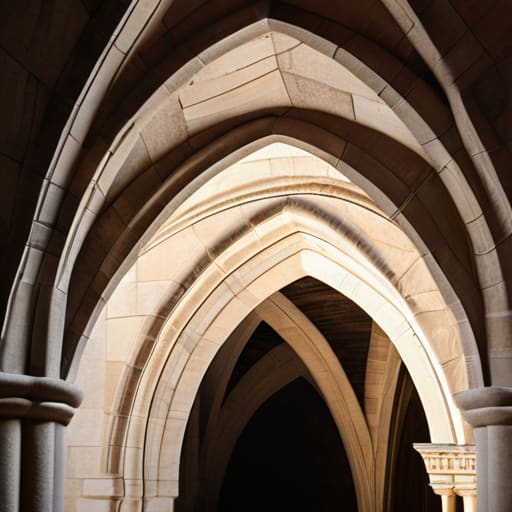
When I stand beneath a heavy ceiling, I don’t see a decorative canopy; I see a constant, silent negotiation between weight and geometry. Take the transition from a simple barrel vault to something more complex. In a basic barrel vault, the weight is relentless, pushing outward along the entire length of the walls like a heavy, unyielding wave. You can see the struggle in the thickness of the masonry required to keep those walls from splaying. But when the mason moves toward groin vault construction, the physics change entirely. By intersecting two barrel vaults at right angles, they concentrate the downward thrust into four specific points. It is a brilliant bit of structural sleight-of-hand—the weight is no longer a continuous burden on the walls, but a directed force that can be channeled into piers.
It is in these moments of transition that the mason’s ambition becomes visible. If you look closely at a ribbed vault structure, you aren’t just looking at ornamentation; you are looking at the skeletal framework that allowed builders to push higher and thinner than ever before. The ribs act as the primary load-bearing paths, guiding the gravity away from the web of the vault and down toward the ground. I often find myself tracing these lines with my eyes, trying to sense the exact moment the builder decided to stop relying on sheer mass and start relying on calculated elegance.
The Silent Dialogue of Stone
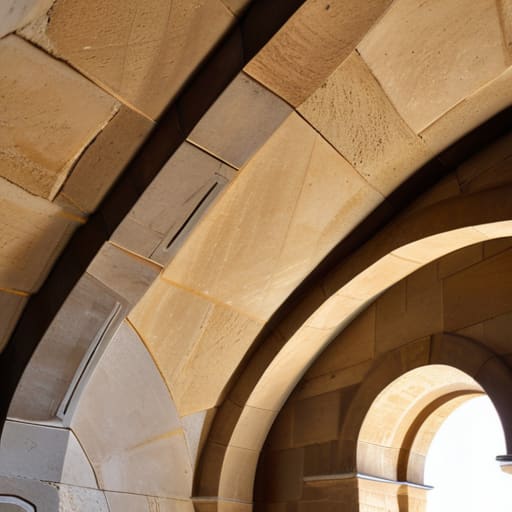
When we step back from the individual stones, we see that a vault is never just a static shape; it is a continuous, calculated negotiation with gravity. Whether we are tracing the precise, mathematical elegance of a Roman barrel vault or the more intuitive, organic curves of a local vernacular structure, we are looking at a record of structural decision-making. We have seen how the thickness of the mortar, the angle of the voussoirs, and the way the lateral thrust is managed all serve to translate raw weight into enduring form. To understand the vault is to understand that stability is not an accident, but a deliberate triumph of geometry over the constant pull of the earth.
Next time you find yourself standing beneath one of these heavy, overhead spans, I urge you to do more than just admire the scale. Look for the imperfections—the slight shift in a stone, the way a particular joint has been packed with lime to compensate for a settling foundation, or the marks left by a chisel that sought to refine a curve. These are the fingerprints of the past. A vault is a conversation between the material and the maker that has been continuing for centuries. If you listen closely to the way the weight is distributed, you will realize that the building isn’t just standing there; it is actively performing the work of staying alive.