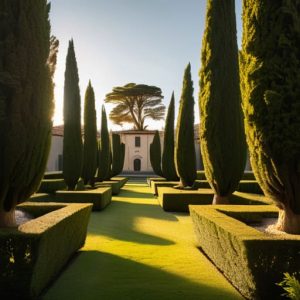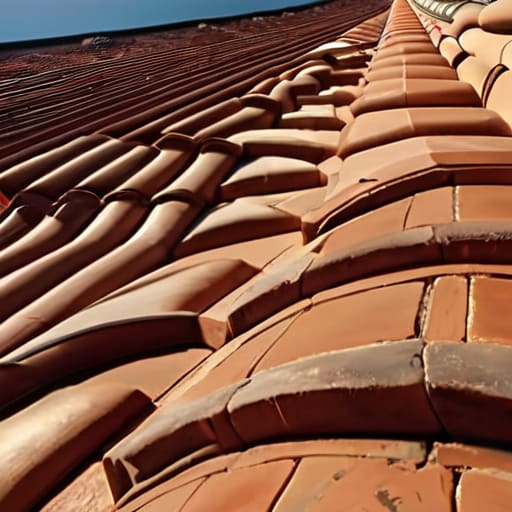
I spent three hours last Tuesday crouched on a scaffold near the Duomo, not looking at the skyline, but squinting at a single, stubborn seam of mortar. Most people visit the brunelleschi dome in florence to marvel at the sheer scale of the silhouette against the Tuscan sky, but that’s just the surface—it’s the easy part. They talk about the “genius” as if it were a divine lightning bolt, ignoring the grit and the terrifying math that actually kept those massive stones from plummeting onto the Piazza del Duomo. To me, the miracle isn’t in the aesthetic grandeur; it’s in the way the bricks were laid in a herringbone pattern to prevent the whole structure from sliding inward during construction.
In this series, I’m not going to feed you the polished, textbook version of Renaissance history. Instead, I want to show you the actual mechanics of survival. We are going to look past the tourist brochures and examine the joints, the weight distribution, and the sheer, stubborn engineering that turned a structural crisis into a masterpiece. I promise to show you exactly how this thing stays standing, one stone at a time.
Table of Contents
The Weight of Ambition in Santa Maria Del Fiore Architecture
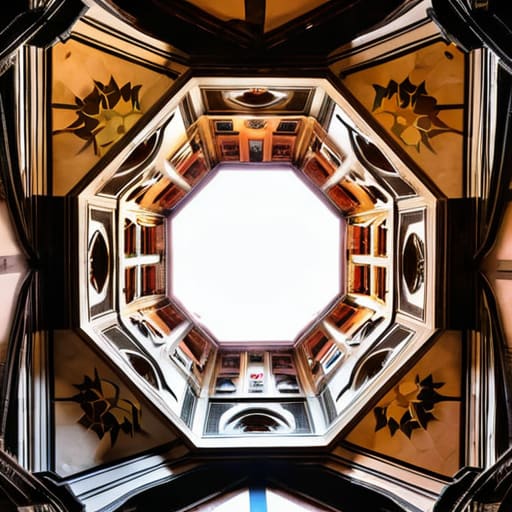
When I stand in the nave of Santa Maria del Fiore, I don’t just see the vastness of the space; I feel the crushing physical pressure of the void above us. For decades, that octagonal opening sat like an open wound in the city’s skyline, a structural impossibility that no one knew how to close without massive, traditional centering—timber scaffolding that simply didn’t exist in quantities large enough to bridge the gap. The sheer scale of the Santa Maria del Fiore architecture meant that any mistake wouldn’t just be an aesthetic failure; it would be a catastrophic collapse of stone and ego.
Brunelleschi’s genius wasn’t just in the math, but in his understanding of how to manage these massive lateral forces. He moved away from the idea of a single, heavy mass and instead pivoted toward a double-shell dome construction. By nesting a lighter inner shell within a protective outer one, he created a structural system that breathed. It was a radical departure from the Gothic traditions that had preceded him. You can see his logic in the way the masonry is laid; he wasn’t just stacking bricks, he was weaving a web of stone that used its own weight to lock itself into place, turning gravity from an enemy into a stabilizing force.
Where Stone Meets Will the Logic of the Impossible
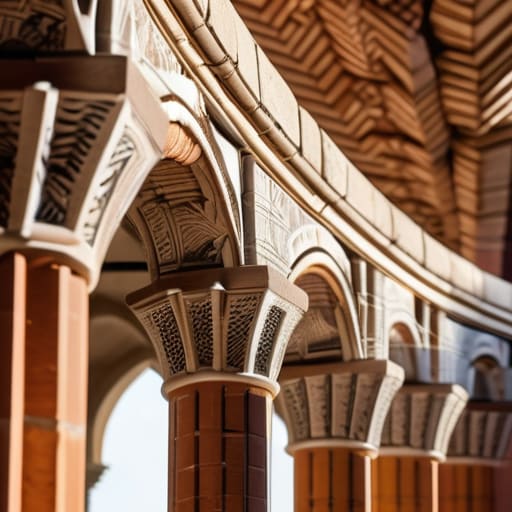
I spent an hour yesterday tracing the line where the brickwork transitions into the stone ribs, and it struck me again: this wasn’t just about aesthetics. To understand the Santa Maria del Fiore architecture, you have to stop looking at the silhouette and start looking at the physics of the curve. Brunelleschi couldn’t rely on traditional centering—those massive wooden scaffolds that usually support an arch during construction—because the span was simply too wide, the scale too terrifying. Instead, he turned the structure into its own support system. By utilizing a double-shell dome construction, he created a hollow space between an inner, thicker shell and a lighter outer one, effectively reducing the dead weight that would have otherwise crushed the drum below.
It is a masterclass in tension and compression. When I examine the way the bricks are laid in a herringbone pattern, I don’t just see a decorative choice; I see a solution to a crisis of gravity. That spina pesce pattern allows the masonry to lock into itself, preventing the courses from sliding inward as the dome rose toward the sky. It is one of those rare moments in history where the geometry isn’t just a way to shape the building, but the very thing that keeps it from collapsing under its own ambition.
The Imprint of the Maker
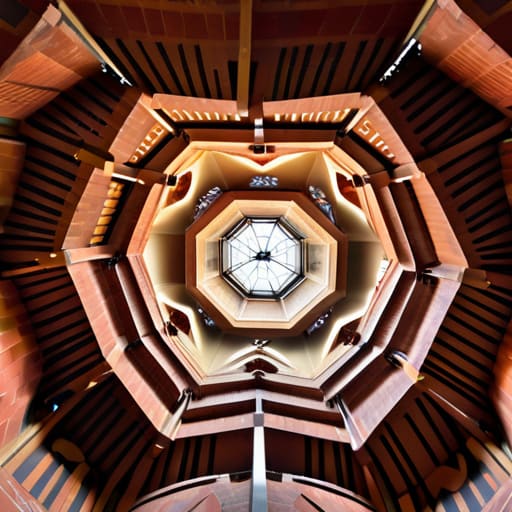
When I stand beneath the shadow of the Cupola, I am not looking at a finished monument, but at a continuous argument between gravity and human ingenuity. We have traced the logic of the double shell, the ingenious herringbone brickwork that prevented the masonry from sliding inward during construction, and that fundamental shift from mere guesswork to rigorous, mathematical engineering. It wasn’t just about the scale of the achievement; it was about the specific, tactile decisions made in the scaffolding and the mortar joints. Brunelleschi didn’t just dream of a dome; he solved the mechanical puzzle of how to keep it from collapsing under its own immense weight before the final keystone was ever set.
Ultimately, the dome reminds us that architecture is never just a silhouette against the Tuscan sky. It is a physical record of struggle, a testament to the thousands of hands that laid each brick and the singular mind that dared to organize them. Next time you pass through Florence, don’t just look up at the majesty of the shape. Look for the seams and the structural logic hidden in the shadows of the ribs. If you look closely enough, you will see that the real miracle isn’t the height of the structure, but the way the people of the fifteenth century managed to weave stone and will into something that refuses to fall.