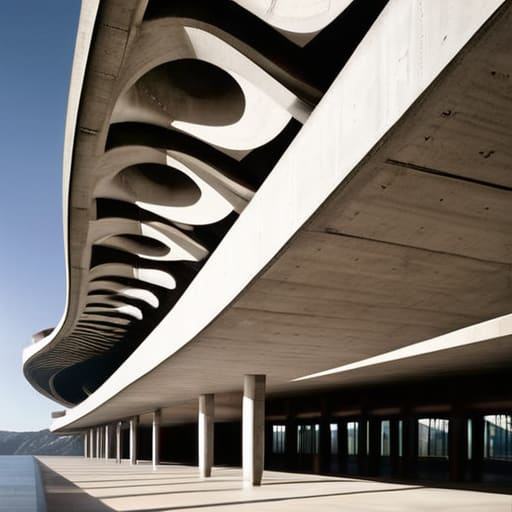
I remember standing in the shadow of the Palazzetto dello Sport in Rome, my fingers tracing the rhythmic, sweeping curves of the precast ribs. Most people stand there and marvel at the aesthetic grace of the structure, treating it like a piece of sculpture that just happened to be built. They talk about the “genius” of the designer as if it were a divine spark, completely ignoring the grit, the heavy lifting, and the mathematical violence required to make such a thing stand. To me, the true magic of nervi and concrete engineering isn’t found in the grand silhouette, but in the way the ribs manage the tension—the way they translate raw, heavy force into something that looks almost weightless.
I am not here to sell you on the romanticized myth of the “architect-as-god.” Instead, I want to pull back the scaffolding and look at the actual mechanics of the pour and the logic of the reinforcement. We are going to look past the prestige to examine the physical reality of how these forms actually work. I will show you how to read the structural intent hidden within the concrete, moving beyond the hype to understand the precise, calculated decisions that allow these giants to defy gravity.
Table of Contents
Reading the Intent in Post War Structural Engineering History
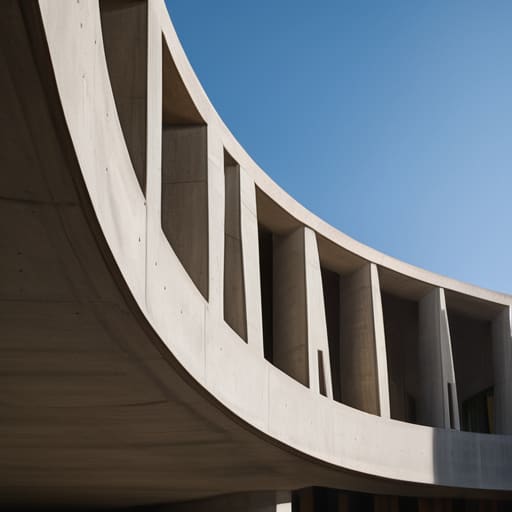
To understand the shift in post-war structural engineering history, you have to stop looking at the buildings as finished objects and start seeing them as a series of resolved tensions. Before the war, much of our masonry was about mass—thick walls, heavy loads, a sense of permanence through sheer weight. But after the devastation, there was this desperate, beautiful necessity to do more with less. We moved away from hiding the skeleton behind plaster and marble; instead, we began to celebrate the very mechanics of survival.
When I stand beneath one of his larger spans, I am not looking at a ceiling; I am looking at a logic of forces. This era birthed a true structural expressionism in architecture, where the beauty wasn’t applied as a veneer, but emerged directly from the math. You can see it in the way the ribs trace the flow of stress, a rhythmic language that tells you exactly where the compression is highest. It wasn’t just about making a roof stay up; it was about the aesthetic integration of structural elements, turning the heavy, industrial reality of poured stone into something that feels, almost impossibly, like it is breathing.
Where Math Meets the Mortars Edge
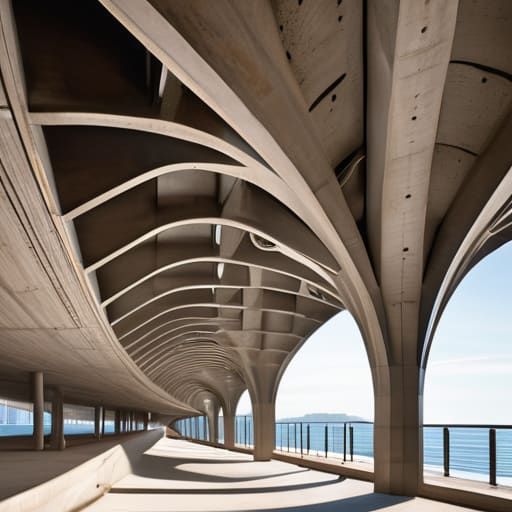
When I stand beneath one of his structures, I don’t see a finished object; I see a mathematical argument frozen in time. To the untrained eye, the ribs are merely decorative, but to me, they are the visible logic of the load. Nervi didn’t hide the physics; he celebrated it. This is the heart of structural expressionism in architecture, where the geometry of the support dictates the rhythm of the entire space. You can see it in the way the ribs taper or thicken, responding to the invisible pressures of gravity and tension. It is a dialogue between the abstract calculation and the physical reality of the pour.
What fascinates me most, however, is the tactile reality of the surface. If you run your hand along the underside of a slab, you aren’t just feeling stone; you are feeling the memory of the timber molds. His innovative concrete formwork design meant that the texture of the wood grain was often transferred directly into the cured mass. Every knot and seam in the timber becomes a permanent part of the building’s skin. It reminds us that even the most complex mathematical proofs must eventually pass through the hands of a carpenter and the grit of a construction site.
The Calculus of the Curve
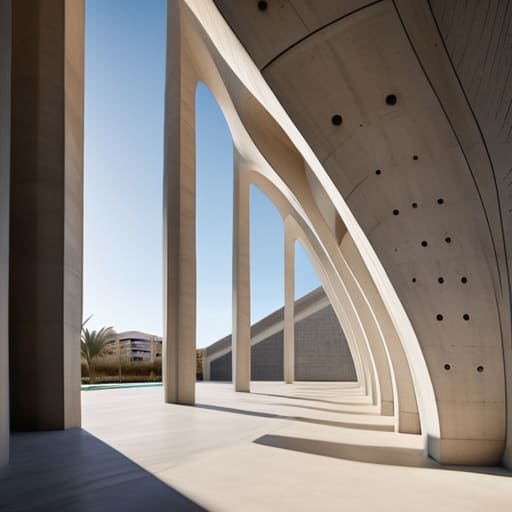
When we look at Nervi’s work, we aren’t just looking at a mastery of physics; we are looking at a profound dialogue between the liquid state of poured concrete and the rigid demands of gravity. We have seen how he moved beyond the mere utility of the material, transforming it into a language of ribs and shells that actually celebrates the tension inherent in the structure. By tracing the flow of his pre-stressed elements, we realize that his genius lay in his ability to make the invisible forces of load and thrust visible to the naked eye. He didn’t hide the structural logic behind a decorative mask; he made the logic itself the ornament.
As I stand before these sweeping, rhythmic geometries, I am reminded that a building is never truly finished once the scaffolding comes down. It is a living record of a specific moment in time—a moment where human intuition and mathematical precision collided. My hope is that when you next walk beneath a concrete span, you won’t just see a ceiling, but rather a frozen choreography of forces. If you look closely enough at the way the light catches a seam or a curve, you will find that the real soul of the architecture isn’t in the grand silhouette, but in the quiet, calculated honesty of the joinery.