I was standing on a scaffolding in Turin last October, my fingers tracing the oxidized seam where a wrought-iron balcony met a limestone lintel, when it hit me how much we misinterpret this era. Most people walk past these buildings and see nothing but “pretty decorations” or expensive, flowery whimsy, treating liberty style and art nouveau as if it were merely a coat of aesthetic paint applied to a facade. They miss the structural rebellion. They see the petal of a flower, but they fail to see the deliberate tension in the metalwork that allowed the architect to finally break free from the heavy, suffocating geometry of the nineteenth century.
I am not here to give you a lecture on art history dates or to romanticize the movement into something untouchable. Instead, I want to show you how to read these buildings like a technical drawing. We are going to look past the surface gilding to examine the way the iron actually behaves, the specific way the masonry was cut to accommodate those sudden, organic curves, and the decisions of the craftsmen who had to invent new ways to join materials.
Table of Contents
The Whiplash Line Aesthetic and Its Living Pulse
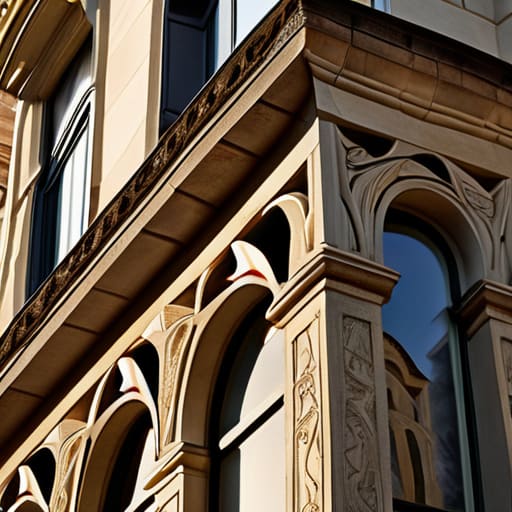
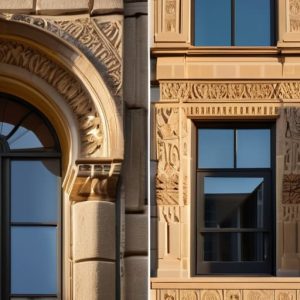
When I stand before a facade from the turn of the century, I don’t just see the decoration; I see the tension. The whiplash line aesthetic isn’t just a pretty squiggle applied to a surface; it is a kinetic energy captured in stone and iron. It’s that sudden, violent curve—like a stem snapping back under pressure—that gives the building a sense of breathing. In many examples of Italian liberty style architecture, you can see how the stonemasons had to abandon the rigid, right-angled logic of the previous era to accommodate these sweeping, asymmetrical flows. It was a technical headache for the carvers, but it changed the very way a building holds its shape.
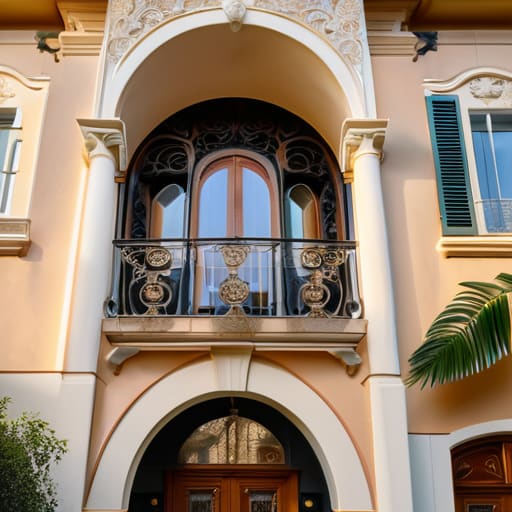
You can trace the pulse of the fin de siècle design history by looking at how these lines transition from the structural to the purely ornamental. I often find myself photographing the way a wrought-iron balcony railing doesn’t just sit on the ledge, but seems to erupt from it, mimicking the frantic growth of a vine. These aren’t static shapes. When you observe the ornamental curves and organic forms in situ, you realize they were designed to lead the eye in a continuous, restless movement, ensuring that the architecture never feels truly still.
Decoding the Fin De Sicle Design History
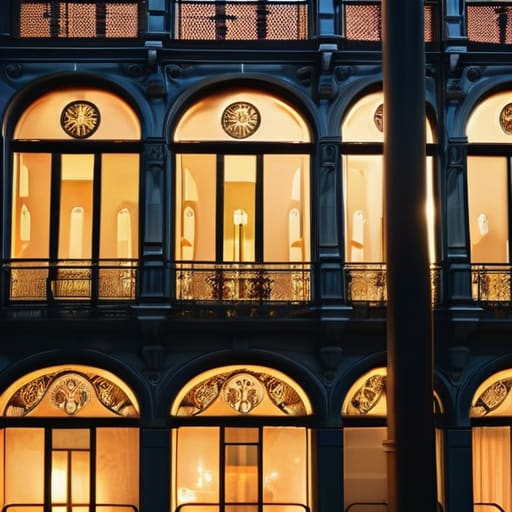
To understand why these buildings feel so restless, you have to look past the surface beauty and into the social anxiety of the era. We often talk about the fin de siècle design history as a mere aesthetic shift, but when I am on a scaffolding in Milan or Turin, I see it as a frantic, beautiful rebellion. It was a period caught between the rigid, heavy weight of 19th-century academicism and the terrifying speed of the coming machine age. The architects weren’t just choosing pretty shapes; they were trying to find a new language that felt alive, a way to bridge the gap between the industrial soot of the city and the memory of the natural world.
In my surveys, I often find that this transition is most visible in the way materials began to cooperate. You see it in the transition from heavy masonry to more fluid, integrated systems where the stone itself seems to yield. The floral motifs in art nouveau weren’t just slapped onto a facade like a sticker; they were often carved with a deep understanding of the substrate, following the grain of the stone or the flow of the stucco. It was a deliberate attempt to marry the decorative arts movement with the very bones of the structure, ensuring that the ornament wasn’t just an addition, but a vital part of the building’s anatomy.
The Echo in the Stone
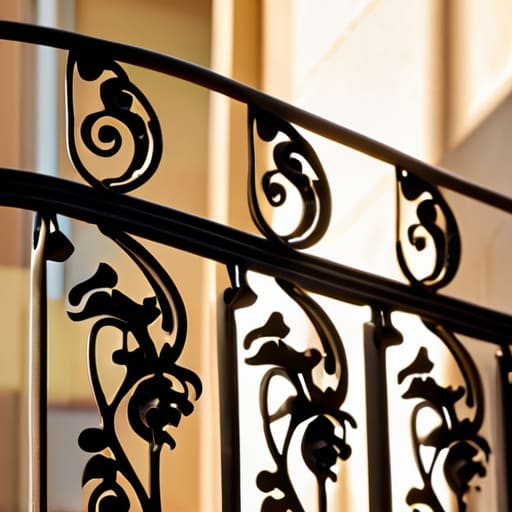
When we step back from the grand facades and look closer at the details, the true essence of Liberty style reveals itself. It isn’t just about the floral motifs or the expensive materials; it is found in the way the ironwork mimics the tension of a stem, or how the stucco transitions from a rigid line into a soft, organic curve. We have seen how this movement was a rebellion against the heavy, historical imitations of the past, opting instead for a fluidity of form that sought to bridge the gap between art and the everyday structure. Whether it is a wrought-iron balcony in Milan or a ceramic tile in Palermo, the movement was defined by a deliberate rejection of the straight line in favor of something that felt, for the first time, truly alive.
As a conservator, I find that these buildings demand more than just a superficial cleaning; they require us to respect the intent of the maker. When you run your hand along a carved stone leaf or trace the seam where glass meets metal, you are touching a moment of profound optimism from a century ago. My hope is that you stop seeing these buildings as mere scenery and start seeing them as living documents of craftsmanship. The next time you walk through an old city center, don’t just look at the height of the ceilings—look for the fingerprints of the artisans who dared to make stone breathe.