I was standing on a rickety scaffold in a damp crypt near Siena last autumn, my nose inches away from a fractured lancet window, when I realized most people completely miss the point of stained glass in italian churches. They walk into the nave, tilt their heads back, and wait to be overwhelmed by the “divine light,” treating the windows like some ethereal, magical accident. But when you’re the one holding the calipers and the cleaning solvent, you see the truth: that light isn’t a miracle; it is a mechanical triumph. It is the result of heavy lead cames being forced into place, of glass being hand-blown with intentional impurities, and of craftsmen fighting against gravity and wind loads to keep those fragile colors from shattering.
I am not here to give you a lecture on the theology of color or the romanticism of the Renaissance. Instead, I want to show you the physicality of the craft. We are going to look past the glow and focus on the structural reality—the way the iron armatures grip the masonry and how the varying thickness of the glass dictates the very soul of the illumination. I’ll show you how to read the material decisions left behind by the glaziers, so you can finally see the building for what it actually is.
Table of Contents
The Violent Alchemy of Medieval Stained Glass Techniques
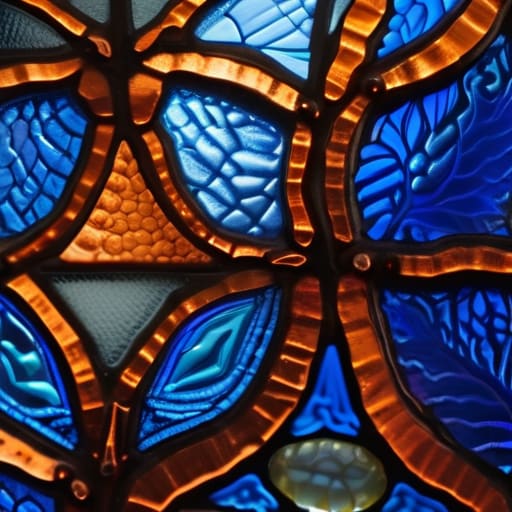
To understand how these windows survived the centuries, you have to stop thinking of them as delicate art and start seeing them as products of a violent, elemental process. The creation of medieval stained glass techniques wasn’t a delicate dance; it was a struggle with fire and chemistry. They would take raw silica, potash, and metal oxides—cobalt for that deep, bruising blue, or copper for the reds—and subject them to the unpredictable fury of the furnace. There is a specific, heavy quality to the glass from this era; it isn’t perfectly flat like the sheets we use today. When I run my fingers near the edge of a surviving fragment, I can feel the slight, organic undulations where the molten material was simply blown or spun into shape, trapping tiny bubbles of air that act like miniature lenses.
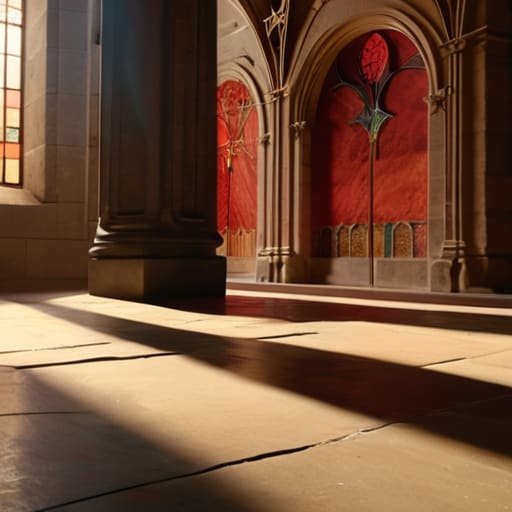
When these pieces are finally set into the lead cames, the physics of the window changes. It isn’t just about the religious iconography in glass; it is about how those thick, uneven surfaces catch the light. As the sun moves, the glass doesn’t just transmit color; it refracts it, throwing jagged, heavy pools of pigment across the stone floor. You aren’t just looking at a picture; you are witnessing a structural battle between the weight of the lead and the thermal expansion of the glass itself.
Where Mortar Meets Metal Securing the Light
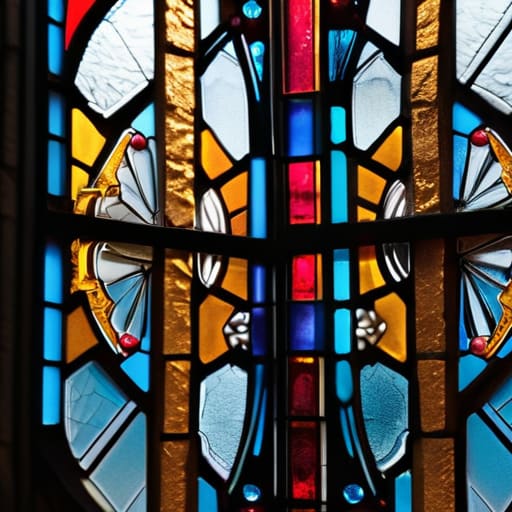
It is easy to get lost in the colors, but as a restorer, I find myself staring at the perimeter. The glass doesn’t just float; it is fighting a constant battle against gravity and the wind. To survive centuries of seismic shifts and thermal expansion, the panels are held in place by a complex skeletal system of iron armatures and lead cames. I often find myself tracing the way the ferramenta—the iron bars—are anchored directly into the stone reveals. If the mason didn’t leave enough room for the expansion of the metal, the glass would have shattered long ago. You can see the tension in the way the lead has slightly bowed over time, a silent record of the weight it carries.
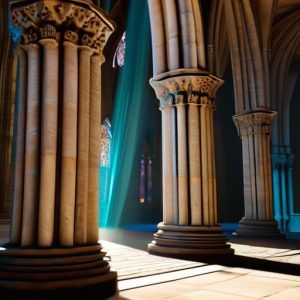
When I examine these windows, I’m looking for the interface where the masonry meets the light. In many examples of italian ecclesiastical architecture, the transition from heavy limestone to the delicate lattice of the window is where the most ingenious engineering happens. You see deep grooves carved into the stone to receive the leaded edges, a technique that ensures the cathedral window illumination remains stable even as the building settles. It is a marriage of brute force and extreme fragility, where the stone must be soft enough to allow for precise carving, yet strong enough to cradle the entire luminous assembly for a millennium.
Beyond the Glow: The Living Window
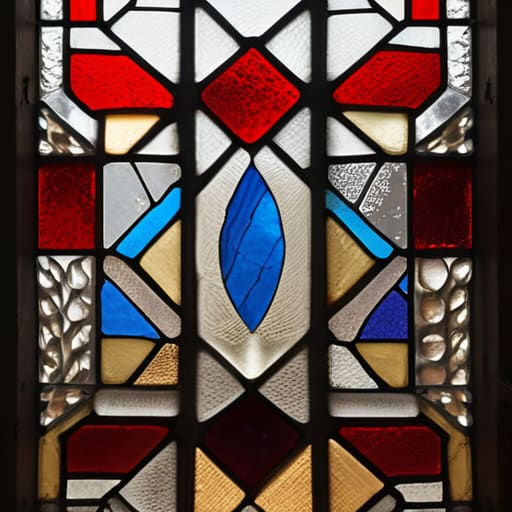
When we step back from the immediate brilliance of the colors, we are left with the reality of the assembly: the heavy lead cames that have bowed under their own weight, the grit of the mortar holding the stone surrounds in place, and the chemical scars where the glass has survived centuries of humidity and heat. It isn’t just a visual spectacle; it is a feat of structural endurance. We have seen how the medieval glazier’s alchemy was inseparable from the mason’s skill, creating a delicate tension where light is filtered through a framework that was never meant to be seen, only to be felt through its strength.
The next time you find yourself in a darkened nave, I urge you to resist the urge to simply look up and marvel. Instead, lean in. Look for the slight irregularities in the glass thickness, the way the iron armatures bite into the masonry, and the intentionality of the joinery. These windows are not just decorations hung upon a wall; they are a dialogue between the light of the sky and the heavy, stubborn physics of the stone. If you look closely enough at the seams, you won’t just see a story of faith—you will see the hands of the people who figured out exactly how to make the light stay.