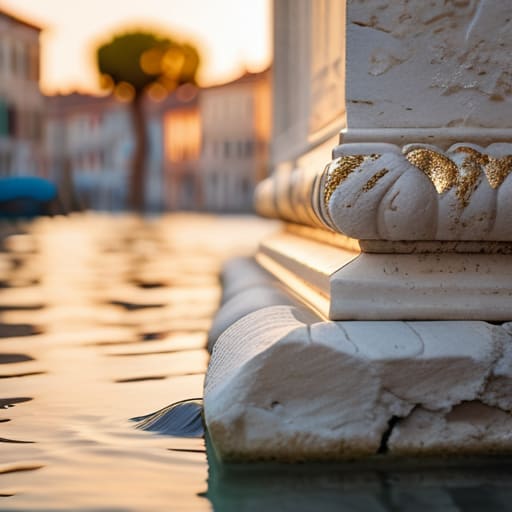
I was crouched in a damp, narrow calle near Cannaregio last Tuesday, my flashlight tracing the jagged interface where a foundation block meets the salt-slicked water. Most tourists walk right past these details, seeing only the shimmering reflection of the Grand Canal, but I was looking at the way the Istrian stone in Venice has actually held its ground against centuries of tidal assault. I didn’t see “beautiful white marble”—a term that makes my skin crawl—I saw a deliberate, heavy defense against the lagoon’s decay. It wasn’t a decorative choice; it was a survival tactic etched into the very grain of the stone.
I’m not here to give you a glossy brochure or a list of architectural superlatives that you could find in any guidebook. Instead, I want to show you the real mechanics of this city: how these massive blocks were actually bedded, why certain joints are failing while others remain watertight, and what the tool marks tell us about the masons who fought the salt long before we were born. We are going to look past the facade to understand the structural truth of how this stone keeps Venice from sinking.
Table of Contents
Decoding the Calcium Carbonate Limestone Properties
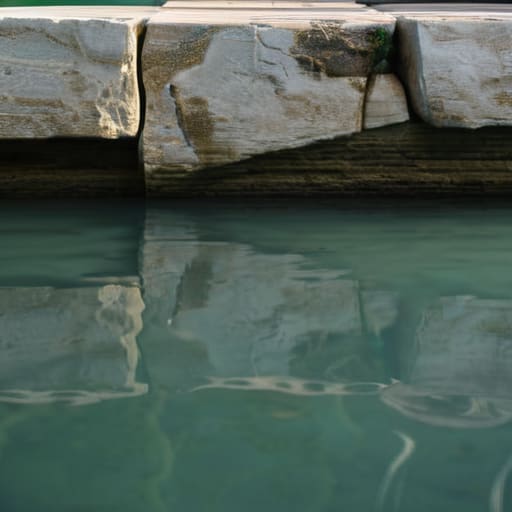
To understand why this stone remains the backbone of the city, you have to look past its pale, luminous surface and get into its chemistry. When we talk about calcium carbonate limestone properties, we aren’t just discussing a geological fact; we are discussing a survival strategy. Unlike the more delicate marbles that you might find in a Florentine palazzo, which crumble under the slightest atmospheric stress, this specific limestone is incredibly dense. It possesses a low porosity that makes it a superlative water-resistant stone for canal foundations. I’ve spent many afternoons kneeling on damp docks, tracing the grain of these blocks, and what strikes me is how little the salt has managed to penetrate the crystalline structure.
It isn’t just about being “hard.” It is about the way the stone reacts to the specific, brutal chemistry of the lagoon. When comparing istrian stone vs marble durability, the difference becomes a matter of life and death for a building. Marble is a luxury, a statement of beauty, but Istrian stone is a statement of structural defiance. It handles the cycle of wetting and drying—the constant, rhythmic pulse of the tides—without the catastrophic exfoliation you see in lesser sedimentary rocks. It is a heavy, deliberate choice that allows the city to sit, quite literally, on a foundation of stone that refuses to dissolve.
Why Venice Chose This Specific Venetian Architecture Building Materials
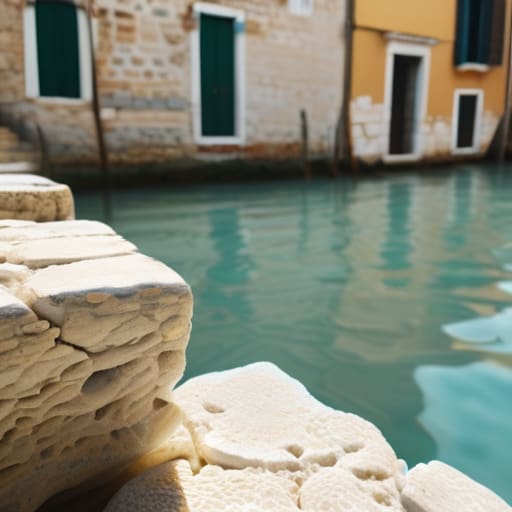
It wasn’t a matter of aesthetic preference, though the creamy, pale glow of the stone certainly helped define the city’s visual identity. For the Venetian builders, the choice was a matter of survival. When you are building a city on a mudflat, you cannot simply pick a pretty stone; you have to pick a stone that can withstand the relentless assault of the lagoon. I often find myself tracing the waterline of a palazzo, looking at how the blocks meet the salt, and I’m struck by the sheer logic of it. They needed a water-resistant stone for canal foundations that wouldn’t turn to mush under the constant ebb and flow of the tides.
If you compare the istrian stone vs marble durability in these specific conditions, the winner is obvious. While marble is beautiful, it is often too porous, too prone to the “sugaring” effect caused by salt crystallization. Istrian stone, however, acts almost like a seal. Its density means it doesn’t just sit in the water; it fights it. This was the fundamental strategy behind selecting specific venetian architecture building materials: they weren’t just building houses, they were engineering a barrier against the sea. Every block wedged into a foundation was a calculated move to keep the salt from migrating deep into the brickwork behind it.
The Weight of the Stone
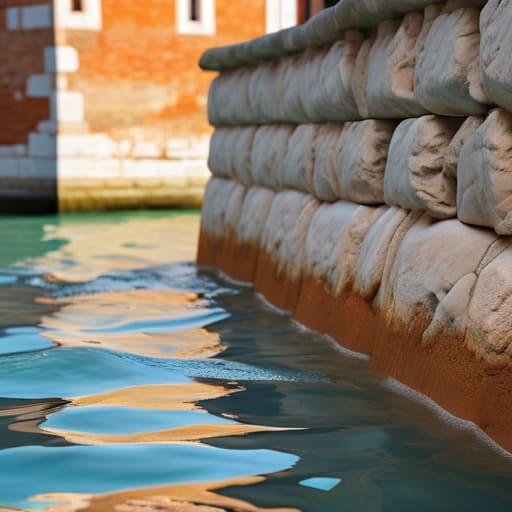
When we step back from the grand facades of the Grand Canal, we must remember that the city’s survival isn’t just a feat of engineering, but a mastery of material. It is the way the Istrian stone acts as a impermeable shield against the corrosive lagoon, a dense limestone barrier that holds the salt at bay while the softer bricks breathe behind it. From its incredible compressive strength to the way it resists the relentless humidity, this stone was never a mere aesthetic choice. It was a strategic defense mechanism—a calculated decision by Venetian builders to use a geological rarity to anchor a city built on mud.
Next time you find yourself wandering through a calli, I urge you to stop looking at the carvings and start looking at the seams. Look at how the blocks meet, how the mortar has weathered, and how the stone has fought to stay white against the grey tide. There is a profound, quiet dignity in a material that performs its duty so perfectly for centuries. If you listen closely to the texture of the masonry, you realize that Venice isn’t just floating; it is being held together by the sheer will of the stone and the hands that shaped it.