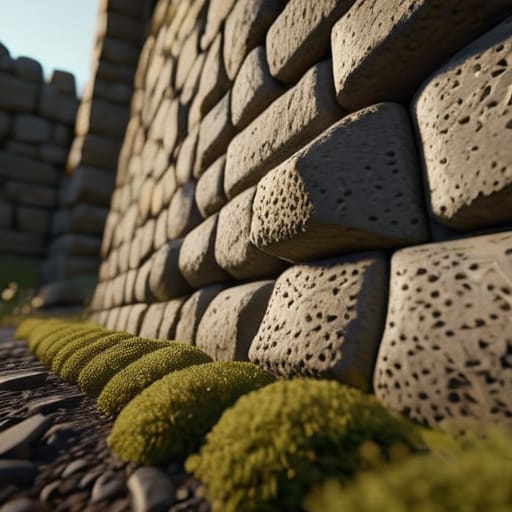
I was standing in the shadow of a sixteenth-century bastion in Puglia last summer, tracing a jagged line of lime mortar with my thumb, when I realized how much we misinterpret the history of defense. Most guidebooks will give you a sanitized, textbook lecture on the transition from high medieval towers to low-slung bastions, treating the shift as a mere change in geometry. But they miss the violence of the transition. When you look closely at the masonry, you don’t just see a change in shape; you see the desperate, sweating reality of artillery and changing walls. You see where the stone suddenly thickens, where the rubble fill becomes much denser to absorb shock, and where the builders clearly stopped caring about elegance and started praying for mass.
I am not here to give you a dry timeline of gunpowder’s invention. Instead, I want to show you how to read these stones like a map of human panic and ingenuity. We are going to look past the grand silhouettes and focus on the joints, the thickness of the ramparts, and the specific way a wall’s composition had to evolve to survive a cannonball. By the end of this, you won’t just see a fortification; you will see the decisions of people who were forced to reinvent the very idea of a boundary.
Table of Contents
Reading the Scars of Ballistic Impact on Masonry
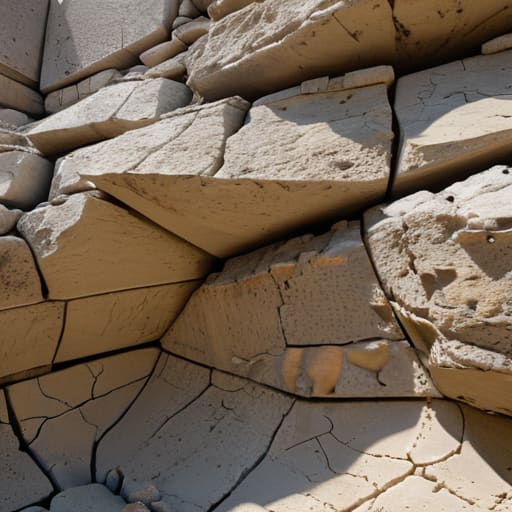
When I run my hands over a scarred limestone block, I don’t just see damage; I see the physics of a moment frozen in stone. You can tell immediately if a projectile hit at a high arc or a direct, punishing line. A glancing blow often leaves a scalloped, shallow crater where the stone grain has been torn away, whereas a direct hit from a heavy cannonball doesn’t just chip the surface—it sends a shockwave through the entire assembly. I often find myself photographing these impact points because they reveal the hidden struggle for fortification structural integrity. If the mortar was too brittle, the impact causes a web of radial cracks that spiderweb far beyond the point of contact, signaling a failure in the original recipe of the bind.
It is in these fractures that we witness the true evolution of defensive architecture. As siege warfare tactics shifted from ladders and rams to the relentless rhythm of gunpowder, the masonry had to change its very nature. You start to see builders moving away from thin, decorative facing toward massive, rubble-filled cores designed to absorb rather than deflect the kinetic energy. When I study a breach, I’m looking for that transition—the moment when the stone stopped being a proud, vertical statement and started becoming a thick, resilient sponge meant to survive the storm.
How Siege Warfare Tactics Redefined the Skyline
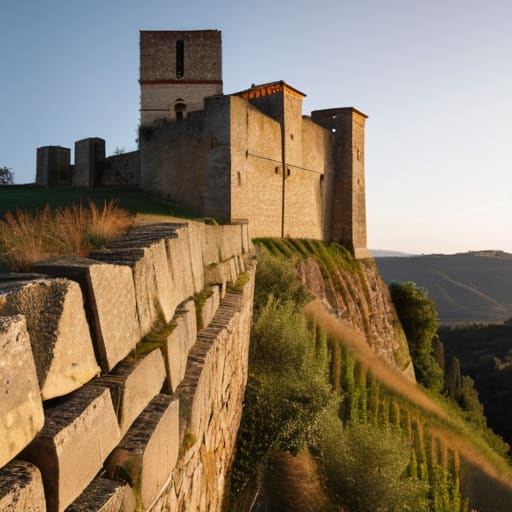
If you stand in the shadow of a late-medieval curtain wall, you can almost feel the architectural anxiety that took hold when the first heavy bombards arrived. Before this shift, the skyline was a vertical boast—high, thin, and elegant, designed to make an ascent impossible. But as siege warfare tactics evolved, that verticality became a liability. A tall wall is simply a larger target for a kinetic strike. I’ve spent hours tracing the transition points in many Tuscan hill towns, where the slender, soaring towers of the thirteenth century are abruptly truncated or reinforced by much lower, much heavier massing.
We see the defensive architecture evolution most clearly in the death of the crenelated parapet. The elegant, notched battlements that once allowed archers to peek and hide were too fragile; they would shatter under sustained fire. Instead, the skyline began to flatten and thicken. Architects started designing low-profile bastions and angled earthworks that could absorb energy rather than simply resisting it. It wasn’t about reaching for the heavens anymore; it was about managing the artillery trajectory and angles of the enemy. The silhouette of the Italian city changed from a jagged crown of stone to a series of heavy, geometric slopes, designed to deflect rather than defy.
The Lessons Left in the Stone
When I walk along the perimeter of a fortification today, I don’t just see a line of defense; I see a physical record of a technological arms race. We have traced how the transition from thin, vertical curtain walls to these heavy, sloping bastions wasn’t a choice of aesthetics, but a desperate response to the kinetic energy of gunpowder. We have seen how the very composition of mortar had to change to absorb shock rather than simply shatter, and how the skyline itself was forced to descend, trading elegant heights for the brutal, low-profile geometry of the trace italienne. Every thickened base and every angled face is a silent testimony to the moment when the physics of the cannon outpaced the traditional wisdom of the mason.
Ultimately, these walls remind us that architecture is never static; it is a constant negotiation between human ambition and the unforgiving laws of physics. The next time you pass a weathered stone bastion, don’t just look at the silhouette against the sky. Look closer at the joints, the way the stone has been compressed, and the way the builders reconfigured the earth to survive a single afternoon of bombardment. There is a profound, quiet beauty in these scars. They tell us that even in the midst of destruction, there is a stubborn human will to adapt, to rebuild, and to find a way to stand firm against the changing tides of history.