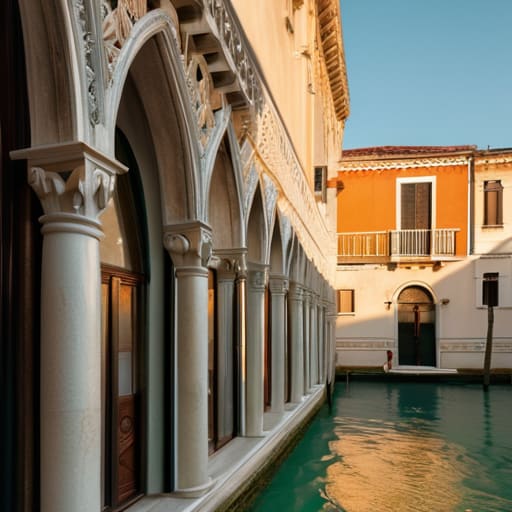
I was crouched on a damp scaffold near the Grand Canal last November, my fingers tracing the jagged edge of an Istrian stone lintel, when it finally clicked. Most people walk past these facades and see nothing but a pretty, romantic silhouette—a postcard version of history. They use terms like “Venetian Gothic” as if it’s a single, frozen style, but that’s a lie. When you actually get close enough to see the scarred masonry, you realize that venetian gothic and its blend isn’t a style at all; it is a frantic, beautiful negotiation between the weight of Northern European stone and the airy, light-hungry geometry of the East.
I am not here to give you a lecture on art history or a list of dates to memorize for a museum quiz. Instead, I want to show you how to read the physical evidence left behind in the joints and the tracery. We are going to look past the lace-like decorations and focus on the actual mechanics of how these builders managed to make heavy stone appear to float on water. I promise to show you exactly where the Byzantine influence ends and the Gothic structural logic begins, because that is where the real story of Venice is actually written.
Table of Contents
Tracing the Ogival Arches and Tracery
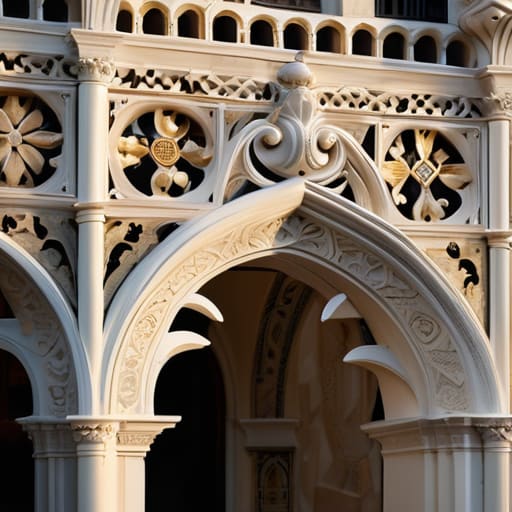
When I stand before a facade on the Grand Canal, I don’t look at the overall silhouette first; I look at the points where the stone meets the air. The ogival arches and tracery are where the geometry starts to feel less like a structural necessity and more like a conversation. In the standard Northern European Gothic, you see a relentless drive toward verticality, a heavy, skeletal logic. But here, the arches feel lighter, almost liquid. They possess a certain rhythmic elasticity that speaks to a much deeper Byzantine influence on Venice, where the structural weight is deferred to allow for these delicate, lace-like stone patterns.
If you lean in close—close enough to see the chisel marks left by a mason five centuries ago—you realize these aren’t just decorative flourishes. There is a specific tension in how the stone is carved to create those intricate, interlacing loops. You can see the Islamic architectural impact on Venice in the way the geometry avoids the rigid, predictable repetition of the French style. Instead, the tracery wanders, creating a sense of movement that mimics the water below. It is a deliberate, sophisticated choice to prioritize the play of light and shadow over sheer mass, turning a heavy stone wall into something that feels as if it might simply float away.
Where Byzantine Influence on Venice Meets Stone
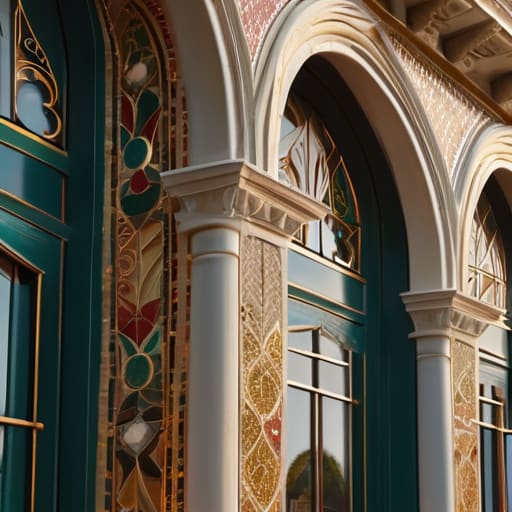
When I stand before a facade on the Grand Canal, I don’t just see a wall; I see a collision of histories. The Byzantine influence on Venice isn’t some abstract concept found in textbooks—it is physically etched into the way the light hits the Istrian stone. You can see it in the lingering obsession with surface ornamentation, a direct inheritance from the East. While Northern European Gothic was busy reaching for the heavens through sheer verticality and skeletal lightness, the Venetian builder was still thinking about the shimmer. They wanted the stone to behave like silk, using polychrome marble inlays and gold-leafed mosaics to create a sense of weightless opulence that feels more like a jewel box than a fortress.
It is in the transition from the heavy, rounded Romanesque base to the delicate lace of the upper stories that the real tension lies. You can observe the Islamic architectural impact on Venice in the way certain decorative motifs—those rhythmic, repetitive patterns—begin to soften the structural rigidity of the stone. It’s a peculiar, beautiful compromise. The craftsman isn’t just following a blueprint; he is negotiating between the structural necessity of a sturdy pier and the aesthetic desire for a pattern that feels infinite. When you look closely at the junctions where these decorative elements meet the structural masonry, you realize that the Venetian style isn’t just a blend; it is a deliberate, tactile conversation between two different worlds.
The Architecture of Compromise
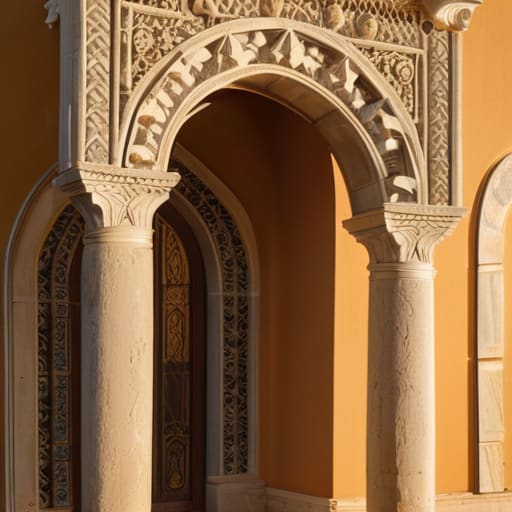
When we look at these facades, we aren’t just seeing a style; we are seeing a series of calculated, physical negotiations. We have traced how the heavy, structural logic of the West met the delicate, almost weightless ornamentation of the East, resulting in that specific Venetian tension. It is found in the way the ogival arches don’t just sit atop the columns, but seem to float, supported by a sophisticated understanding of how Istrian stone behaves under pressure. From the rhythmic patterns of the tracery to the subtle shifts in mortar that allowed these buildings to breathe in a salt-soaked lagoon, the Venetian Gothic is a masterclass in structural hybridity.
Ultimately, I find that the beauty of these buildings lies not in their perfection, but in their ability to hold disparate worlds together. Every joint and every carved relief tells the story of a city that refused to be defined by a single border or a single tradition. Next time you find yourself walking past a palazzo, I urge you to stop looking at the silhouette against the sky and instead look closer at the seams. Look at how the stone meets the light, and how the craftsmen managed to turn the heavy necessity of survival into something that feels entirely like a dream. That is where the real soul of Venice resides.