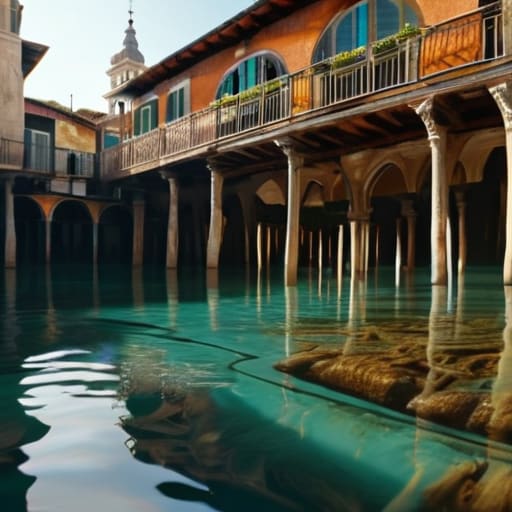
I was kneeling in a damp, narrow calle near Cannaregio last November, my knees aching against the slick Istrian stone, when I realized how much we get wrong about the city. Most guidebooks treat the concept of venice and building on water as some kind of magical, floating miracle, a romantic impossibility that defies physics. They want you to see the lace-like marble and the sunset reflections, but they never want you to see the rot. They ignore the reality of the timber piles, the struggle of the silt, and the sheer, stubborn grit required to marry heavy stone to a foundation that is constantly trying to liquefy beneath you.
I am not here to sell you on the Venetian dream or the postcard version of its architecture. Instead, I want to show you the actual mechanics of survival. We are going to look past the facade to examine the unseen engineering—the way the larch piles were driven into the mud and how the salt-heavy air dictates every choice of mortar and brick. I promise to show you how these buildings actually hold themselves up, one joint and one timber at a time.
Table of Contents
Deciphering the Secrets of Venetian Lagoon Sediment Layers
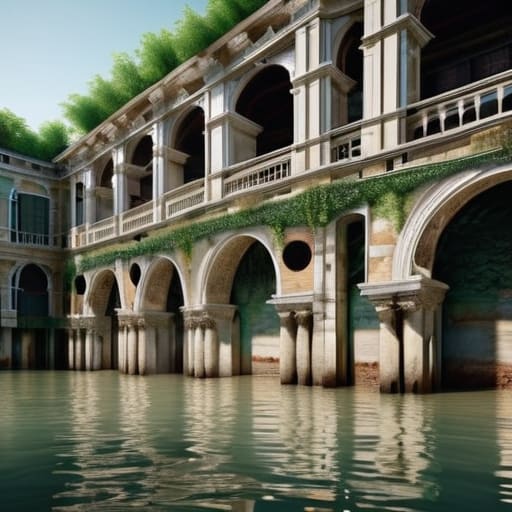
To understand why a palazzo stays upright while its neighbor leans precariously toward the canal, you have to stop looking at the Istrian stone facades and start looking at what lies beneath the silt. The venetian lagoon sediment layers are not a uniform mass; they are a chaotic, compressed history of organic decay and alluvial deposits. As I’ve seen in countless boreholes during site surveys, these layers act like a series of shifting plates. The real challenge for the ancient builders wasn’t just the mud, but the variable density of these silts, which dictates how much weight the ground can actually bear before the architectural stability on mud is compromised.
When I photograph the interfaces where different sediment types meet, I am looking for the logic of the load. The builders understood that they couldn’t simply rest a heavy structure on the surface. They had to bypass these unstable, water-logged layers entirely to reach the more compact caranto—that stiff, clay-like subsoil that provides the necessary resistance. This required a sophisticated grasp of ancient maritime engineering techniques, specifically the art of driving thousands of sharpened larch and oak poles deep into the muck. It is a violent, rhythmic process of displacement that turns a liquid landscape into a solid, albeit hidden, platform for stone.
The Stubborn Truth of Architectural Stability on Mud
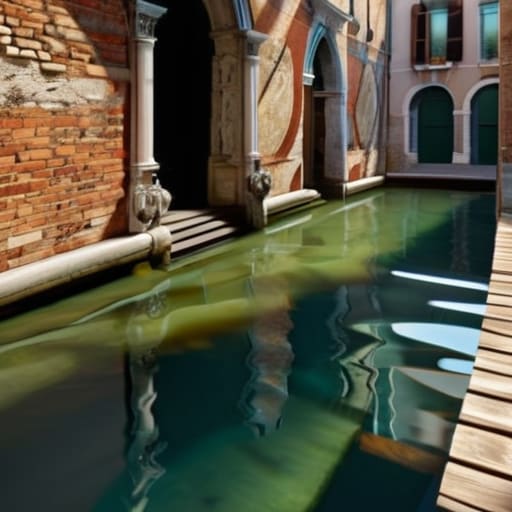
It is easy to look at a palazzo and see only the marble facade, but the real drama is happening several meters below the waterline. To achieve any semblance of architectural stability on mud, the builders had to abandon the idea of a solid footing and embrace a system of friction. They drove thousands of sharpened larch and oak poles deep into the silt until they hit the more compact caranto layer. I often find myself kneeling by a canal edge, tracing the waterline, thinking about the sheer mathematical courage required to trust a forest of vertical timber to hold up tons of Istrian stone.
What fascinates me most isn’t just the placement, but the chemistry of the survival. In a typical soil environment, wood rots; here, the lack of oxygen in the anaerobic silt creates a state of submerged timber preservation that is almost miraculous. The wood doesn’t decay; it mineralizes, becoming a stone-like extension of the lagoon itself. When I examine the joints where the stone base meets the timber platform, I don’t see a struggle against the elements, but a calculated, centuries-old negotiation between the weight of the city and the yielding nature of the lagoon.
The Weight of History and Water

When we look at the grand facades of the Grand Canal, it is easy to get lost in the marble and the light, but the real engineering feat lies in the dark, unseen geometry beneath the waterline. We have traced the journey from the initial compaction of lagoonal sediments to the incredible, sacrificial strength of the millions of timber piles driven into the caranto layer. It is a delicate, precarious equilibrium where the success of the structure depends entirely on the absence of oxygen and the precise distribution of weight across those ancient, submerged forests. To understand Venice is to understand that its beauty is not a surface-level phenomenon; it is a triumph of load-bearing logic over a shifting, liquid landscape.
Ultimately, studying these foundations reminds me why I spend my days squinting at tool marks and mortar joints. Architecture is never just about the silhouette against the sky; it is about the profound, silent conversation between the builder and the ground they inhabit. Venice teaches us that even the most ambitious human intentions must eventually negotiate with the natural world. As a conservator, I find a strange sort of peace in this struggle. It reminds us that true permanence is an illusion, and that our greatest legacy lies in how thoughtfully we choose to anchor ourselves to a world that is constantly in motion.