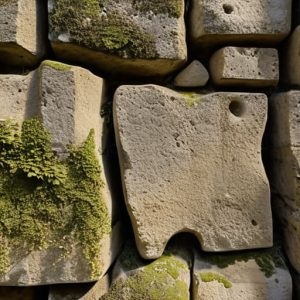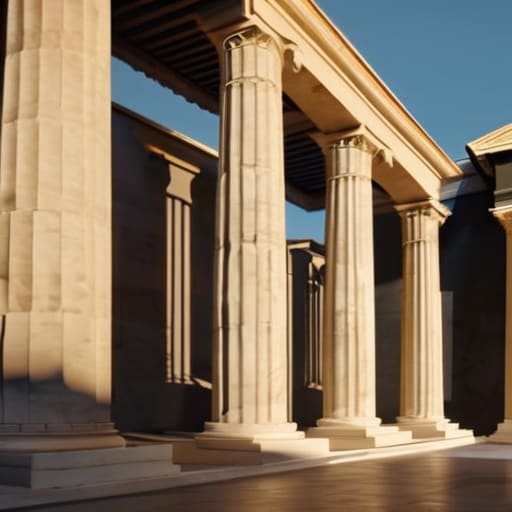
I was standing in a dusty courtyard near Paestum last autumn, tracing the edge of a weathered column with my thumb, when I realized how much we get wrong in the textbooks. People love to talk about the seamless transition of beauty, but when you actually look at the stone, you see the friction. They treat greek influence and roman adaptation as if it were a polite, academic handoff, a graceful passing of a torch. It wasn’t. It was a clash of intentions. The Greeks were obsessed with the mathematical perfection of the individual piece, while the Romans were busy figuring out how to make those pieces serve a massive, sprawling, concrete-driven machine.
I’m not here to give you a sanitized lecture on aesthetic evolution or recite dates from a syllabus. Instead, I want to show you how to read the structural scars left behind by that transition. We are going to look past the marble facades and focus on the joints, the weight distribution, and the sheer, stubborn pragmatism that allowed the Romans to take a Greek ideal and bend it to their will.
Table of Contents
The Precision of the Hellenistic Art Impact on Rome
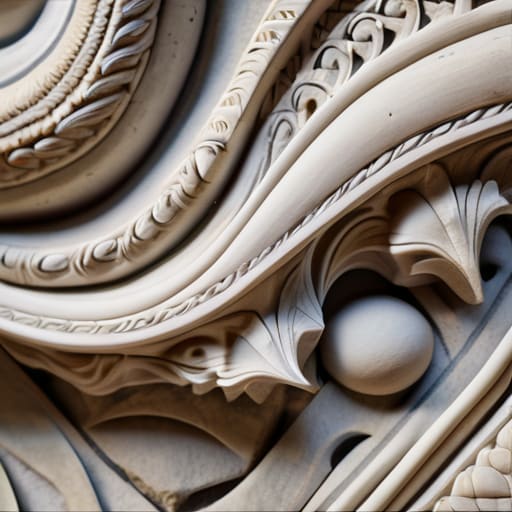
When I stand in front of a Hellenistic-style frieze, even a heavily restored one, I find myself tracing the edges where the marble meets the air. There is a specific, almost nervous energy in the Hellenistic approach—a preoccupation with the mathematical perfection of the curve and the deep, dramatic undercut of the shadows. The Greeks weren’t just building structures; they were sculpting space. When the Romans first encountered this level of refinement, they didn’t just copy it; they became obsessed with the idea of the “ideal” form. You can see the Hellenistic art impact on Rome in the way they began to treat stone not just as a structural necessity, but as a medium for high drama.
However, as a conservator, I look past the beauty to see the technical tension. The Greeks relied on the sheer, honest weight of the stone, often using dry-jointing techniques that demanded absolute, punishing precision. The Romans took this obsession with the Hellenistic aesthetic and began to marry it to their own pragmatism. It wasn’t enough to have a beautiful Corinthian capital; they wanted that capital to sit atop a structure that could span a valley or support a massive concrete vault. This was the beginning of a profound cultural synthesis of antiquity, where the delicate, sculptural language of the East met the heavy-duty, structural ambition of the West.
The Shift From Idealism to Imperial Necessity
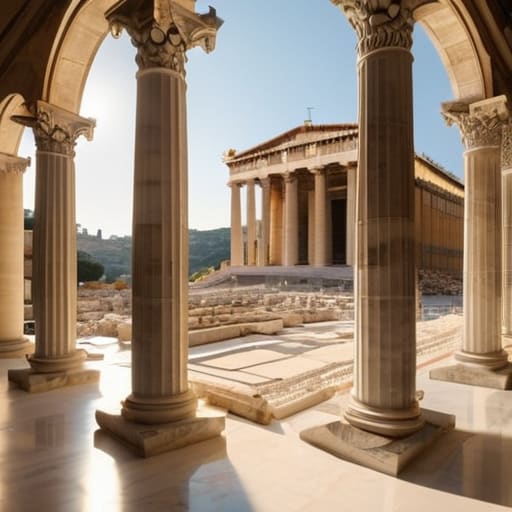
If you stand in the center of a Roman forum, you start to feel the tension between what the Greeks dreamed of and what the Romans actually needed to do. The Greeks were obsessed with the perfect moment—that mathematical, frozen ideal where every proportion is a closed loop of logic. But the Romans? They were pragmatists, builders of roads, aqueducts, and massive administrative hubs. They looked at the Hellenistic aesthetic and realized it was a beautiful language, but one that lacked the vocabulary for the sheer scale of an empire. This was the core of the classical architecture evolution: a move away from the singular, sculptural temple toward a complex, interior-focused urbanism.
I often find myself tracing the transition in the way they handled the orders. While a Greek architect might treat a column as a sacred, standalone entity, the Romans began to treat them as much more flexible—sometimes even decorative—elements within a larger structural system. It wasn’t just about copying; it was a cultural synthesis of antiquity where the Greek column was repurposed to frame massive, vaulted spaces that the Greeks simply couldn’t have enclosed. They took the elegance of the past and forced it to serve the heavy, unyielding demands of imperial power.
The Ghost in the Masonry
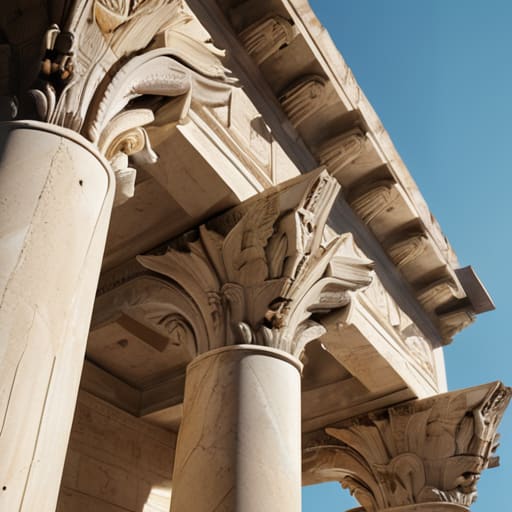
When I stand before a ruin, I don’t just see a collapsed pediment or a fallen capital; I see the tension between two different ways of thinking. We have traced how the Romans took the uncompromising perfection of the Hellenistic orders and stripped away the purely aesthetic pretension to make room for something much more muscular. They didn’t just copy the Greeks; they took those delicate proportions and wedded them to the brutal, heavy reality of concrete and structural necessity. It was a transition from the pursuit of the ideal to the mastery of the functional, turning a language of grace into a language of power that could actually hold up the weight of an empire.
Ultimately, looking at these stones teaches us that architecture is never a finished thought, but a continuous conversation across centuries. The Greeks provided the vocabulary, but the Romans wrote the epic, and we are still reading their sentences every time we walk through a portico or cross a bridge. Next time you pass an old column, don’t just admire the marble. Look at the joints where the stone meets the core, and remember that every building is a decision made by hands that are long gone, leaving us to decipher the logic of their survival.