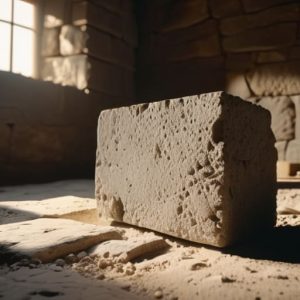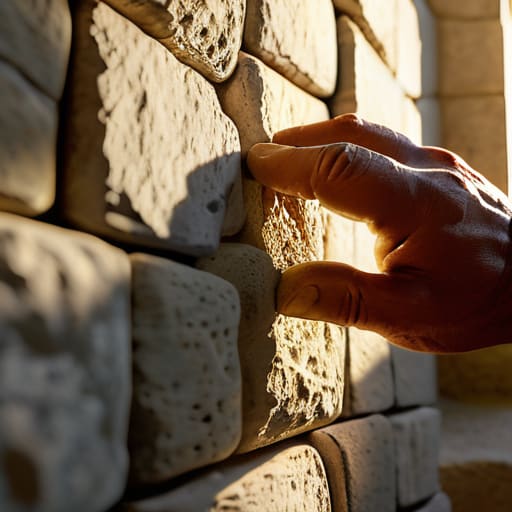
I was standing in a courtyard near Syracuse last autumn, watching a contractor prepare to patch a crumbling limestone plinth with a pre-mixed, grey industrial mortar. It was heartbreaking. He thought he was doing a favor by using something “stronger,” but he was actually signing a death warrant for the stone. People often mistake strength for durability, but when it comes to matching historic materials, if your repair is harder than the original substrate, the building will inevitably crack itself apart to make room for your mistake.
I’m not here to sell you on expensive, proprietary chemical resins or academic theories that only work in a laboratory. Instead, I want to talk about the grit, the lime, and the specific aggregates that actually belong in a joint. I promise to show you how to look past the surface and understand the breathability and texture of what came before. We are going to look at the real mechanics of the craft, so you can stop guessing and start respecting the logic of the mason who laid that stone centuries ago.
Table of Contents
Decoding the Alchemy of Period Accurate Building Supplies
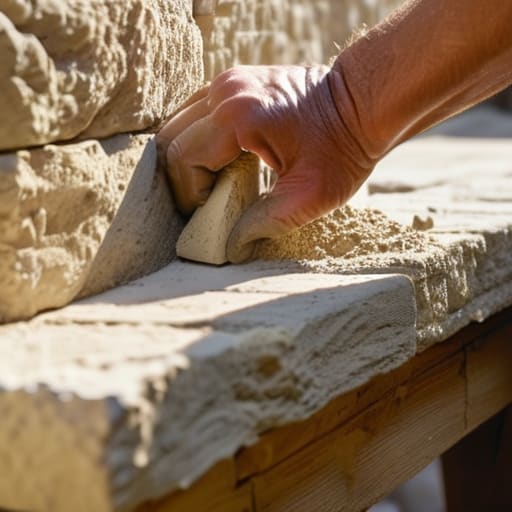
When I’m standing in a damp basement in Ravenna or a sun-bleached courtyard in Sicily, I’m not just looking at a wall; I’m looking at a recipe. To understand how to approach period-accurate building supplies, you first have to stop thinking of mortar as a mere adhesive and start seeing it as a chemical dialogue. If the original mason used a high-calcium lime with a specific river sand, that mixture was designed to breathe, to move slightly with the seasons, and to sacrifice itself to protect the stone. When we ignore those nuances, we aren’t just making a mistake; we are actively sabotaging the structure.
The real challenge in modern architectural conservation techniques isn’t finding a material that looks similar, but finding one that behaves with the same mechanical sympathy. I’ve seen too many “restorations” where a hard, grey Portland cement was injected into a soft, volcanic tuff wall. It looks clean for a month, but then the moisture gets trapped, the pressure builds, and the original stone begins to spall and crumble from the inside out. You have to hunt for the grit, the color, and most importantly, the porosity that the original builders intended. It’s a slow, often frustrating process of trial and error, but you cannot rush the chemistry of history.
Why Modern Substitutes Fail the Original Intent
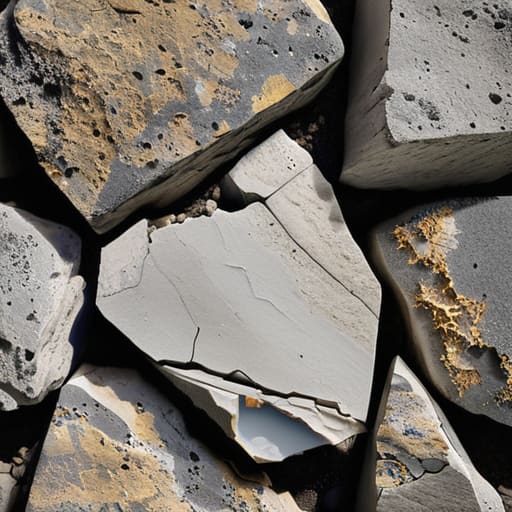
I’ve seen it happen too many times on a site—a well-meaning contractor arrives with a pallet of high-strength Portland cement, ready to “fix” a crumbling wall in a fourteenth-century palazzo. They think they are adding strength, but they are actually signing a death warrant for the stone. Modern cement is a rigid, impermeable beast; it doesn’t breathe. When moisture gets trapped behind that hard, grey shell, it can’t evaporate through the joint like it was meant to. Instead, the pressure builds until the original stone itself begins to spall and shatter. You aren’t repairing the wall; you are forcing the building to sacrifice its own skin to protect a patch of bad masonry.
True material compatibility in restoration isn’t about strength in the industrial sense; it’s about sacrificial softness. In my years surveying sites from Ravenna to Palermo, I’ve learned that the mortar must always be the weakest link in the chain. If the environment attacks the building, the mortar should take the brunt of the weathering, not the precious carved marble or tuff. When we ignore these fundamental architectural conservation techniques in favor of quick, modern fixes, we lose the ability of the structure to move and “inhale” with the seasons. We aren’t just fixing a crack; we are disrupting a centuries-old dialogue between stone and air.
The Weight of the Decision
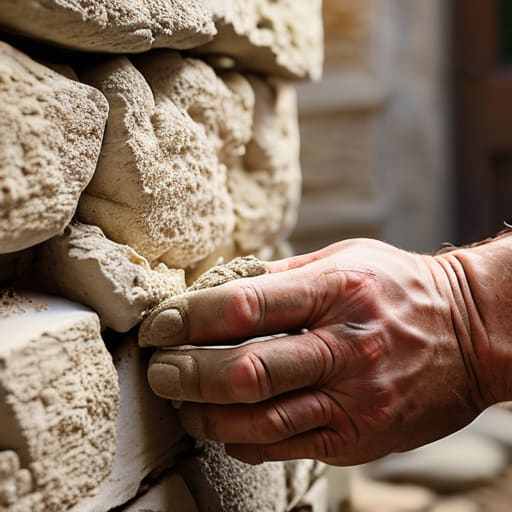
Ultimately, matching historic materials is never about a simple aesthetic imitation; it is an act of technical empathy. We have seen that if you ignore the chemical reality of a lime-based substrate or the specific grain of a local sand, you aren’t just making a mistake—you are actively sabotaging the physics of the structure. When we use modern, rigid cements where soft, breathable mortars were intended, we trap moisture and invite the very decay we are trying to prevent. Respecting the original work means doing the hard, often tedious labor of analyzing the grit, the color, and the porosity to ensure that the new intervention lives in harmony with the old, rather than fighting against it.
I often find myself standing in the shadow of a crumbling archway, tracing the marks of a chisel left behind five hundred years ago, and I realize that we are merely temporary custodians. Every time we choose the correct aggregate or the right hydraulic lime, we are engaging in a silent conversation with the masons who came before us. We aren’t just fixing walls; we are preserving the integrity of human intention. When you finally find that perfect match, it isn’t just a successful repair—it is a way of ensuring that the building’s story continues to be told, clearly and honestly, for the next generation to read.