I was standing in a damp basement in Ravenna last Tuesday, staring at a hairline fracture in a sixteenth-century foundation, when I realized the crack wasn’t caused by the earth shifting. It was caused by the sheer, frantic weight of trying to be everything at once. We talk about the industry in terms of grand visions and cultural heritage, but when you strip away the glossy brochures, the reality of the profession and its pressures is much more granular. It is found in the exhaustion of a surveyor who has spent twelve hours on their knees, or the quiet anxiety of an architect realizing that the modern budget is slowly eroding the integrity of a historical joint.
I am not here to give you a lecture on management theory or some sanitized version of professional development. Instead, I want to talk about the structural fatigue that happens to us when we try to balance the sanctity of the past with the brutal speed of the present. I will share what I have learned from twenty years of looking closely at what breaks—both in stone and in people—so you can learn to recognize the signs before the settlement becomes permanent.
Table of Contents
Reading the Stress Fractures in Daily Labor
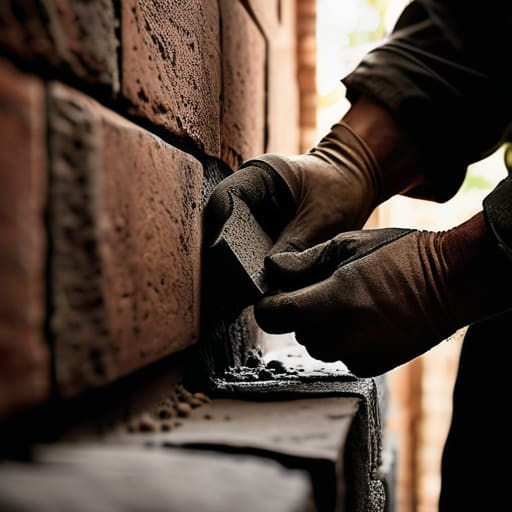
When I walk onto a site, I don’t just look at the masonry; I look at the hands holding the trowel. You can see the strain of the job in the way a structure holds its weight—in the hurried mortar and the joints that were forced to settle before they were ready. It is much the same with us. We treat our own capacity like a load-bearing wall, pushing it further and further until we see the hairline cracks of professional burnout prevention becoming a necessity rather than a luxury. When you are constantly racing against a deadline or a shrinking budget, you start to make the same mistakes as a tired mason: you skip the curing time, you rush the finish, and you ignore the subtle signs of fatigue until the whole system groans.
It isn’t just the physical labor, either; it is the invisible weight of navigating industry competition in a field that often prizes speed over soul. We are taught to respect the slow setting of lime, yet the market demands instant results. This constant friction between the technical reality of conservation and the frantic pace of modern commerce creates a specific kind of structural fatigue in the person behind the drawing board. We forget that, much like a cathedral, a career cannot sustain itself if the foundation is built on nothing but sheer, unyielding momentum.
The Weight of Managing Professional Workload
When I am on a site, I often look at how a load-bearing wall is distributed; if the weight is unevenly allocated, the stone eventually begins to shear. Managing professional workload feels remarkably similar. We often try to pile too many responsibilities onto a single “structural” point—a single project or a single season—expecting it to hold without any sign of deflection. But in conservation, as in life, there is a limit to how much pressure a system can absorb before the first hairline crack appears.
It isn’t just about the hours spent on a scaffold; it is the mental tax of constant vigilance. We are perpetually navigating industry competition, often feeling forced to underbid or overextend ourselves just to keep the lights on in the studio. This creates a precarious equilibrium where professional burnout prevention becomes an afterthought, something we only consider once the structural failure has already begun. I have seen colleagues lose their passion for the craft because they were too busy managing the sheer volume of the grind to actually look at the stone. We must learn to distribute the load, or we risk a total collapse of the very expertise we have spent decades building.
The Final Survey

Ultimately, navigating this profession is much like assessing a structure that has been subjected to decades of uneven settling. We have looked at how the constant pressure of deadlines acts as a lateral load on our mental stability, and how the heavy accumulation of administrative weight can cause even the most seasoned professional to show signs of structural fatigue. Just as a building cannot sustain itself if the mortar is too brittle to allow for movement, we cannot expect to maintain our expertise if we do not account for the stresses inherent in the daily grind. To ignore these fractures is to ensure a collapse later down the line.
But there is a way to build something that lasts, even when the ground beneath us is shifting. We must learn to treat our own careers not as static monuments, but as living systems that require constant, careful maintenance. If we pay attention to the small fissures—the moments of burnout or the subtle shifts in our passion—we can reinforce our foundations before the damage becomes irreversible. I have learned that the most beautiful restorations are never about hiding the scars, but about understanding why they formed and building back with greater intention. If we respect our own limits, we can continue to stand tall.