
I was standing in a damp basement in Ravenna last autumn, tracing the edge of a limestone lintel that felt entirely wrong under my fingertips. The stone was sliced with a precision that mocked the heavy, slouching weight of the arch above it, a deliberate tension that most historians dismiss as mere error. They call it a mistake, or perhaps a lack of skill, but they miss the point entirely. When we talk about mannerism and broken rules, we aren’t discussing a failure of geometry; we are witnessing a calculated, almost cheeky, refusal to play by the textbook. It is the moment a builder decides that the rules of Vitruvius are merely suggestions, and that subverting expectation is far more interesting than achieving perfect symmetry.
I have no interest in the sanitized, academic theories that treat these architectural tensions like math problems. Instead, I want to show you how to read the friction. I promise to strip away the lofty jargon and look directly at the masonry, the misplaced pilasters, and the unsettling proportions that define this era. We are going to look at how these “errors” were actually intentional decisions made by hands that knew exactly what they were doing.
Table of Contents
Reading the Tension in a Misplaced Stone
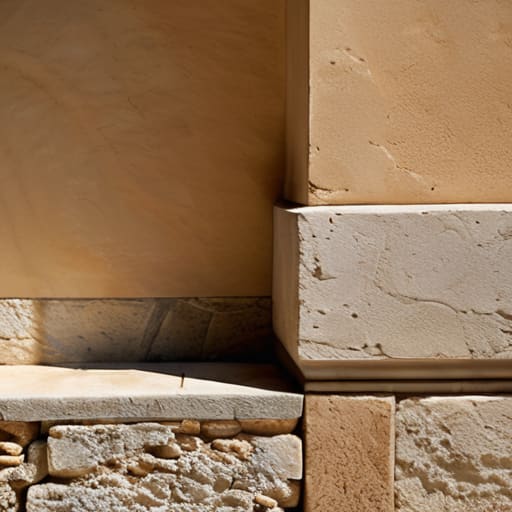
I was in a small courtyard near Lucca last Tuesday when I found it—a single ashlar, slightly oversized and set with a hairline gap that shouldn’t have been there. In a classical facade, you expect a rhythmic, almost mathematical certainty. But there it was: a stone that refused to submit to the surrounding geometry. This wasn’t a mistake born of a clumsy hand or a lack of lime; it was a deliberate disruption. When a mason places a block like that, they are engaging in a subtle form of breaking protocol for effect, creating a visual hiccup that forces your eye to stop its smooth transit across the wall.
It makes me wonder about the man behind the chisel. We often view historical construction as a rigid adherence to hierarchy, but these tiny errors suggest a different kind of energy—the psychology of nonconformity manifesting in physical matter. To place a stone “wrong” is a quiet, permanent way of asserting one’s own agency against the crushing weight of a master plan. It is a way of leaving a thumbprint on the stone, a silent protest against the perfection demanded by the patron.
The Calculated Error as a Masterwork
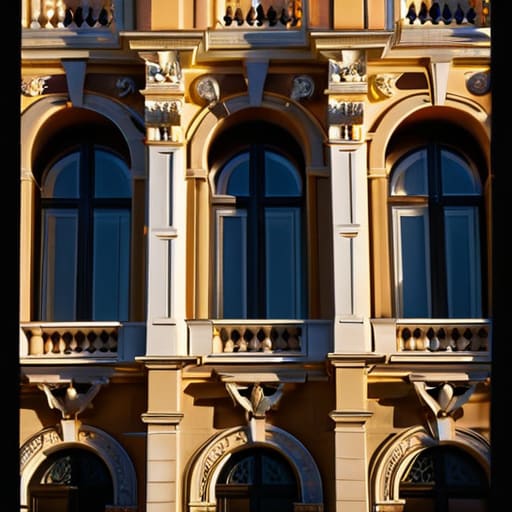
Sometimes, I find myself staring at a cornice that refuses to align with the rhythm of the windows below, and instead of seeing a mistake, I see a provocation. In the late Renaissance, this wasn’t an accident of the hand, but a deliberate psychology of nonconformity etched into the very stone. The architect wasn’t just designing a façade; they were playing a game of wits with the viewer. By introducing a slight, jarring asymmetry, they force your eye to stop its mindless scanning and actually engage with the surface. It is a way of refusing the easy comfort of perfect symmetry, choosing instead to create a sense of restlessness that keeps the building alive.
This wasn’t merely an aesthetic whim; it was a sophisticated breaking protocol for effect. There is a profound tension in seeing a master mason follow every rule of classical proportion, only to introduce a singular, calculated deviation that disrupts the entire visual logic. It feels almost like a social etiquette transgression—as if the building itself is whispering a secret or making a joke at the expense of the rigid rules it appears to follow. When I photograph these moments, I’m not looking for the error; I’m looking for the intent behind the defiance.
The Ghost in the Masonry
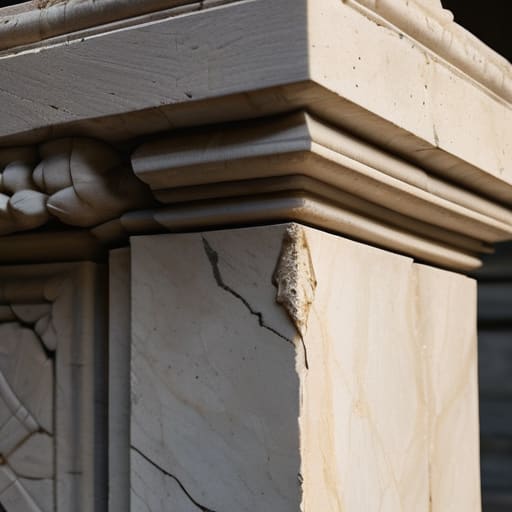
When we look at these intentional deviations—the stone that refuses to sit flush or the column that seems to strain under a weight it shouldn’t be able to carry—we aren’t seeing failure. We are seeing the moment the architect stopped being a mere technician and became a storyteller. Whether it is a deliberate slip in a Mannerist facade or a pragmatic adjustment in a medieval wall, these “errors” are the connective tissue between the rigid geometry of a blueprint and the messy, tactile reality of stone and lime. To understand a building, you cannot simply study the finished silhouette; you must study the tension held within the joints and the places where the rulebook was tossed aside in favor of something more human.
Next time you find yourself walking through a courtyard or tracing the line of a weathered lintel, I beg you: stop looking at the grand scale. Lean in. Look for the seam that doesn’t quite line up or the tool mark that suggests a sudden change in direction. In those tiny, seemingly insignificant breaks in symmetry, you will find the true heartbeat of the structure. It is in these small rebellions that the spirit of the maker survives, whispering through the centuries that a building is never truly finished until it has been tempered by the hand of a human being.