
I remember standing in a dusty site office outside Syracuse, staring at a cracked, peeling slab that a contractor had insisted was “cutting-edge” engineering. He spoke about the miracle of modern materials, but all I could see were the tell-tale signs of a rushed, careless pour. People tend to treat ferrocement and thin shells as if they are some kind of magic trick—a way to bypass the fundamental physics of weight and tension—when in reality, they are incredibly temperamental systems. If you don’t respect the way the wire mesh interacts with the mortar, you aren’t building a structure; you’re just creating a very expensive, very fragile shell that is waiting to fail.
I’m not here to sell you on the glossy architectural renders or the theoretical efficiency found in textbooks. My goal is to show you how these structures actually behave once the scaffolding comes down and the real world sets in. We are going to look past the aesthetic curves and focus on the material reality: the grit of the sand, the tension in the mesh, and the precise way a shell carries its own weight. I want to teach you how to read the intent behind the pour, so you can tell the difference between a masterwork and a disaster.
Table of Contents
Tracing the Intent in Wire Mesh Reinforcement Methods
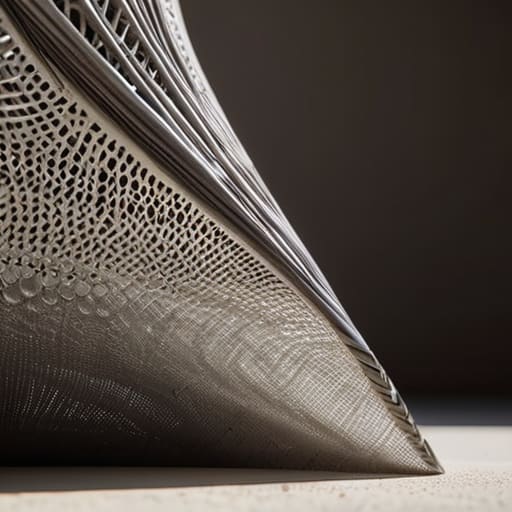
When I approach a site where ferrocement has been used, I don’t look at the finished curve first; I look for the ghost of the hand that laid the mesh. In many of these older structures, you can see the tension in the way the wire mesh reinforcement methods were executed. If the builder was rushed, the mesh sits unevenly, creating a localized thickening of the concrete that betrays the original geometry. But when it’s done with care, the layers of fine wire create a seamless, almost organic continuity. You can almost feel the rhythmic, repetitive motion of the worker pressing the mortar into the interstices, ensuring that no void remains to compromise the high-strength thin-walled concrete profile.
The real magic, however, lies in the density of the weave. In high-quality ferrocement construction techniques, the mesh isn’t just a structural additive; it is the skeleton that dictates the very soul of the form. I often find myself tracing the overlap of the wires with my fingers, looking for that specific tightness that allowed the architect to push the limits of the material. It is this precise, internal scaffolding that grants the structural advantages of thin shells, allowing for spans that feel impossibly light, as if the building is holding its breath rather than fighting gravity.
The Fragile Strength of High Strength Thin Walled Concrete
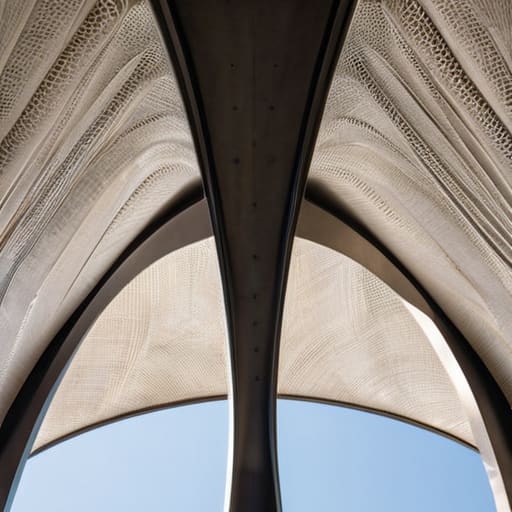
When I stand beneath a low-slung vault of high-strength thin-walled concrete, I don’t see a heavy mass; I see a tensioned skin. There is a specific, almost nervous energy in these structures. Unlike the massive, compressive certainty of a Roman barrel vault, these shells rely on a delicate equilibrium. You realize quickly that the structural advantages of thin shells aren’t just about saving material—though they certainly do that—but about the way the geometry itself takes over the burden of gravity. It is a dance between the geometry of the curve and the microscopic grip of the cement on the steel.
However, this elegance comes with a terrifying vulnerability. In my surveys, I’ve often found that the greatest enemy of these forms isn’t a lack of strength, but the sheer lack of margin for error. If the cover over the mesh is even a few millimeters too thin, or if the mix was slightly too thirsty during the pour, the whole logic of the shell begins to unravel through carbonation or micro-cracking. You can see the history of the pour in the way the surface catches the light; any irregularity in the thickness tells you exactly where the structural integrity might eventually falter. It is a brittle kind of brilliance that demands respect.
The Memory in the Curve
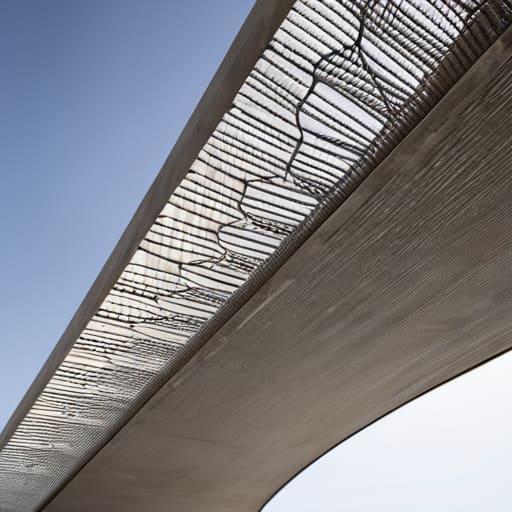
When we look at these structures, we aren’t just looking at a feat of mathematics or a clever way to save on material; we are looking at the physical manifestation of a specific tension between strength and lightness. From the way the wire mesh is meticulously layered to the precise, almost delicate thickness of the concrete pour, every element serves to bridge the gap between the heavy tradition of masonry and the fluid possibilities of the modern age. To understand ferrocement is to understand that structural integrity is not just about mass, but about the controlled distribution of force through a highly disciplined skin. It is a dance of reinforcement and cement that requires a level of care most modern, heavy-handed construction has long since forgotten.
Ultimately, my work has taught me that even the thinnest shell carries a heavy weight of human decision. Whether I am surveying a mid-century cistern or a contemporary pavilion, I find myself searching for those same traces of intent—the subtle irregularities in the shell that tell me exactly how the builder held the form. We must learn to respect these fragile geometries not as mere shells, but as living records of technical ambition. Next time you stand beneath a sweeping, thin-walled curve, don’t just admire the shape; look for the rhythm of the mesh beneath the surface. That is where the true soul of the building resides.