
I remember standing in a damp cellar outside Ravenna three years ago, the air thick with the smell of wet limestone and ancient silt. My flashlight caught a jagged, diagonal fissure slicing through a centuries-old stone plinth, and I didn’t see a catastrophe; I saw a conversation. Most engineers would have immediately reached for their expensive software and started talking about soil compaction and seismic shifts, but they were missing the point. They treat foundation problems in old buildings like a mathematical error to be corrected with more concrete, when in reality, these cracks are often just the building trying to find its balance after centuries of shifting ground.
I am not here to sell you on high-tech injections or unnecessary structural overhauls that strip a house of its soul. Instead, I want to teach you how to listen to what the masonry is saying. Over the next few sections, I will share what I have learned from twenty years of surveying—from the way lime mortar breathes to the subtle signs of subsidence that a quick glance will miss. We are going to look past the surface cracks to understand the true mechanics of stability, focusing on honest, historical context rather than modern quick fixes.
Table of Contents
Listening to the Subtle Signs of Foundation Settlement
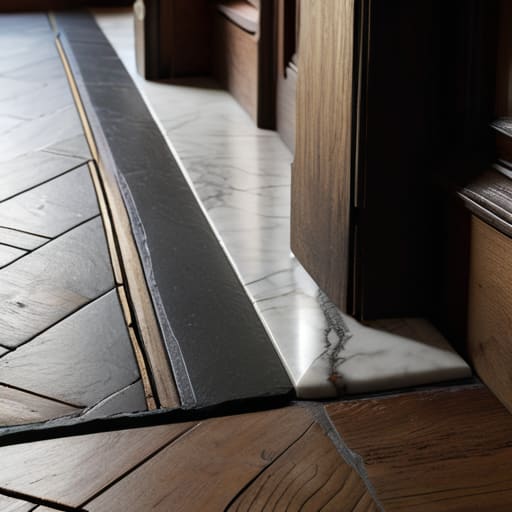
I often find that people wait for the dramatic—a gaping fissure or a door that refuses to latch—before they take a building seriously. But the real story of a structure’s decline usually begins in whispers. When I am on-site, I don’t just look at the walls; I look at how the floor meets them. You might notice a slight, almost imperceptible tilt in a heavy marble threshold or a floorboard that has begun to groan in a way it never did during the previous season. These are the first signs of foundation settlement, the building’s way of telling you that the earth beneath it is shifting its weight.
If you look closely at the plasterwork, particularly near the corners of window reveals, you might see hairline fractures that seem to follow a diagonal path. These aren’t just cosmetic flaws; they are often the first indicators of soil subsidence in aging structures. I once spent an entire afternoon in a villa near Ravenna, tracing a series of tiny, stair-stepped cracks through ancient brickwork. It wasn’t a sudden collapse, but a slow, rhythmic descent as the clay soil breathed and settled over decades. To catch these movements early is to understand the building’s pulse before the rhythm breaks entirely.
Deciphering the Structural Integrity of Historic Homes
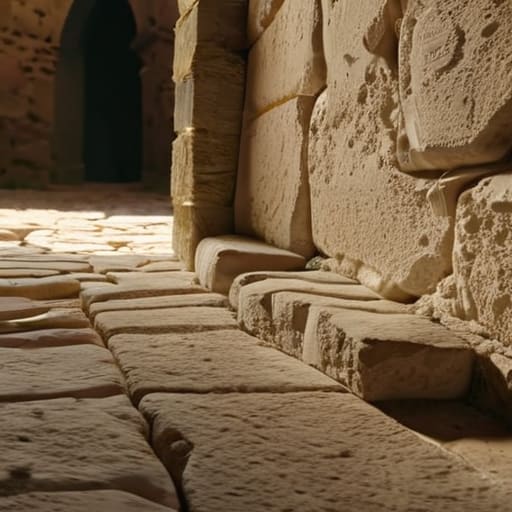
When I am standing in a cellar in a Sicilian palazzo or a farmhouse in the Romagna hills, I am rarely looking at the frescoes first. My eyes go straight to the junctions where the floor meets the wall. To truly assess the structural integrity of historic homes, you have to look past the aesthetic decay and find the geometry of the movement. It isn’t just about a crack in the plaster; it is about the directionality of that crack. A vertical fissure might just be the building breathing, but a diagonal shear—one that follows the line of a stone course—tells a much more violent story of the earth shifting beneath the weight of centuries.
I often find myself tracing the path of masonry cracks and foundation failure with my fingertips, feeling for the depth of the separation. If the crack is wider at the top than at the bottom, the building is leaning, perhaps due to localized soil subsidence in aging structures that were never meant to sit on such fickle clay. You see it in the way a door frame begins to bind or how a floorboard refuses to lie flat. It is a slow, heavy dialogue between the stone and the soil, and if you don’t learn to read the tension in the joints, you miss the most critical chapter of the house’s life.
The Weight of the Story
Ultimately, diagnosing foundation issues is never just about checking for level surfaces or measuring the width of a fissure in a plaster wall. It is about understanding the dialogue between the earth and the stone. Whether we are looking at the slow creep of subsidence in a Roman-era basement or the sudden, sharp fractures caused by modern drainage failures, we are essentially reading a chronicle of movement. We have looked at the cracks, the uneven lintels, and the tell-tale signs of soil shifting, but we must remember that these are not just defects to be patched with cement. They are physical testimonies of how the building has negotiated its existence with the ground beneath it over centuries.
When you walk through an old courtyard or stand in a dim cellar, I urge you to stop looking at the facade and start looking at the connections. Do not fear the cracks; instead, respect them as the building’s way of speaking to you. If we treat these structures as static objects rather than living, breathing entities that react to every season and every tremor, we will fail them. Our job—whether we are architects, owners, or simply observers—is to listen to those whispers in the masonry and ensure that the decisions made by the builders of the past are not erased by the negligence of the present.