I was standing in a damp basement in Ravenna last autumn, tracing the edge of a crumbling wall, when I realized most people look at a facade and see only a color or a texture. They talk about “heritage” as if it’s something you can buy in a catalog, completely ignoring the gritty, physical reality of how those materials actually arrived on site. To me, the true soul of a structure isn’t in its grand silhouette, but in the specific, localized brick making traditions that dictated whether a wall would breathe with the humidity or crack under its own weight. You can tell within seconds if a mason was working with local river clay or something imported, and more importantly, you can see the exact moment the kiln temperature failed them.
I am not here to give you a polished history lesson or a list of romanticized myths. Instead, I want to show you how to read the material itself. I will guide you through the technical nuances of regional compositions and the subtle tool marks that reveal a builder’s intent, moving past the aesthetic fluff to focus on the structural logic of the past.
Table of Contents
The Weight of Hand Molded Clay Bricks
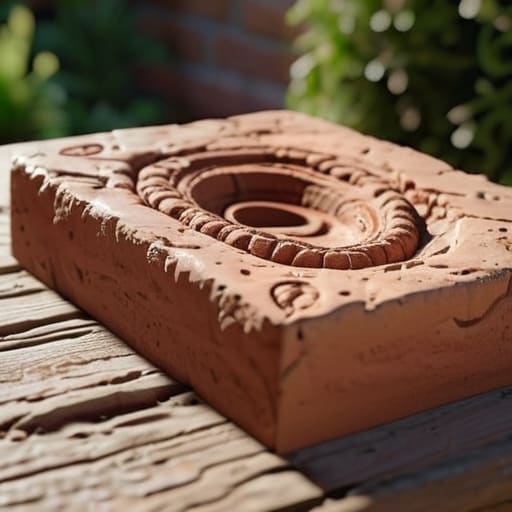
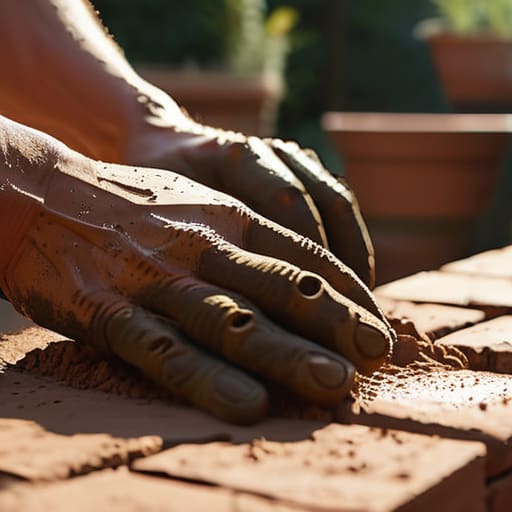
When I stand in a courtyard in the outskirts of Ravenna, I don’t look at the walls as a single surface; I look at the individual units. There is a specific, heavy rhythm to hand-molded clay bricks that modern, extruded versions simply cannot replicate. In these older structures, you can see where the moisture was still fighting the maker’s grip. You’ll find a slight swelling in the center of a brick, a subtle bulge that speaks to the pressure of a thumb or the unevenness of a wooden mold. It’s not a defect; it’s the physical record of a person standing in the mud, deciding exactly how much force to apply to the earth.
These irregularities are what allow the building to breathe. Because the density isn’t uniform, the natural clay brick production process creates a porous, living skin. When I examine a wall using ancient masonry techniques, I’m looking for those tiny voids and the way the edges aren’t perfectly sharp, but rather slightly rounded by the slip. This lack of mathematical precision is exactly what gives the facade its character. A machine produces a thousand identical soldiers, but a craftsman produces a community of individuals, each one carrying a slightly different thermal signature and a unique way of weathering the centuries.
Reading the Intent of the Maker
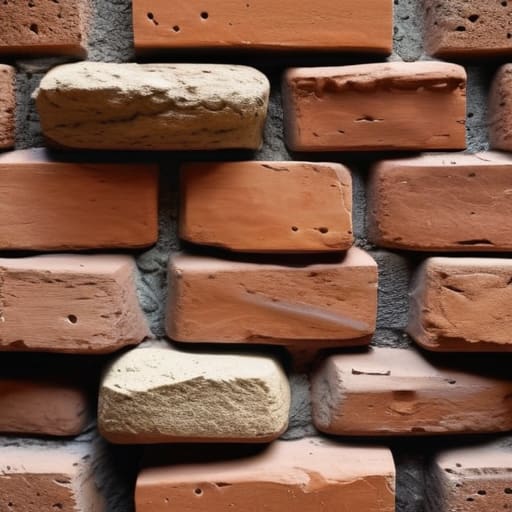
When I lean in close to a wall—closer than most visitors would ever think to go—I’m not looking at the color or the pattern. I’m looking for the ghost of the person who held the clay. In many of the older structures I’ve surveyed, you can see exactly where the rhythm of the work faltered or surged. There is a specific, almost tactile intelligence in artisanal brickwork heritage that modern, machine-pressed units simply cannot replicate. You see it in the subtle variations of thickness; a brick isn’t just a unit of measurement, it is a physical record of a hand pressing, smoothing, and turning.
If you look at the edges, you’ll find the true narrative. A perfectly straight, clinical edge tells you nothing, but a slightly irregular margin reveals the traditional kiln firing methods used in the past, where heat was never perfectly uniform. These variations create a beautiful, breathing texture. I often find myself photographing these minute irregularities—the way a corner is slightly rounded or how the surface grain catches the light—because they are the only way to truly understand the natural clay brick production of a specific era. It’s not about perfection; it’s about the decision to keep going despite the imperfections.
Beyond the Kiln: The Living Wall
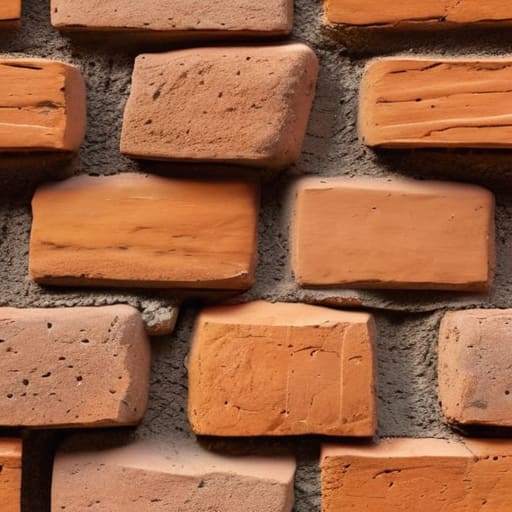
When we step back from the individual irregularities of a handmade course, we see that these bricks are more than just structural units; they are a physical record of local geography and human labor. From the specific mineral composition of the riverbed clay to the rhythmic, imperfect spacing of the mortar joints, every element tells us how a community once negotiated with its landscape. We have seen that the maker’s hand is never truly absent, even centuries later, preserved in the slight variations of color and the subtle shifts in geometry that no machine could ever replicate. To understand a building, one must respect these foundational idiosyncrasies that define its very soul.
As I walk through the old quarters of Ravenna or the sun-bleached streets of Sicily, I am constantly reminded that a wall is not a static object. It is a slow, breathing dialogue between the earth and the artisan. Next time you pass a weathered facade, I urge you to stop looking at the building as a whole and instead look into the gaps. Look at how the bricks meet, how they have settled, and how they have endured. If you learn to read the language of the material, you will find that the history of a place isn’t just written in its books, but is pressed firmly into every fired row of clay.