
I remember standing in the shadow of a towering structure in Barumini, my hands caked in fine, ochre dust, feeling more frustrated than inspired. Most guidebooks treat the sardinian nuraghi as these mystical, almost magical monoliths—mysterious relics left by a lost civilization that defies explanation. It’s a romantic lie that does a disservice to the actual builders. When you stop looking for “magic” and start looking at the physics of the stone, the mystery evaporates, replaced by something much more profound: the sheer, calculated intelligence of people working with nothing but gravity and grit.
I have no interest in chasing ghosts or entertaining grand, unproven theories about alien architects. Instead, I want to show you how these towers actually stand. We are going to look past the sweeping vistas and focus on the mechanical truth of the construction—the way the cyclopean blocks are seated, the intentionality of the dry-stone stacking, and the way the weight is distributed to ensure these structures outlasted the very empires that followed them. This isn’t a tour of myths; it is an investigation into structural logic.
Table of Contents
The Physics of Megalithic Structures in Sardinia
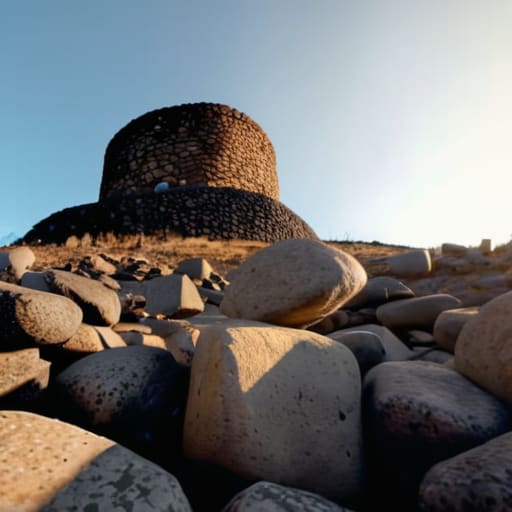
When I stand at the base of a particularly large tower, I don’t just see a ruin; I see a masterclass in gravity. These prehistoric stone towers in Italy weren’t built with the luxury of modern calculating software, yet the builders understood the fundamental laws of compression with startling precision. They relied on a technique of cyclopean masonry, where the sheer mass of the basalt or granite blocks provides the necessary stability. There is no binding agent here—no lime, no sand—just the calculated placement of immense weight. You can see where they prioritized the stability of the foundation, selecting larger, flatter stones to create a footprint that resists the lateral shifts of the Sardinian soil.
The real genius, however, lies in the corbelled vaulting. As the walls rise, each successive ring of stone is set slightly further inward than the one below it. It is a slow, rhythmic narrowing that eventually meets at the top to form a dome. This isn’t just aesthetic; it is a way to direct the downward force of the load through the thickness of the walls, preventing the structure from buckling under its own immense weight. Studying these megalithic structures in Sardinia reveals a deep, intuitive grasp of how to transform individual boulders into a singular, breathing organism of stone.
Reading the Intentionality of Bronze Age Mediterranean History
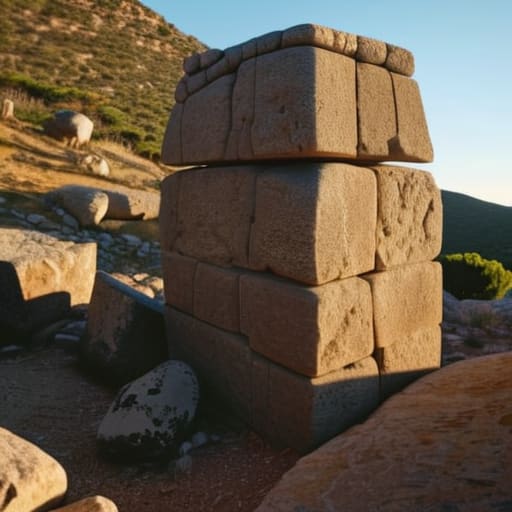
When I stand before these towers, I am not looking at a monument; I am looking at a series of solved problems. To understand the Bronze Age Mediterranean history through these stones, you have to stop seeing them as static objects and start seeing them as a sequence of human decisions. Every block was selected, moved, and levered into place with a specific intention. You can see it in the way the courses shift slightly to accommodate a particularly stubborn boulder, or how the builders tightened the gap between stones to ensure the weight distributed downward rather than outward. It isn’t just primitive stacking; it is a sophisticated, intuitive grasp of gravity.
There is a specific kind of intelligence in this ancient Sardinian architecture that often gets lost in broader archaeological discussions. We tend to look for grand blueprints, but the truth of the Nuragic civilization archaeology is found in the micro-adjustments. I find myself tracing the edges of the stones, looking for the subtle tapering that prevents a collapse. These builders weren’t just surviving; they were mastering the landscape. They understood that if you respect the geometry of the stone, the stone will hold your history for three thousand years.
The Silent Dialogue of Stone
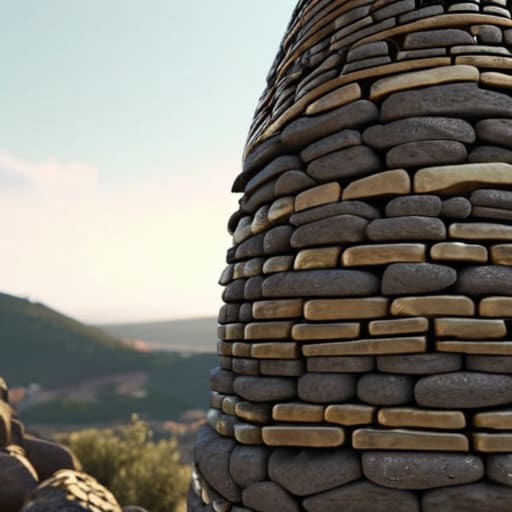
When we strip away the romanticism of the “lost civilization” trope, we are left with something far more profound: a masterclass in structural logic. The nuraghi aren’t mere accidents of gravity; they are the result of a sophisticated understanding of compression and load distribution. From the precise selection of basalt to the way these massive blocks find their equilibrium through sheer, calculated weight, every tower stands as a testament to a people who understood the language of the earth. We see it in the lack of binding agents and the way the corbelled domes reach upward, defying the very decay that has claimed so much of our modern, mortar-reliant world.
I often find myself standing in the shadow of these structures, my fingers tracing the rough edges of a stone that hasn’t moved in three millennia, and I am struck by a singular thought. We spend so much of our professional lives trying to fix, stabilize, and reinforce, yet these builders achieved a kind of permanent stability through nothing more than an intimate knowledge of their materials. They didn’t build against nature; they built with its fundamental laws. The next time you look at a ruin, don’t just see a pile of stones. Look for the intentionality in the joinery, because that is where the true genius of the past remains etched, waiting to be read.