
I was kneeling in the dust of a crumbling boundary wall in the hills outside Syracuse last July, my fingers tracing the jagged edge of a limestone block that refused to sit flush. Most people look at a pile of rocks and see a mess, or worse, they see a project that requires expensive, modern mortars to “fix” what they perceive as broken. They treat dry stone construction techniques like a puzzle to be solved with chemical adhesives, but that is a fundamental misunderstanding of the craft. A wall isn’t a static object; it is a living equilibrium of gravity and friction, and if you try to force it with cement, you aren’t repairing it—you are suffocating it.
I am not here to sell you on the romanticized myth of the “simple” stone wall or provide a sanitized, textbook list of steps. Instead, I want to show you how to listen to the stone. I will walk you through the actual, tactile logic of structural interlocking and the precise way a hearting of small shards provides the internal strength a wall needs to breathe. We are going to look past the surface and understand the mechanics of how these walls actually hold their own weight.
Table of Contents
Listening to the Weight of Every Stone
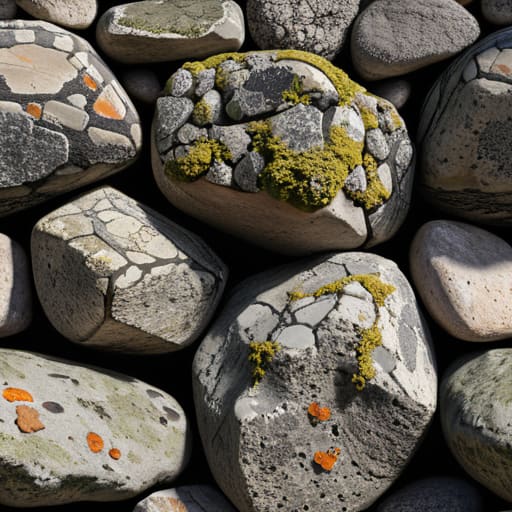
When I stand before a field wall in the Maremma, I don’t see a boundary; I see a complex calculation of force. To understand these structures, you have to stop thinking about adhesion and start thinking about friction. These aren’t just piles of rock; they are masterclasses in gravity-based masonry methods. Every stone is placed with a specific intention, seeking a center of gravity that locks it into its neighbor. If you look closely at the base, you’ll notice how the largest, most irregular boulders are buried deep into the soil. These aren’t just heavy; they are the anchors that establish the stone wall foundation principles necessary to prevent the entire face from bowing outward under the pressure of the earth behind it.
It is a tactile kind of physics. I often find myself running my fingers along the “hearting”—those smaller, jagged stones packed tightly into the center of the wall. This internal core is what actually provides the structural integrity of dry stone walls, preventing the larger facing stones from shifting or wobbling. There is no mortar to hide mistakes here; there is no cement to bridge a gap left by a lazy hand. You either find the right stone to wedge into the void, or the wall eventually speaks its displeasure through a collapse.
The Immovable Truth of Stone Wall Foundation Principles
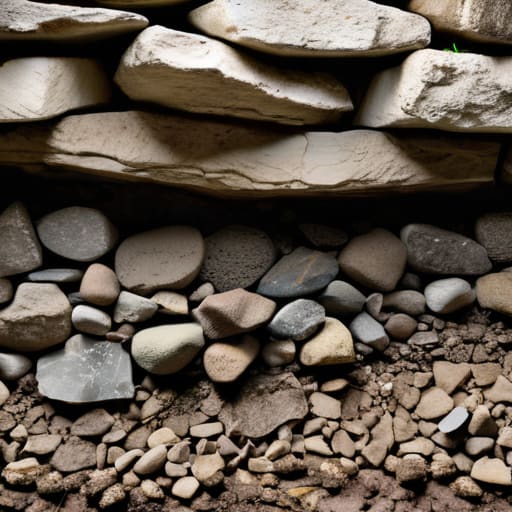
When I am surveying a site, my eyes always go straight to the ground, long before I look at the height of the wall. People often mistake a dry stone wall for something that simply sits upon the earth, but a wall without a proper footing is just a pile of rocks waiting for the first heavy autumn rain to reclaim it. The true stone wall foundation principles rely on finding the “living” ground—that compact, undisturbed subsoil that won’t shift under pressure. I’ve seen too many modern attempts fail because they tried to build on loose topsoil or organic debris, forgetting that even the most masterful masonry is a slave to the stability of what lies beneath it.
In traditional stone wall building, we aren’t looking for a poured concrete slab; we are looking for a trench of heavy, flat stones that act as a sacrificial base. These foundation stones must be larger and more irregular than the ones above, providing a wide footprint to distribute the load. It is a matter of managing the downward force through sheer mass and clever placement. If the base is even slightly off-level or poorly wedged, the entire verticality of the structure becomes a lie, and gravity will eventually expose that deception.
The Living Geometry of the Wall
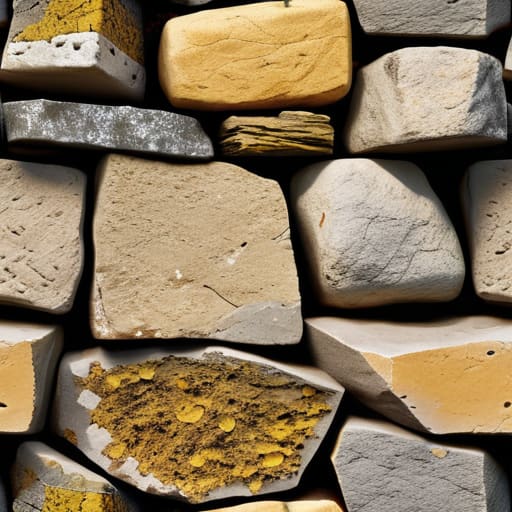
When we strip away the modern obsession with quick fixes and chemical binders, we are left with the raw, honest logic of the dry stone wall. We have seen how the foundation must settle into the earth, how the hearting provides the necessary internal mass, and how the careful selection of through-stones creates a structural bond that no mortar could ever replicate. It is a discipline of constant negotiation—between the gravity of the material and the precision of the placement. To build this way is to understand that a wall is not merely a barrier, but a complex equilibrium of friction and weight, where every single stone must earn its place within the collective whole.
As I walk through the landscapes of Sicily or the hills of the Marche, I am always struck by how these structures defy the passage of time. They do not fight the earth; they become part of its very anatomy. When you finally learn to see the difference between a stone that has been forced and one that has been rightfully seated, you stop looking at architecture as a finished product and start seeing it as a continuous process. I hope that the next time you pass a field boundary or an ancient terrace, you don’t just see a pile of rocks, but rather the fingerprints of a mason who understood that true stability is found in the quiet, perfect fit.