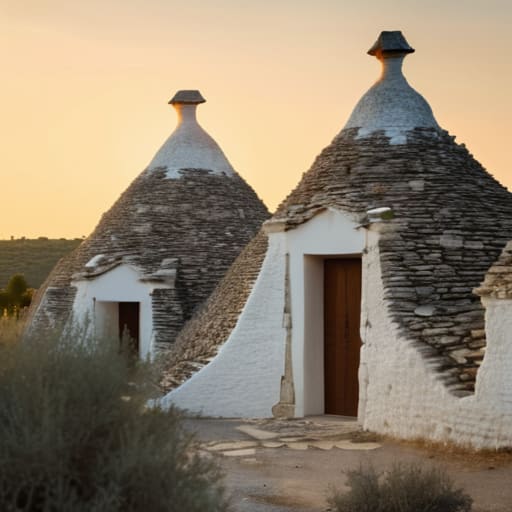
I was kneeling in the dust of a courtyard in Alberobello last July, my knees aching and my hands stained with limestone grit, when I realized how much the travel brochures lie to you. Most people visit puglia and the trulli looking for a postcard-perfect backdrop for a photo, treating these structures like some whimsical, fairy-tale whim of the landscape. They see a “charming” conical roof and move on. But if you look closer—if you actually stop to see the way the limestone slabs are wedged into one another—you realize these aren’t decorations. They are a masterclass in survival, a desperate, brilliant response to tax laws and a lack of mortar.
I have no interest in telling you which boutique hotel has the best breakfast spread. Instead, I want to show you how to read the stone. My goal here is to strip away the tourist veneer and look at the actual logic of the construction: the dry-stone physics, the thermal mass of the walls, and the way the local hands shaped the earth to create something that lasts. We are going to look past the aesthetic and understand the structural honesty of these buildings.
Table of Contents
The Logic of Dry Stone Stacking
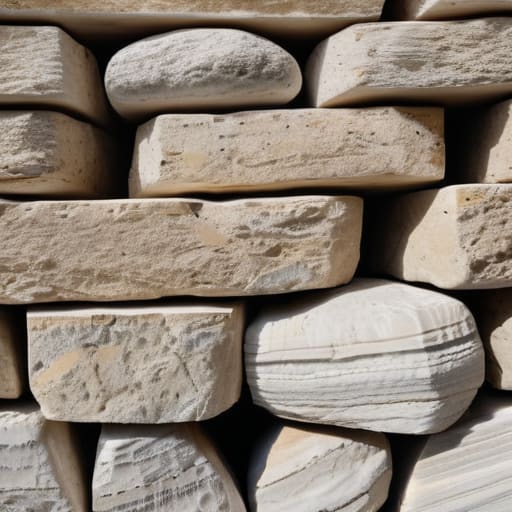
When you stand close to the base of a trullo, you realize quickly that this isn’t just a pile of rocks; it is a sophisticated exercise in gravity. There is no cement here to hide mistakes, no liquid binder to mask a poor fit. Instead, you are looking at the pure, unadulterated logic of traditional limestone architecture. Each stone—often pulled directly from the very field the structure sits upon—has been selected for its specific geometry. I find myself tracing the edges where two irregular blocks meet, looking for that precise moment where a builder decided to wedge a smaller “chinking” stone into a gap to stabilize the course above. It is a tense, beautiful equilibrium.
The real genius lies in the way the weight is distributed through those whitewashed conical roofs. As the stones spiral upward, the center of gravity shifts inward, creating a self-supporting shell that breathes with the humidity of the Adriatic breeze. This isn’t merely a charming feature for an Apulia region travel guide; it is a structural necessity. You can see the history of the labor in the slight irregularities of the limestone; the way a certain stone was notched to accommodate a neighbor, a silent conversation between the mason and the earth.
Tracing the Hand of the Mason
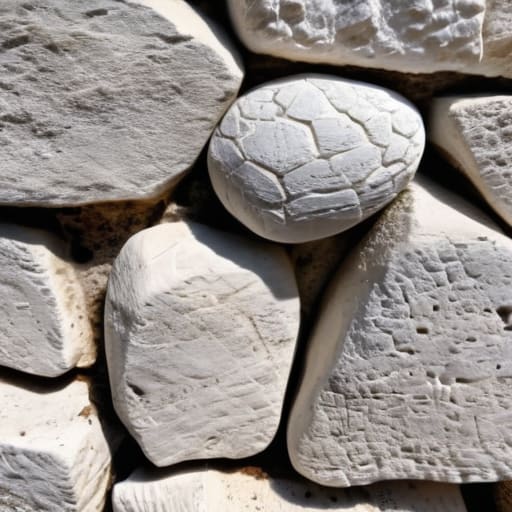
When I crouch down near the base of a wall in Alberobello, I am not looking at the picturesque silhouette of the whitewashed conical roofs against the blue sky. I am looking for the scars. If you lean in close, you can see the slight, rhythmic irregularities where a heavy stone was forced into place, or the shallow divots left by a primitive hammer. These aren’t flaws; they are the signatures of a workforce that had to balance gravity and friction without the luxury of modern binders. In the context of traditional limestone architecture, these marks tell me exactly how much strength the mason exerted to find the center of gravity for each course.
There is a specific kind of intelligence in how these stones are selected. You can see it in the way a larger, flatter slab is used to cap a section, acting as a stabilizer for the smaller, more irregular pieces beneath it. This isn’t just construction; it is a physical dialogue between the person and the rock. When travelers visit these UNESCO World Heritage sites in Italy, they often focus on the charm of the village, but I find myself captivated by the micro-decisions made in the heat of a Puglian afternoon—the choice to wedge a sliver of flint into a gap to prevent a shift, or the way a specific grain of limestone was oriented to better shed the winter rain.
The Living Skeleton of the Itria Valley
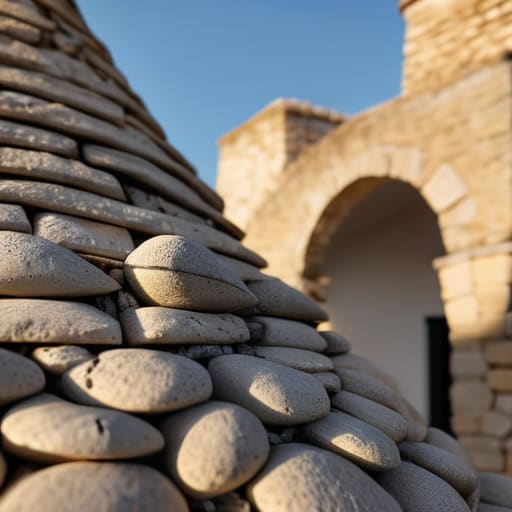
When we step back from the immediate geometry of the cone, we see that a trullo is not merely a shape, but a continuous dialogue between gravity and limestone. We have looked at how the absence of mortar isn’t a lack of technique, but a sophisticated structural choice that allows the building to breathe and shift with the earth. From the deliberate placement of the larger foundation stones to the rhythmic, overlapping layers of the chiancarelle, every element serves the same purpose: stability through friction. To understand the trullo is to understand that the strength lies in the contact points, in those tiny, unseen intersections where one stone leans its entire weight against its neighbor to find equilibrium.
Ultimately, my work in restoration has taught me that we must stop treating these structures as mere postcards for tourists and start seeing them as active, technical achievements. A trullo is a lesson in restraint; it is what happens when human necessity meets the raw logic of the landscape. As you walk through the Valle d’Itria, I urge you to stop looking at the white facades and instead look into the crevices. Look for the scars of the tools and the way the light catches the uneven edges of the stone. When you do, you aren’t just looking at a house; you are reading the silent, enduring signature of the hands that refused to let the stone go to waste.