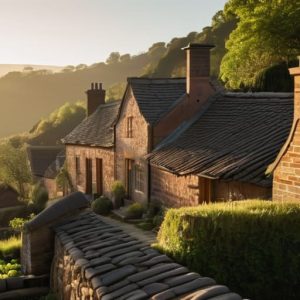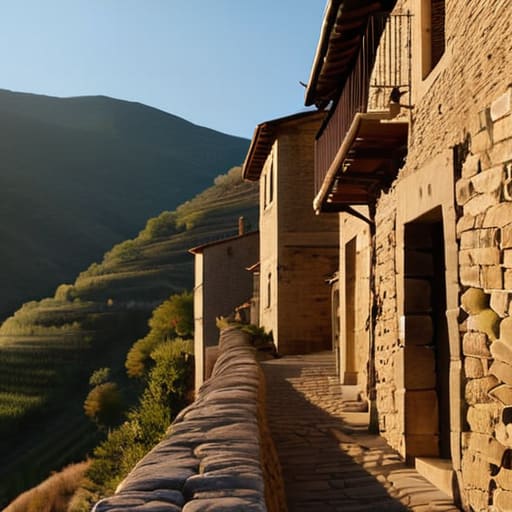
I remember standing on a crumbling terrace in Santo Stefano di Sessanio last October, my knees aching from the climb, staring at a wall that refused to make sense. Most travel guides will tell you that the beauty of abruzzo mountain settlements lies in their “picturesque vistas” or “timeless charm,” but that is such a lazy, hollow way to look at architecture. They treat these villages like postcards, when they should be treating them like living puzzles. I wasn’t looking at the view; I was looking at how a specific type of local limestone had been notched to lock into a dry-stone foundation, a solution born of necessity and a very specific kind of mountain grit.
I have no interest in giving you a curated list of the most “Instagrammable” spots. Instead, I want to show you how to actually read these places. We are going to look past the aesthetic veneer to understand the logic of the stone, the way the narrow alleys were shaped by wind patterns, and how the ancient mortar holds a community together. My promise is simple: I will teach you to see the structural truth behind the scenery, so you can understand the people who refused to let the mountains win.
Table of Contents
Reading the Weight of Apennine Mountain Villages
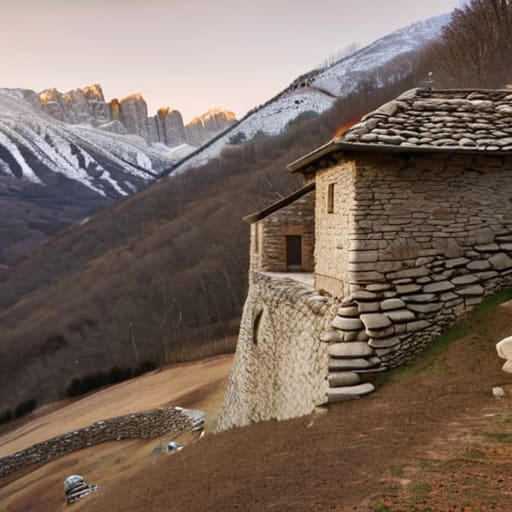
When you climb into the higher reaches of the Apennines, the first thing you notice isn’t the view, but the gravity. These medieval mountain hamlets don’t sit upon the landscape; they seem to have been squeezed out of it. I often find myself tracing the base of a wall in a place like Santo Stefano di Sessanio, looking for how the foundation negotiates with the slope. You can see the logic in the way the larger, rougher boulders are used to anchor the structure against the seasonal heave of the earth. It is a heavy, deliberate kind of building, where every stone is a calculated response to the wind and the sheer weight of the snow that will eventually sit on those roofs.
As I move through these historic hilltop towns in Italy, I am less interested in the picturesque facades and more in the ancient stone masonry techniques that keep them standing. I look for the “scars”—the way a later repair uses a different lime ratio or how a doorway was notched into a pre-existing lintel. There is a specific rhythm to the traditional stone architecture of Abruzzo; it is a language of compression and interlocking. You aren’t just looking at a house; you are looking at a centuries-old conversation between a mason’s chisel and the stubbornness of the mountain itself.
Where the Foundation Dictates the Life
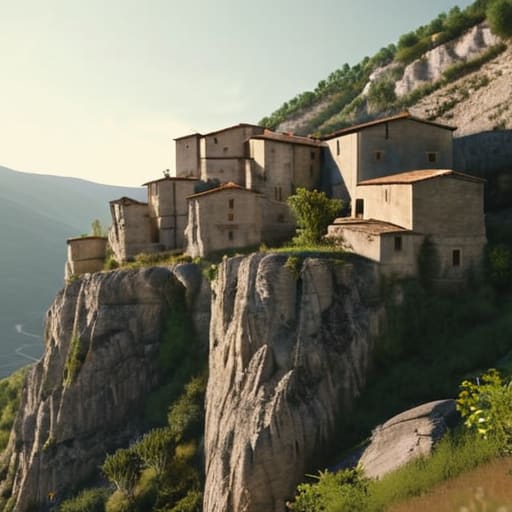
You cannot understand the logic of these Apennine mountain villages without looking at what they are sitting on. In the high reaches, the topography isn’t just a backdrop; it is the primary architect. I have spent many afternoons kneeling in the dirt, tracing how a wall emerges directly from a limestone outcrop, almost as if the building is merely a continuation of the mountain itself. This isn’t the clean, planned geometry we see in modern urbanism. Instead, it is a reactive architecture. The builders didn’t fight the slope; they wedged the foundation into the crevices, using the natural irregularities of the rock to anchor the weight of the structure.
When I examine the ancient stone masonry techniques used in these high-altitude sites, I see a profound respect for gravity. The walls are thickest at the base, often composed of rubble-fill cores that provide a thermal mass capable of surviving the brutal winter shifts. It is a heavy, deliberate way of living. In these medieval mountain hamlets, the foundation dictates everything—the orientation of the doorways to avoid the wind, the narrowness of the alleys, and even the way the light hits a courtyard. Every stone placed at the foot of a house was a calculated response to the unyielding reality of the terrain.
The Living Record of the Stone
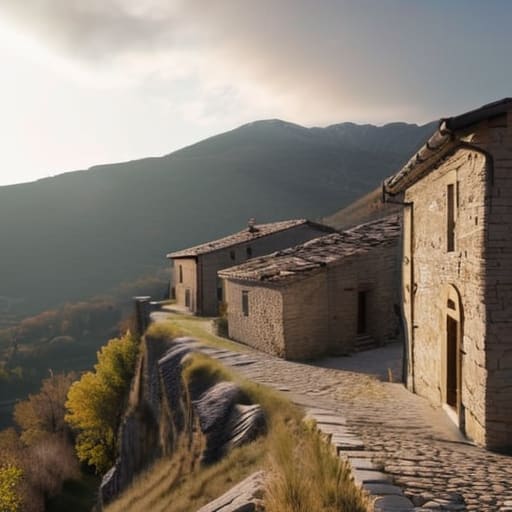
To walk through these Abruzzo settlements is to realize that architecture here was never an imposition upon the landscape, but a negotiation with it. We have seen how the heavy, load-bearing logic of the lower walls responds to the mountain’s slope, and how the specific choice of local limestone dictated the very rhythm of the streets. From the way the mortar was mixed to survive the biting Apennine winters to the strategic placement of every lintel, these villages are not merely collections of houses; they are structural responses to survival. When we look closely at the joints and the weathered edges of the masonry, we aren’t just seeing old stone—we are seeing the materialized logic of a community that refused to be broken by the altitude.
Ultimately, my work in restoration has taught me that a building is never truly finished; it is a continuous conversation between the hand that laid the stone and the environment that tries to reclaim it. As you travel through these high altitudes, I urge you to stop looking at the panoramic views and start looking at the seams of the world. Look at the way a doorway is cut into a slab, or how a terrace clings to a precipice. If you listen to the masonry, you will find that these mountains are not silent. They are telling a story of human resilience written in lime and grit, waiting for anyone with the patience to actually read it.