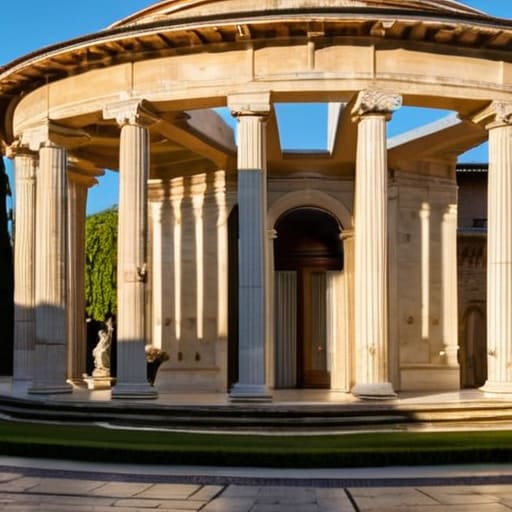
I was standing in the shadow of the Tempietto last Tuesday, squinting against the Roman sun, when I realized how much we get wrong. Most textbooks treat bramante and the high renaissance as if they were discussing a collection of ethereal, untouchable ideas, some divine geometry floating in a vacuum. They talk about “harmony” and “proportion” as if those words weren’t actually achieved through sweat, heavy lifting, and the precise placement of travertine blocks. When you stand that close to the masonry, you realize it isn’t magic; it’s a brutal, brilliant mastery of weight and tension.
I’m not here to give you a lecture on aesthetic theory or recite dry dates from a syllabus. Instead, I want to show you how to actually read the stone. We are going to look past the polished surface of the High Renaissance to find the real story: the way Bramante manipulated mass to create a sense of gravity, and how his structural decisions changed the very DNA of Italian architecture. By the end of this, you won’t just see a beautiful building; you’ll see the logic of the maker hidden in every joint and shadow.
Table of Contents
Tracing Classical Antiquity in Renaissance Architecture
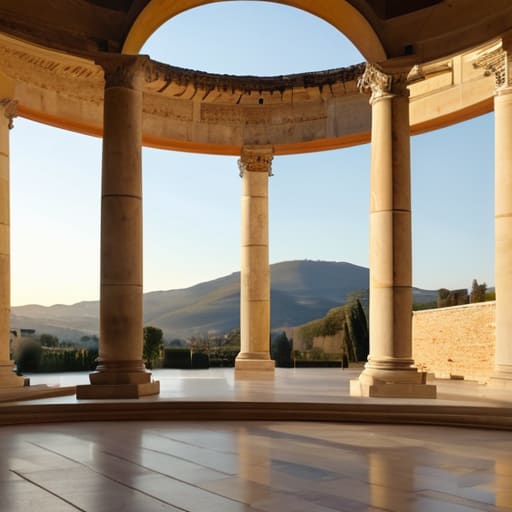
When I stand before the Tempietto in San Pietro in Montorio, I don’t see a mere monument; I see a frantic, brilliant attempt to solve a puzzle left behind by the ancients. It isn’t just about copying a Corinthian column or a Doric frieze. It’s about how Bramante understood the logic of the weight. If you trace the way the circular cella sits within its peristyle, you realize he wasn’t just imitating ruins; he was distilling the very essence of classical antiquity in Renaissance architecture into a single, coherent gesture. He looked at the fragments of Rome and saw not just stones, but a mathematical language of gravity and grace.
To understand this, you have to look at the joints where the stone meets the light. In his pursuit of Renaissance spatial harmony and proportion, Bramante moved away from the additive, almost cluttered decorative styles of the previous century. Instead, he leaned into the purity of the circle and the square. There is a specific tension in the way the columns support the entablature—a sense that the structure is breathing. He wasn’t just building a chapel; he was reconstructing the feeling of a lost world, proving that the old rules could still dictate a new, perfect rhythm.
The Weight of Decisions in Roman Stone
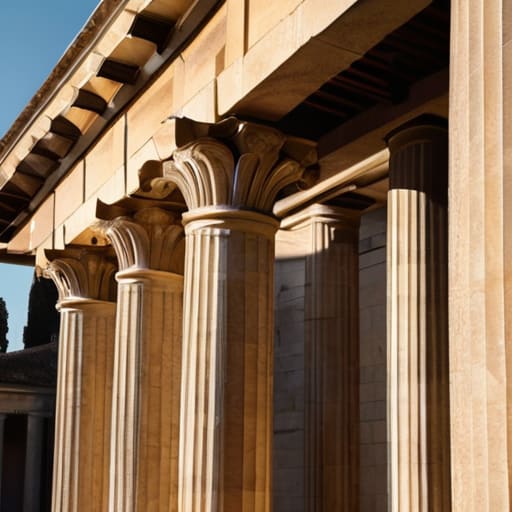
When I stand before the Tempietto, I don’t just see a temple; I see a series of incredibly difficult, calculated choices made in stone. It is easy to talk about the Donato Bramante Tempietto design in abstract terms of geometry, but if you lean in close to the Doric columns, you see the reality of the labor. There is a specific tension in how those drums are stacked. You can almost feel the weight of the decision to move away from the sprawling, decorative chaos of the previous century toward something far more disciplined. He wasn’t just copying the ancients; he was using their logic to solve a new problem of gravity and grace.
This is where the true Renaissance spatial harmony and proportion reveal themselves. It isn’t found in a textbook diagram, but in the way the light hits the joints between the marble and the way the shadows settle into the recesses of the frieze. Bramante understood that for a centralized plan architecture to actually work, the math had to be felt in the body. You don’t just look at the circle; you feel the compression of the space. Every block of stone was placed with the intent to guide your eye toward a center that feels both inevitable and perfectly poised.
Beyond the Surface: The Legacy of the Joint
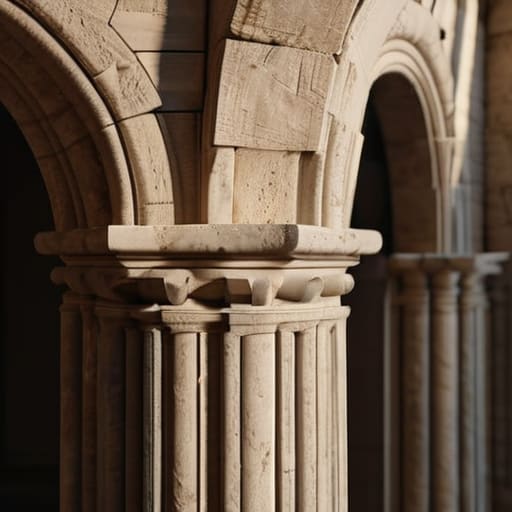
When we step back from the grand facades of the High Renaissance, we shouldn’t lose sight of the granular reality that made Bramante’s vision possible. It wasn’t just a conceptual shift toward classical symmetry; it was a physical, grueling negotiation with gravity and material. We’ve seen how he moved away from the decorative, surface-level logic of the previous century to embrace a structural honesty that echoed the Roman masters. By looking at how he integrated those heavy stone blocks and how he managed the transition from ancient weight to Renaissance grace, we see that his genius wasn’t just in the geometry, but in his understanding of mass and structural tension.
I often find myself standing in the shadow of these structures, running my fingers over a weathered seam of mortar, wondering about the exact moment a mason realized they were building something that would outlast their own name. Bramante reminds us that architecture is never just an idea; it is a series of deliberate, physical choices etched into stone. The next time you walk through a courtyard or stand beneath a dome, don’t just look at the scale of the space. Look for the joints, the tool marks, and the way the stones meet. That is where the true conversation between the architect and the earth still lives.