I was standing on a scaffold in a dusty courtyard near the Forum last autumn, tracing the underside of a weathered capital with my flashlight, when it hit me how much we misinterpret these stones. Most guidebooks treat the corinthian order in rome as if it were some divine, untouchable mathematical perfection, a sort of frozen ideal of beauty. But they forget that these weren’t just “styles”—they were decisions. They were heavy, expensive, and often incredibly difficult to execute, involving frantic workshops and stonecutters trying to make rigid marble mimic the soft, organic sprawl of an acanthus leaf.
I’m not here to give you a lecture on aesthetic theory or recite dry proportions from a textbook. Instead, I want to show you how to read the physicality of the stone itself. We are going to look past the grand silhouette and focus on the chisel marks, the way the volutes are anchored into the drum, and the sheer logistical audacity required to stack these ornaments. By the end of this, you won’t just see a pretty column; you’ll see the hands of the builders who actually made it stand.
Table of Contents
Tracing the Acanthus Leaf Ornamentation
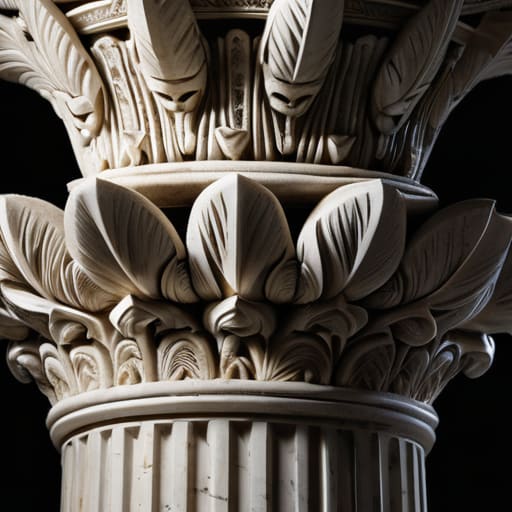
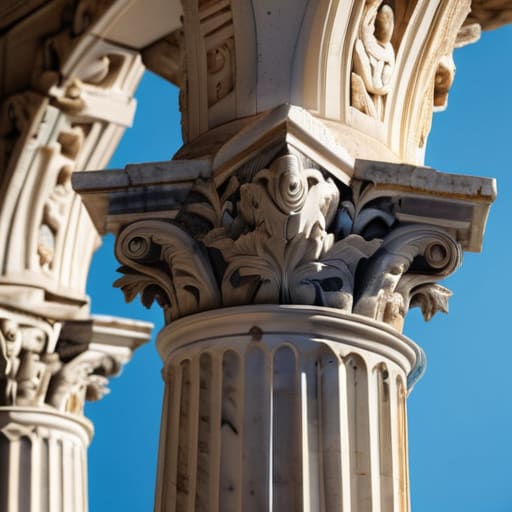
When I’m standing on a scaffold, inches away from a capital that hasn’t been cleaned in a century, I don’t see “decoration.” I see a series of frantic, decisive chisel strokes. To understand the acanthus leaf ornamentation in the capital, you have to look at the depth of the carving. In the earlier Greek examples, the leaves feel somewhat tentative, almost as if they are merely resting on the surface. But as you move into the height of the imperial era, the Romans stopped being polite. They wanted volume. They wanted shadow. They began to undercut the stone so deeply that the leaves appear to be curling away from the core, creating these heavy, dramatic pockets of darkness that make the stone feel alive.
It is in these shadows that you truly see the evolution of Greek and Roman orders. While the Greeks sought a certain mathematical restraint, the Roman approach to architectural column capitals was one of calculated theatricality. I often find myself tracing the veins of a single leaf with my eyes, noting how the mason transitioned from a broad, flat plane to a sharp, serrated edge. They weren’t just copying a pattern; they were manipulating light. They understood that a building isn’t just a collection of stones, but a way to trap the sun and force it to dance across the carved surfaces.
Deciphering Imperial Roman Building Styles
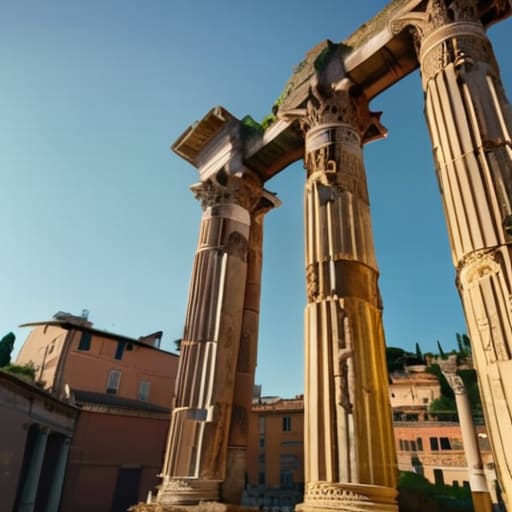
When I walk through the Forum or stand before the ruins of a provincial temple, I don’t see a monolith of “Roman style.” Instead, I see a frantic, beautiful negotiation between tradition and ego. To truly understand imperial roman building styles, you have to stop looking at the silhouette of the building and start looking at the assembly. The Romans weren’t just copying the Greeks; they were scaling up, often using the Corinthian order to project a sense of overwhelming permanence that the lighter, more delicate Greek proportions simply couldn’t convey.
I often find myself tracing the transition from the more restrained Hellenistic influences to the sheer, unapologetic density of the High Empire. You can see it in the way the architectural column capitals began to swell, becoming more muscular to support the massive weight of marble entablatures. There is a specific tension in the stone where the craftsman had to decide how much depth to carve into the volutes to ensure they didn’t look like mere surface decoration. It is in these tiny, structural decisions—the depth of a groove or the thickness of a shaft—that the evolution of greek and roman orders becomes a tangible, physical reality rather than just a chapter in a textbook.
Beyond the Surface Ornament
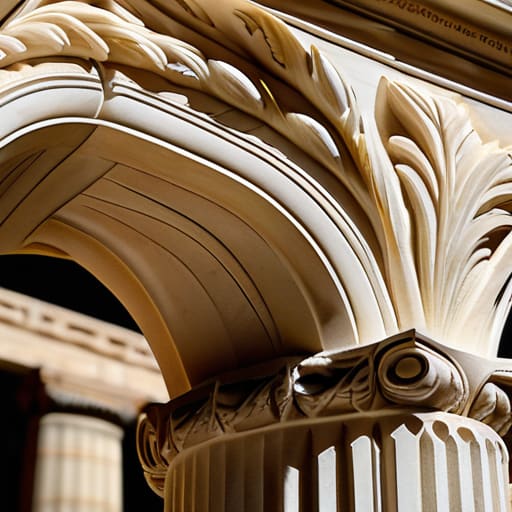
When we look back at these columns, we shouldn’t just see a finished piece of imperial propaganda. We have to see the transition from the rigid, somewhat awkward early attempts at acanthus carving to that seamless, confident mastery where the stone almost seems to breathe. By tracing how the Romans manipulated the Corinthian order—moving from mere decoration to a structural language that defined the very scale of their empire—we see the true fingerprints of the stonemasons who worked under those intense Mediterranean suns. It wasn’t just about aesthetics; it was about the technical evolution of how a single capital could anchor the weight of a massive, marble-clad world.
Next time you find yourself standing in a courtyard or a museum, don’t just snap a photo of the silhouette. Get close. Look at the way the mortar meets the base, or how the light catches the deep undercutting of a leaf. There is a profound, quiet intimacy in realizing that these patterns were decided by a person whose name we will never know, but whose calculated decisions still dictate how we perceive beauty two thousand years later. A building isn’t a static object; it is a conversation between the material and the hand that shaped it, and it is still waiting for you to listen to what it says.