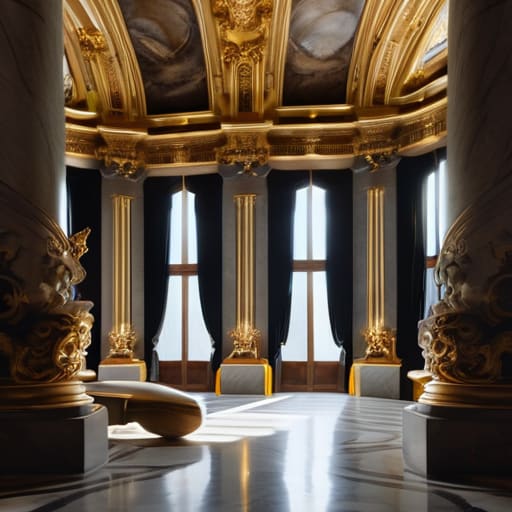
I was standing in the Sant’Andrea al Quirinale last Tuesday, tracing the seam where the marble meets the gilded stucco, when I realized how much we get wrong about the Baroque. Most textbooks will try to sell you a lofty, abstract lecture on how Bernini and spatial drama are synonymous with divine transcendence or mathematical genius. It’s exhausting. They talk about “theatricality” as if it’s some nebulous concept floating in the ether, completely ignoring the fact that this drama is actually built into the very joints and shadows of the masonry. You don’t find the soul of a room in a philosophy book; you find it in the way a sculptor forces a heavy piece of travertine to mimic the softness of a sleeve.
I’m not here to give you a sweeping historical survey or a list of dates to memorize for an exam. Instead, I want to show you how the tension is actually engineered. We are going to look past the gold leaf and the grandiosity to examine the physical mechanics of how he manipulated light and sightlines to command a space. I promise to keep this grounded in the stone, focusing on the technical decisions that turn a mere building into a living, breathing stage.
Table of Contents
Sculptural Dynamism and Space as a Living Force
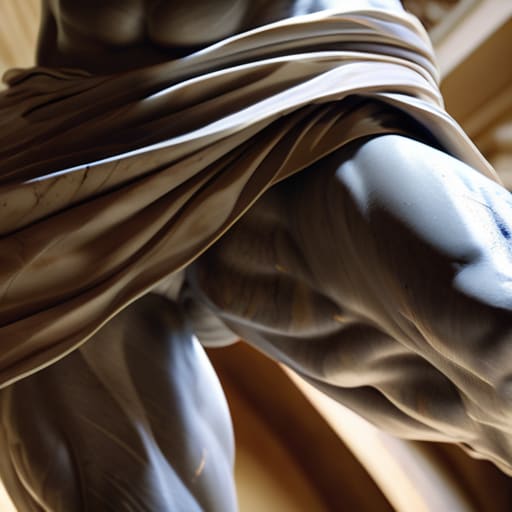
When I stand before one of his more aggressive compositions, I don’t just see a figure; I see a disruption of the surrounding air. Bernini didn’t treat marble as a static mass to be carved, but as something that could be coerced into a state of perpetual motion. He understood that for a sculpture to truly live, it must colonize the space around it. This is the essence of sculptural dynamism and space: the way a limb reaches out or a cloak swirls, not just to show off technical skill, but to force the viewer to physically adjust their position to make sense of the movement.
There is a calculated violence in how he manages the void. He uses the empty spaces between limbs and drapery to create a tension that feels almost tactile. This isn’t just decoration; it is the theatricality of the Counter-Reformation made manifest in stone, designed to pull the soul toward the divine through sheer physical overwhelm. He captures that split second of transition—the moment before a body settles or a breath is released—and freezes it. By doing so, he ensures that the architecture and the figure are no longer separate entities, but a single, breathing organism that demands your absolute attention.
The Emotional Impact of Baroque Movement in Stone

When I stand before one of his larger commissions, I find myself less interested in the polished finish and more captivated by the way he forces the viewer into a state of physical disorientation. He wasn’t just carving shapes; he was choreographing a visceral reaction. This is the true emotional impact of Baroque movement in stone—it is a deliberate assault on the senses. You don’t just look at a Bernini drapery; you feel the sudden rush of air it implies, as if the marble itself is caught in a gust of wind that hasn’t quite settled.
This wasn’t mere decoration. It was a calculated tool of the theatricality of the Counter-Reformation, designed to bypass the intellect and strike directly at the gut. By mastering the integration of light and shadow in Bernini’s work, he creates a rhythmic tension that mimics a heartbeat. As the light shifts across a deep-cut crevice in the travertine or the marble, the stone seems to pulse. It ceases to be a static, heavy mass and becomes something fluid, something that breathes. You realize then that he wasn’t just building structures; he was building moments of crisis that force you to feel the weight of the divine.
The residue of intent
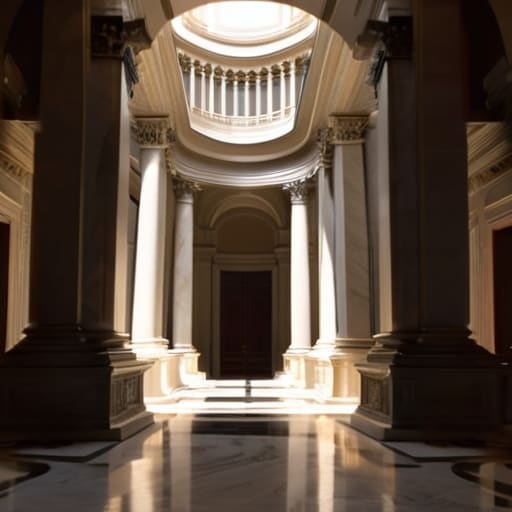
When I stand before his work, I find myself looking past the grand spectacle and focusing instead on how he managed to bend the very physics of a room. He didn’t just place marble in a space; he orchestrated a collision between the weight of the stone and the emptiness around it. By manipulating sightlines and using light as a structural element, Bernini ensured that the architecture was never static. He transformed the rigid, predictable geometry of the Baroque into something that feels alive and breathing, forcing the viewer to participate in a choreographed dance of shadows and sudden, dramatic reveals.
Ultimately, studying Bernini teaches us that architecture is not merely about the assembly of materials, but about the unseen tension held between them. It is a reminder that the most profound stories aren’t found in the polished surfaces, but in the way a designer commands the air itself to hold a specific emotion. The next time you walk into a historic space, don’t just look at the ceiling or the columns. Look at the way the light hits the corner, or how the floor seems to pull you toward a center. Listen to what the space is trying to say, because the real architecture is always happening in the movement between the walls.